
The Art of Returning to Yourself
There is a particular kind of luxury that cannot be bought, displayed or photographed. It is the luxury of having time to hear yourself think, of waking without urgency, of breathing deeply enough to notice how the body feels before the demands of the day begin. In a culture that has made constant movement almost synonymous with success, stillness can feel surprisingly radical. It is within this quieter territory that Yeşim Yuva has built her work, not simply as a yoga and meditation teacher, but as someone interested in what happens when we stop performing our lives long enough to experience them. Based in London, Yuva creates intimate retreats and practices around yoga, somatic awareness, meditation and self-inquiry, bringing together disciplines that ultimately return to a deceptively simple question: how present are we in our own lives?
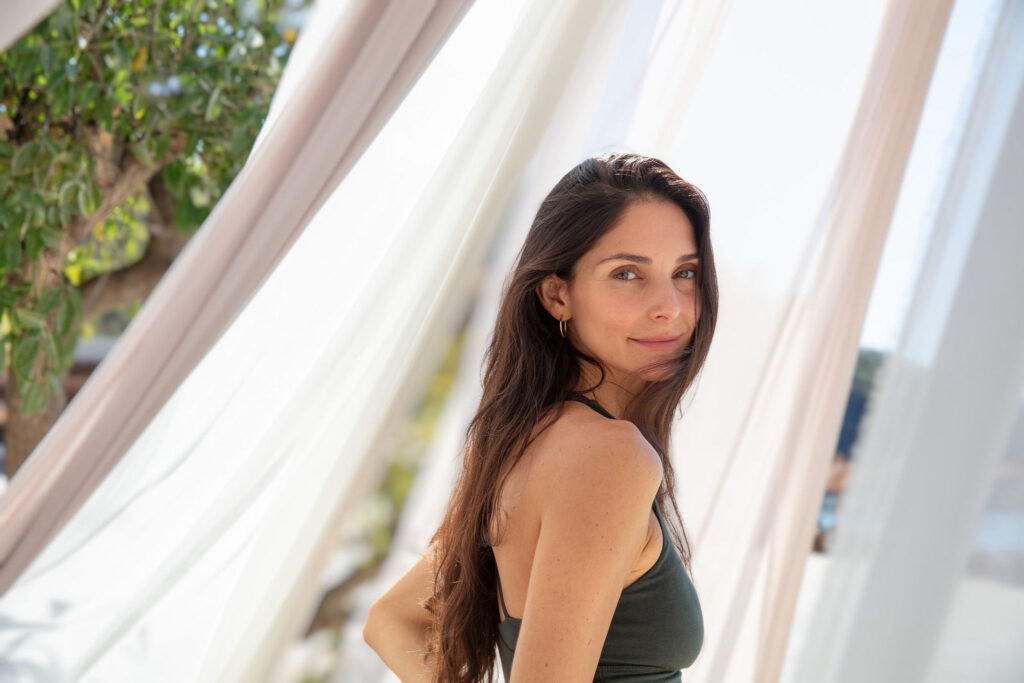
Her path towards wellness was anything but linear, and perhaps that is precisely what makes it interesting. Before retreats, meditation and mornings on the mat, Yuva belonged to the fast-moving worlds of media, fashion and events. After studying business at the University of Cologne, with a focus that included marketing, media management and economic psychology, she worked in creative production, organising international events, fashion shows and film and photographic productions. Later, as an independent project manager, her work brought her into collaboration with names including Armani, Vogue and Hugo Boss. She also spent years in front of audiences and cameras as a presenter, speaker and actress. It was a life built around movement, deadlines, production and the complicated machinery required to make beautiful things appear effortless.
Yet somewhere beneath all that movement was a growing desire for something quieter. More than fifteen years ago, Yuva spent a week in an ashram, an experience she describes as the beginning of a profound shift. Yoga initially entered her life as a practice, but gradually became something much broader: a way of understanding how she moved through the world. She continued studying through teacher trainings, workshops, travel and years of personal practice, learning in places as varied as India, New York, London, Berlin, Peru, Colombia and Istanbul. Her teaching today combines Vinyasa and classical Hatha with roots in Raja Yoga philosophy, complemented by breathwork and meditation. The objective is not simply flexibility or physical accomplishment; the body becomes an entry point into awareness.

This distinction matters. Wellness has become one of the defining industries of contemporary luxury, accompanied by its own immaculate visual vocabulary: perfect linen, beautiful ceramics, infinity pools, green juices and bodies performing impossible poses against extraordinary landscapes. Yuva’s philosophy is more personal than that. She speaks about yoga not as something separated from ordinary existence but as something revealed through the way we breathe, rest, communicate and relate to ourselves and others. Her approach is grounded in body awareness, emotional honesty and what she calls deep listening, with the intention of moving away from relentless “doing” towards a more embodied way of being.
It is perhaps unsurprising that retreats became the natural meeting point between the two seemingly different chapters of her life. The woman who once understood how to construct complex international productions now applies that instinct for detail to experiences designed around precisely the opposite sensation: letting go. Yuva has been leading retreats for more than a decade, guiding hundreds of participants in destinations including Turkey, Portugal and Bali. Her background in production provides the structure—the location, atmosphere, rhythm and invisible logistics—while years of yoga and meditation provide the emotional centre. She describes a retreat not as an escape from life, but as a conscious pause within it, an opportunity to create enough distance from routine for clarity to return.
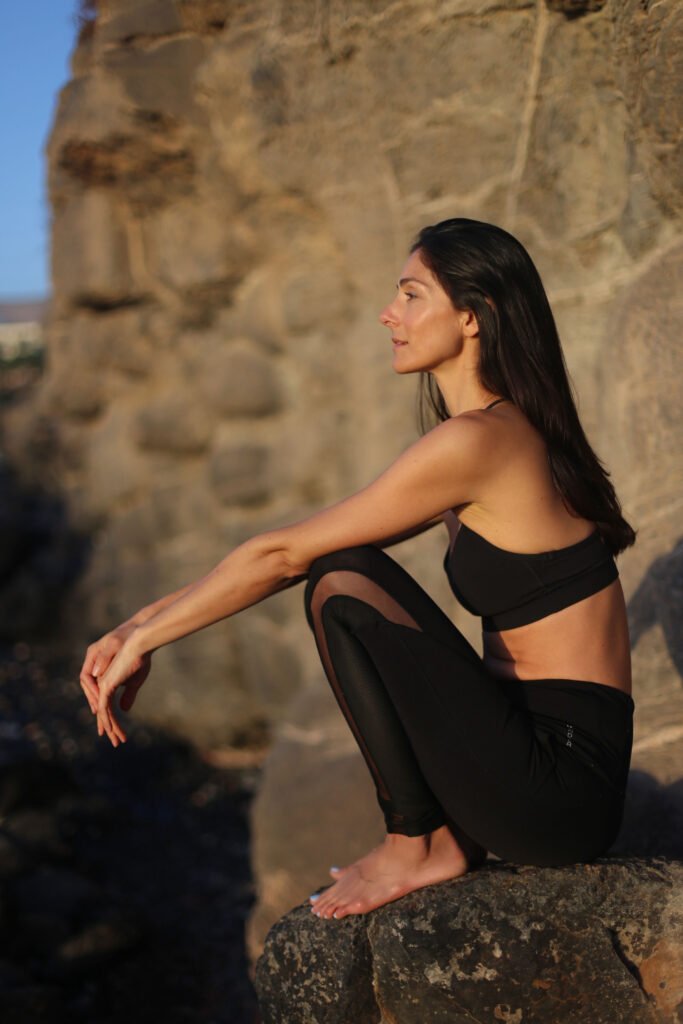
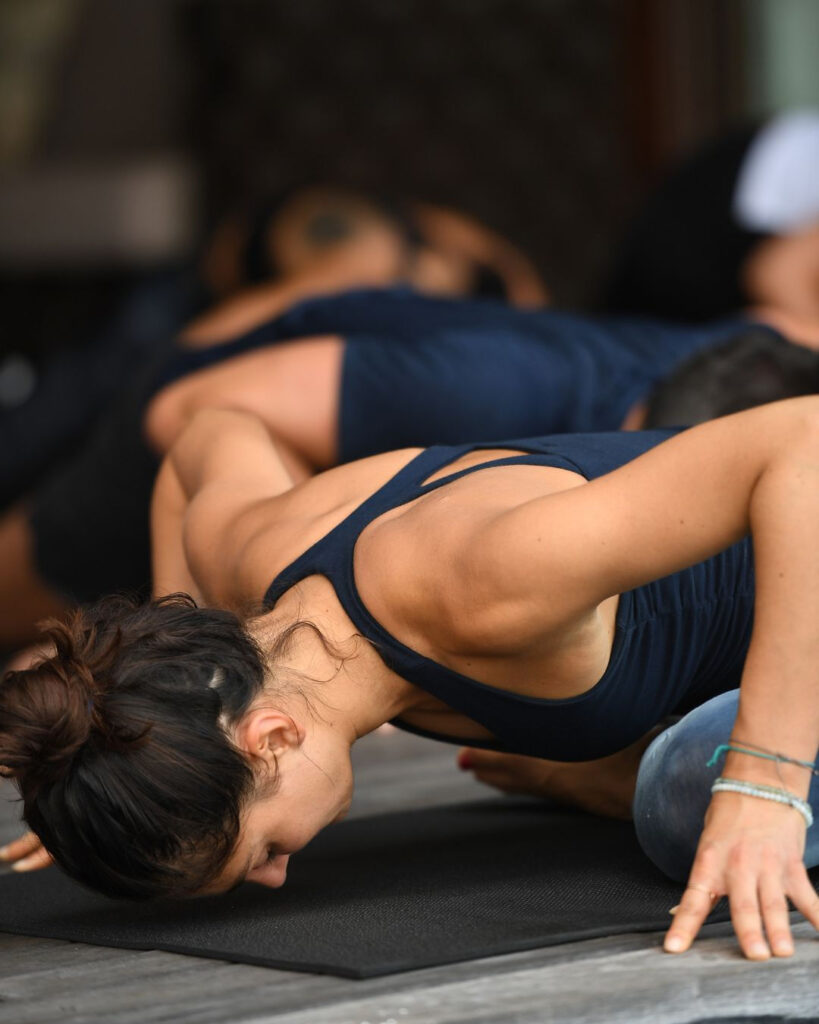
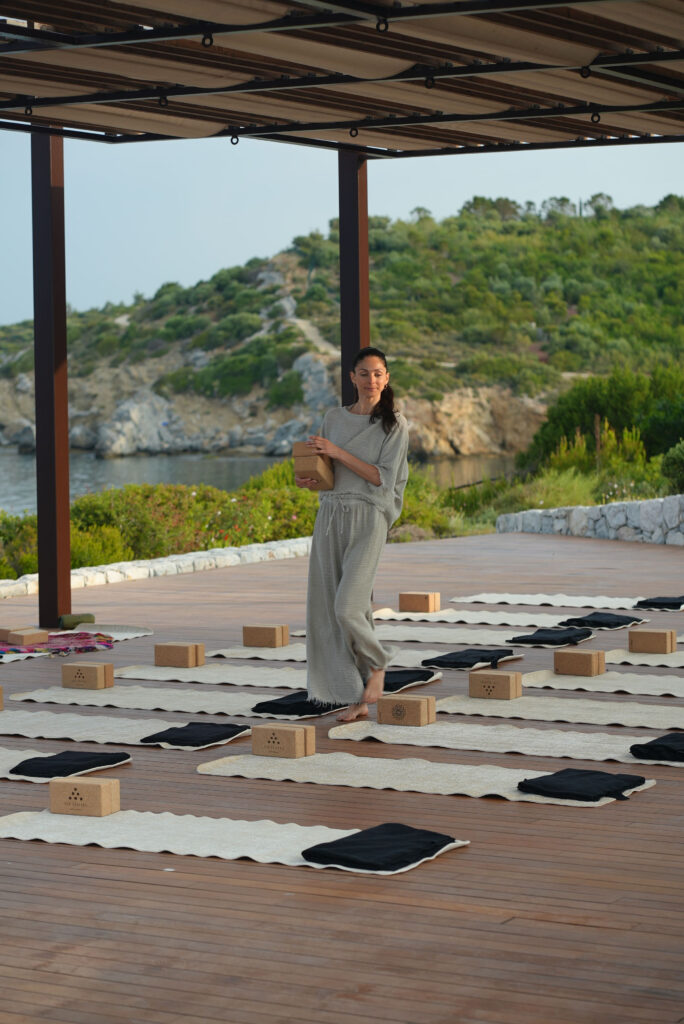
The settings are deliberately beautiful. One of her recent retreats, Soul of Nature, unfolded at AHAMA on Turkey’s turquoise coast, where days combined morning and evening yoga with meditation, sound healing, nature and periods of unstructured time. Future programs continue this dialogue between inner work and exceptional surroundings: a September 2026 retreat in the Somerset countryside is conceived around movement, stillness and nature, while a five-day experience at Six Senses Kaplankaya in May 2027 brings yoga, breathwork, meditation and somatic practices to the Aegean coast. The choice of location is more than aesthetic. Sea, landscape and open space become part of the practice itself rather than simply a luxurious backdrop to it.
There is an interesting paradox here. The more sophisticated the hospitality industry becomes, the more its most discerning travellers seem to desire simplicity. Not simplicity as austerity, but as freedom from unnecessary noise. The beautiful room still matters, as does excellent food, considered design and gracious service, but increasingly these things are valued because of what they enable: sleep, conversation, movement, privacy and time. Yuva’s retreats sit naturally within this changing understanding of luxury. The experience may unfold at a remarkable hotel or aboard a yacht moving through secluded Mediterranean bays, yet the destination ultimately points inward. The setting creates the conditions; what happens within them remains deeply individual.
Her own writing reveals that this search for authenticity extends beyond yoga. Yuva has reflected publicly on the limitations of defining ourselves through professions, describing her own progression through project management, presenting, modelling, acting and eventually teaching. Rather than rejecting those previous identities, she regards them as chapters that contributed to the person she became. It is an unusually nuanced perspective in a culture fond of dramatic reinvention stories. There is no suggestion that one life had to be destroyed for another to begin. Transformation, in her telling, is closer to an accumulation of experience: learning which parts remain meaningful and acquiring the confidence to release those that no longer do.
Motherhood has added another dimension. Yuva describes raising her two young children as one of her greatest teachers, deepening her understanding of patience, compassion and the uncomfortable reality that meaningful growth rarely occurs without challenge. That lived experience appears increasingly central to the way she teaches. Her language avoids the idea that human beings are projects requiring endless correction. Instead, she speaks about creating enough safety and quiet for people to reconnect with what is already there. Her philosophy can be condensed into four words that recur throughout her work: breathe, soften, listen, reconnect.
There is something refreshingly unfashionable about that proposition. We live within an enormous economy devoted to convincing us that transformation requires acquiring something new: a new body, routine, destination, wardrobe, treatment or identity. Yuva’s work proposes almost the reverse. Perhaps the most meaningful transformation begins by removing rather than adding, allowing some of the layers accumulated through expectation, ambition and habit to fall away. The point is not to emerge as an improved version designed for public consumption, but to become more comfortable inhabiting the life that already belongs to us.
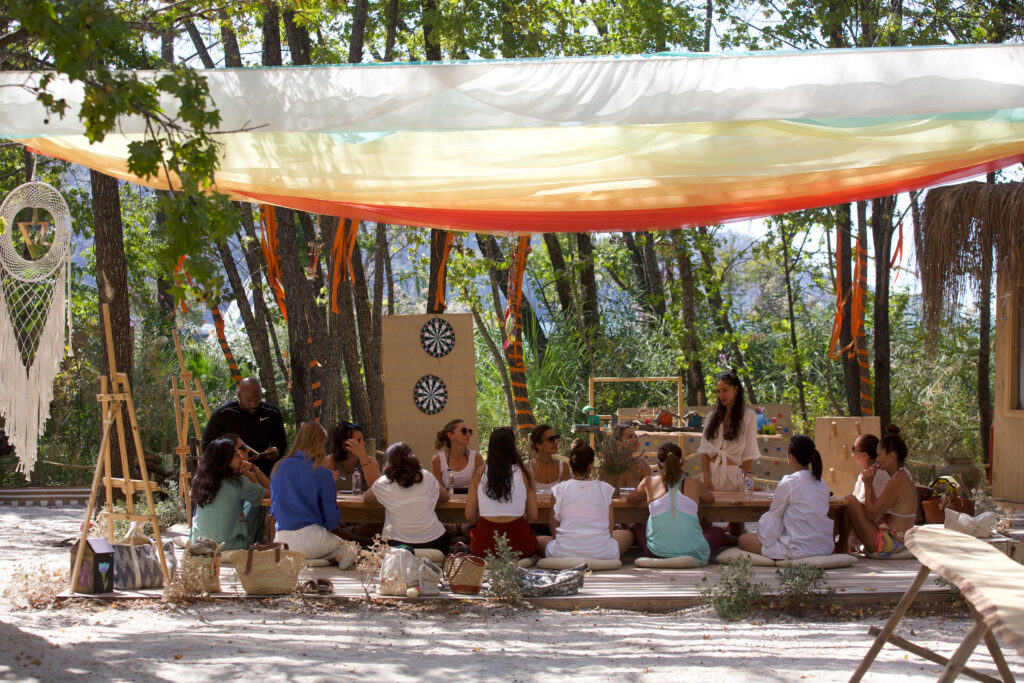
That may also explain why human connection occupies such an important place within her retreats. Yoga is inevitably personal, but retreat life creates a temporary community in which meals, conversations, movement and silence are shared. Participants arrive from different cities and circumstances, often without knowing one another, yet spend several days removed from the familiar roles through which they are usually understood. Without the usual architecture of professional titles and social obligations, conversations can become unexpectedly honest. In this sense, the retreat is not simply about withdrawing from the world. It becomes a laboratory for returning to it differently.

For Yuva, presence is therefore not an abstract spiritual idea reserved for a yoga studio. It is something practiced while breathing, speaking, parenting, eating, walking through nature or sitting opposite another person. The mat may provide the training ground, but ordinary life is where the practice ultimately matters. This is perhaps the most compelling thread connecting the seemingly disparate stages of her career. Whether creating a fashion event for hundreds of people or guiding a small group through meditation beside the sea, she has always been concerned with creating an atmosphere in which people can feel something. Only the definition of what matters has changed.
Today, Yeşim Yuva belongs to a generation reshaping the conversation around wellbeing away from performance and towards awareness. Her story is not compelling because she abandoned one glamorous world for another supposedly purer one, but because she allowed experience to alter her understanding of success. The precision learned through years of international production remains. So does the confidence acquired through presenting and performance. What has changed is where those abilities are directed: towards creating spaces in which very little needs to be performed at all. For a woman whose professional life once revolved around making things happen, perhaps the most interesting evolution has been learning the value of allowing things to unfold.
Maison Blanche Reflection
The word retreat traditionally suggests withdrawal, but Yeşim Yuva’s interpretation feels closer to return: to the body, to intuition, to nature and eventually to oneself. There is no promise that several days of yoga will magically resolve the complexities waiting at home, nor does there need to be. The greater luxury may simply be creating enough silence to recognise which parts of our lives deserve more attention when we return. In the end, Yuva’s philosophy is remarkably uncomplicated. We spend much of our lives looking outward for the next thing that might make us feel complete. Her work asks us, for a moment, to reverse the direction. Not to escape life. But to become present enough to actually live it.