
Beyond the Michelin Stars: The Young Chef Rethinking the Future of Hospitality
At 26, Swiss chef Tom Walter has already experienced a professional journey that many spend decades pursuing. From the precision of Michelin-starred kitchens to the international energy of Hong Kong, from national culinary competitions to leading the kitchen of a luxury hotel in Gstaad, his career reflects an unusual combination of ambition, discipline and curiosity. Yet what makes Walter particularly interesting is not simply how quickly he has progressed through the demanding world of fine dining. It is his willingness to question what success in hospitality should look like, and his growing conviction that the future of the industry depends as much on leadership, organisational intelligence and human potential as it does on the brilliance of the food arriving at the table.
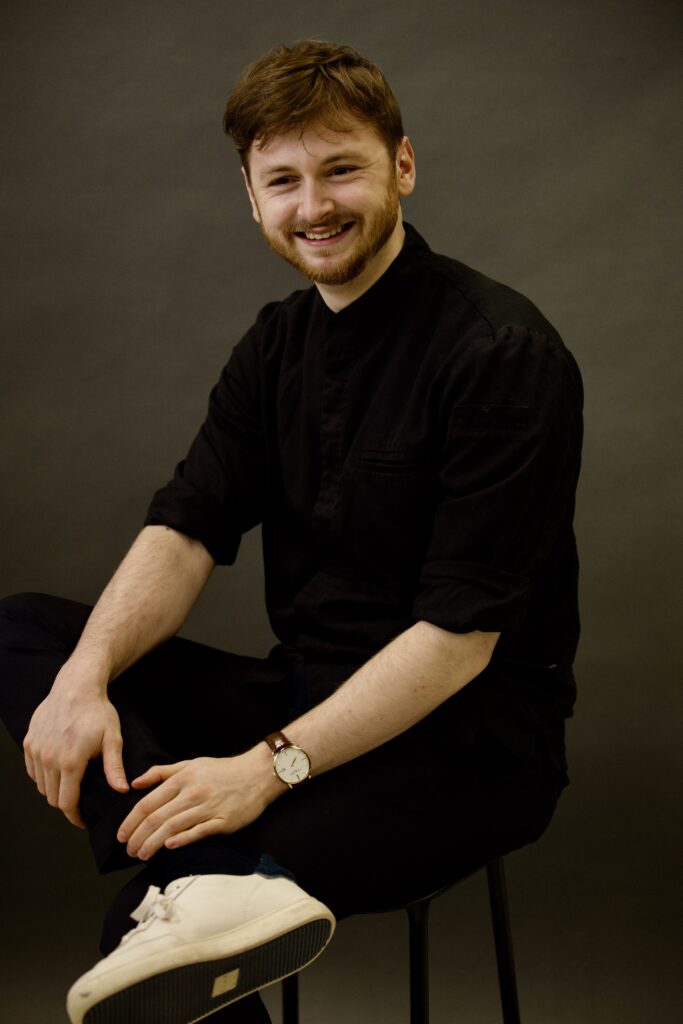
In Gstaad, one of Switzerland’s most celebrated Alpine destinations, luxury is part of everyday life. The village has long attracted an international community drawn by its extraordinary mountain scenery, discreet elegance and remarkable hospitality culture. Behind the carefully composed interiors of its hotels and restaurants, however, lies an industry that demands extraordinary levels of coordination, precision and human commitment. At The Mansard, a contemporary boutique hotel in the heart of the village, Tom Walter took over as Head Chef in July 2025, becoming one of the youngest professionals in Switzerland to assume such a position. His appointment was an important milestone, but it also represented the beginning of a more complex ambition: understanding how exceptional hospitality can be built around organisations that perform consistently, develop their people and remain successful beyond the presence of any single individual.
Walter’s fascination with gastronomy began in Aarau, the historic Swiss town where he was born in 2000. At the age of fifteen, a trial placement at Restaurant Einstein introduced him to the atmosphere of an open kitchen, where the energy of the chefs, the rhythm of service and the reactions of guests were all immediately visible. What captivated him was the relationship between people and performance, the way individual responsibilities could come together to create an experience that mattered to someone else. This early encounter shaped his decision to pursue a culinary career, but it also revealed an interest that would become increasingly important in later years: the organisation of work itself. He was attracted not only to the creativity of cooking, but to the coordination, communication and collective effort required to make a restaurant function.
Between 2016 and 2019, Walter completed his apprenticeship at Hotel Kettenbrücke in Aarau, establishing the technical foundations of his career while developing a reputation for ambition and discipline. His training introduced him to the demanding standards of professional gastronomy, where consistency, preparation and attention to detail are essential. He graduated with excellent results and began distinguishing himself in culinary competitions, receiving a gold medal at the Aargau apprenticeship competition in 2018 and finishing fourth at Gusto, the Swiss competition for young culinary talent, in 2019. These achievements were early indications of his determination, but Walter’s reflections on competition reveal an approach shaped as much by setbacks as by recognition. He came to understand that improvement depended on the ability to analyse mistakes, prepare methodically and maintain confidence through repeated challenges.
An international opportunity at eighteen broadened his understanding of hospitality beyond the familiar environment of Switzerland. Through a development programme, Walter travelled to Hong Kong for an internship at the Grand Hyatt, encountering the scale, complexity and cultural diversity of international luxury hospitality. The experience introduced him to colleagues and guests from different backgrounds, as well as operational standards shaped by the demands of a major international hotel. For a young chef from Aarau, Hong Kong offered a perspective on an industry that extended far beyond the kitchen, demonstrating how service, organisation and cultural awareness combine to create a coherent guest experience. The city also revealed the importance of adaptability, an ability to work within unfamiliar environments while maintaining the discipline required by professional gastronomy.
Another formative experience followed in Germany, where Walter undertook an internship with acclaimed chef Nils Henkel at Restaurant Schwarzenstein, which held two Michelin stars at the time. Henkel’s cuisine was celebrated for its sophisticated treatment of ingredients, particularly vegetables, herbs and the natural flavours of the surrounding landscape. Working within such an environment exposed Walter to the extraordinary technical expectations of European fine dining, where creativity must be supported by precision and where even the smallest details are subject to rigorous scrutiny. The experience contributed to a professional philosophy that would later become central to his own cooking: the importance of understanding ingredients, respecting their origins and allowing genuine flavour to remain the foundation of a dish.
The defining chapter of Walter’s culinary education, however, unfolded in Basel, at Restaurant Stucki under the direction of Tanja Grandits. One of Switzerland’s most respected chefs, Grandits has developed a distinctive culinary identity recognised with two Michelin stars and 19 GaultMillau points. Her cuisine is celebrated for its extraordinary sensitivity to colour, aromatic complexity and the harmonious combination of ingredients, creating dishes that are both visually striking and technically accomplished. For Walter, joining her team in 2020 represented an opportunity to develop within one of the country’s most demanding gastronomic environments. Over the following four years, he progressed through different positions, taking on increasing responsibility and refining his understanding of the discipline required to maintain exceptional standards.
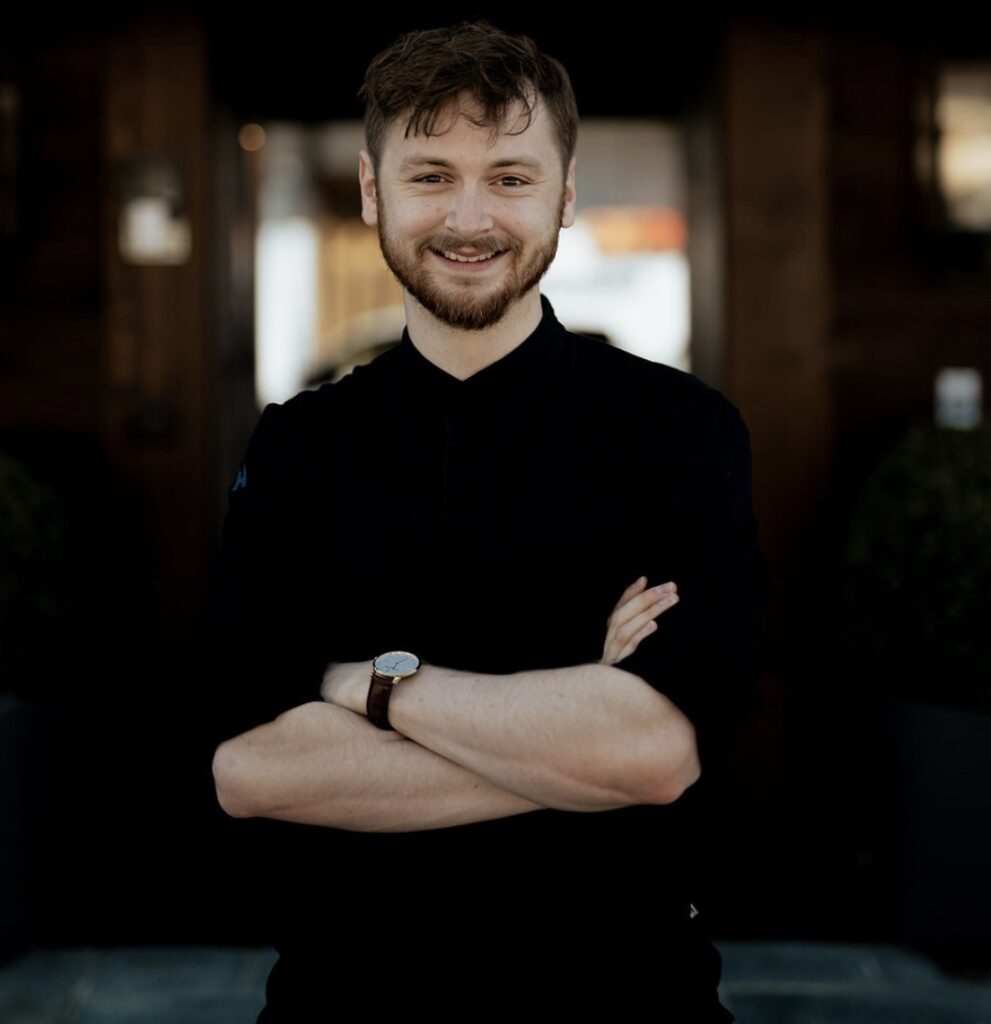
Yet the influence of Grandits extended beyond culinary technique. Walter became increasingly attentive to the relationship between team culture and performance, recognising that the quality of a restaurant depends upon more than the talent of its most visible personalities. The atmosphere within a kitchen, the ability of colleagues to communicate effectively and the confidence created by mutual trust all influence the experience ultimately delivered to guests. Grandits’s approach to teamwork left a lasting impression on him, providing an example of how demanding standards can coexist with an environment in which people feel supported and motivated. These lessons would later shape his own understanding of leadership, particularly as he began considering how organisations could be structured to encourage independence rather than dependence on constant supervision.
Alongside his work in Basel, Walter continued participating in Switzerland’s competitive culinary scene. He became a member of the Swiss Junior National Culinary Team, reached the semifinals of SwissSkills in 2020 and received the Best Commis distinction at the 2021 Goldener Koch competition. Such experiences placed him among ambitious young professionals who regarded competition as an opportunity to measure their abilities against demanding national standards. For Walter, however, the most enduring value of these achievements was the discipline developed through preparation and reflection. He learned to approach difficulties analytically, understanding that progress often emerges from the willingness to question established methods and confront weaknesses rather than simply repeat familiar routines.
By 2023, an important change was taking place in the way Walter viewed his professional future. Although he remained deeply involved in fine dining, his curiosity increasingly extended towards the business structures supporting the hospitality industry. He began studying business administration in Zurich, deliberately choosing an educational environment that brought together professionals from different sectors. The decision reflected his desire to understand how organisations function beyond the specific traditions of gastronomy, exploring subjects such as finance, management, operational performance and strategic decision-making. Exposure to other industries encouraged him to reconsider familiar assumptions about restaurants and hotels, particularly the tendency to place exceptional importance on individual personalities while paying less attention to the systems that allow teams to perform consistently.
This intellectual shift gradually changed the questions Walter was asking. Instead of concentrating exclusively on how to prepare a better dish or improve a particular service, he became interested in why certain businesses succeed over time while others struggle despite possessing considerable talent. He wanted to understand how responsibilities should be distributed, how information could move more effectively through an organisation and how leaders could create environments in which employees were capable of making confident decisions independently. These concerns might appear distant from the romantic image of a chef creating beautiful food, yet they address some of the most important challenges facing contemporary hospitality. Restaurants operate within increasingly complex financial and operational conditions, while the ability to attract, develop and retain talented professionals has become central to long-term success.
His interest in organisational development was not confined to academic study. In 2024, Walter became involved in independent hospitality projects, working with investors, architects and specialist planners on the practical foundations of restaurant operations. One particularly revealing example was his advisory role in the development of Brasserie Brugg, where he contributed to planning the kitchen, storage facilities, hygiene procedures and operational workflows. The project demonstrated how decisions made long before the arrival of the first guest can influence the daily performance of a restaurant. Kitchen layouts, the movement of ingredients, communication between departments and the organisation of staff responsibilities may rarely attract public attention, but they determine whether a hospitality business can operate efficiently and deliver a consistent experience.
Walter’s involvement in Brasserie Brugg also revealed his evolving philosophy of culinary success. In discussing the project, he argued that restaurants should not be designed primarily around the pursuit of awards or recognition from influential guides. Instead, the essential measure of success should be the experience of the guest, with culinary distinctions emerging naturally from genuine quality and consistency. The perspective is particularly interesting from someone whose professional development had taken place within Michelin-starred establishments. Walter was not rejecting the value of gastronomic excellence, but questioning the assumption that external recognition should become the organising principle of a hospitality business. His approach placed the guest, the team and the long-term identity of the establishment at the centre of the decision-making process.
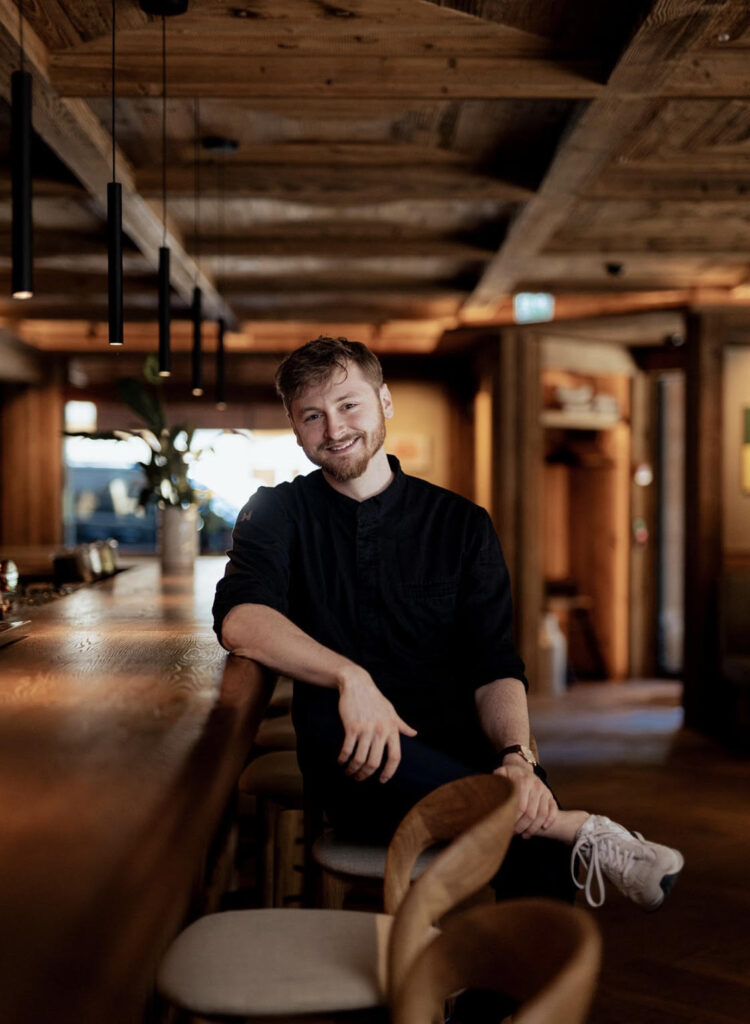
The opportunity to join The Mansard in Gstaad arrived at a moment when Walter was considering a future beyond the conventional progression of a professional chef. Initially, the offer to become Head Chef seemed difficult to reconcile with his growing interest in business administration and organisational development. He had already begun imagining a career that would involve shaping entire hospitality businesses rather than concentrating exclusively on the kitchen. Further discussions, however, revealed that the position could offer precisely the practical environment he needed to bring these ambitions together. Leading a kitchen would allow him to apply his academic knowledge to real operational challenges, combining culinary creativity with financial responsibility, team development and the design of more effective organisational structures.
When Walter assumed the role in July 2025, he took responsibility for the culinary direction of The Mansard at just twenty-five years old. The appointment attracted attention within the Swiss hospitality industry, not least because of his age and the demanding professional environments in which he had previously worked. Yet the significance of the position extended beyond his personal achievements. For the first time, Walter was responsible for an entire kitchen operation, including planning, staff development, cost management, quality standards and the coordination of daily service. The transition from an accomplished member of a prestigious brigade to the person responsible for its overall performance required a different set of skills, demanding the ability to make decisions, establish priorities and create an environment in which others could succeed.
At The Mansard, Walter has developed a culinary direction rooted in contemporary Swiss cuisine, seasonal ingredients and a willingness to reinterpret familiar traditions. The surrounding region offers an exceptional source of inspiration, with Alpine agriculture, local dairies and regional producers contributing to a distinctive gastronomic identity. Rather than pursuing unnecessary complexity, his cooking emphasises clarity of flavour and the natural quality of ingredients, incorporating international influences where they enhance the character of a dish. The approach reflects the lessons of his earlier career while establishing an identity appropriate to the relaxed sophistication of Gstaad. It also recognises that contemporary luxury dining must respond to changing expectations, offering exceptional quality without requiring excessive formality.
His menu has attracted attention for dishes that combine recognisable ingredients with playful contemporary interpretations. Among them, Rind im Schnee, a boldly seasoned beef tartare accompanied by sour cream and cheese espuma, demonstrates his interest in contrasting textures and flavours. Another creation, Ei im Nest, combines confit egg yolk with potato preparations and mountain cheese, transforming familiar Alpine ingredients into a refined contemporary composition. These dishes reflect a culinary personality that values accessibility and pleasure alongside technical precision, allowing guests to appreciate the ingredients without requiring an elaborate explanation of the techniques behind them. The restaurant’s recognition with 13 GaultMillau points in the 2027 guide marks an encouraging development for the young chef and his team.
Gstaad provides a particularly interesting environment in which to develop this philosophy. The village is internationally associated with discretion, refined hospitality and a clientele accustomed to exceptional experiences, yet its identity remains closely connected to the agricultural traditions and mountain culture of the Saanenland. This contrast creates an opportunity for chefs to develop cuisine that is sophisticated without losing its regional character. At The Mansard, Walter’s work extends across the restaurant and the hotel’s rooftop offering, requiring an understanding of different dining occasions and guest expectations. The ability to maintain a coherent culinary identity while responding to these varied environments reflects the organisational challenges that increasingly interest him.
The most distinctive aspect of Walter’s current ambitions, however, lies in his approach to leadership. He has become particularly interested in what he describes as systems engineering for hospitality, an approach that examines the relationships between people, processes, information and business objectives. Rather than treating a restaurant as a collection of separate departments or individual responsibilities, he considers how the entire organisation can be designed to operate effectively as a connected system. The objective is to create clear structures that support daily performance while allowing employees to work with greater independence. Such an approach challenges the traditional image of the chef as an indispensable authority whose constant presence is required to maintain standards.
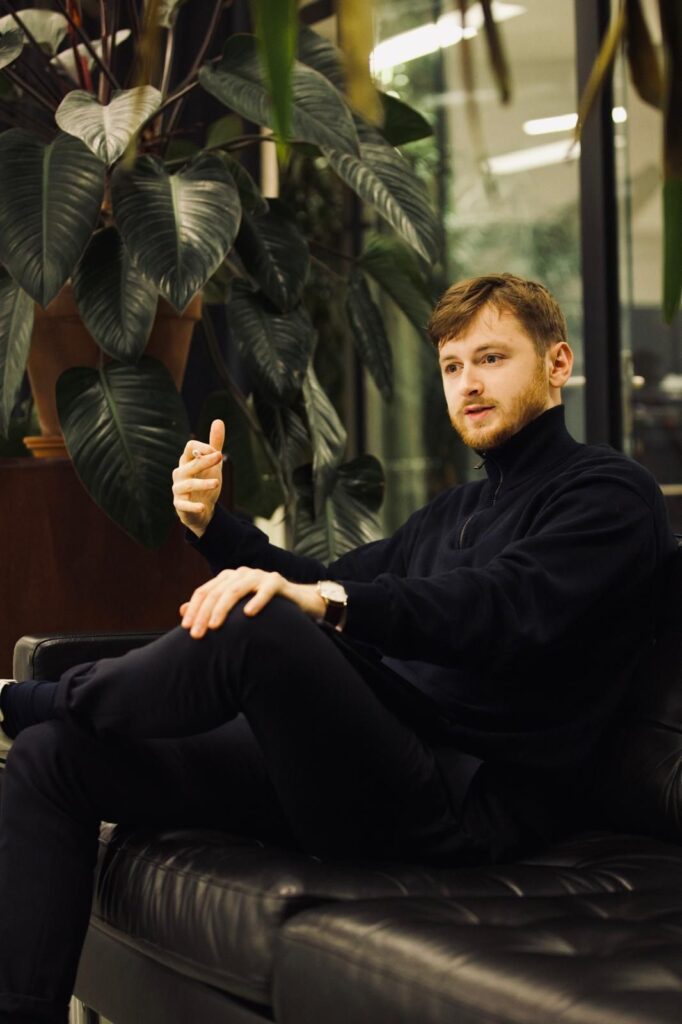
This philosophy also became the foundation of his business administration diploma thesis, which explored the development of a kitchen organisation capable of operating reliably throughout the week without depending on particular individuals being constantly present. The subject addresses a familiar problem within professional gastronomy, where exceptional performance is often achieved through intense personal commitment and long working hours rather than sustainable organisational structures. Walter’s proposed approach places emphasis on clearly defined responsibilities, effective communication, accessible information and the development of employees who understand not only what they must do, but why their work matters. The intention is to create an environment in which quality and economic performance can be maintained through collective competence rather than the continuous intervention of a single leader.
In a September 2026 interview with GastroJournal, Walter expressed a provocative view of the industry’s difficulties, suggesting that the shortage of skilled professionals is closely connected to shortcomings in leadership. His argument reflects a growing debate within hospitality about working conditions, management culture and the ability of businesses to offer meaningful professional development. For Walter, technical excellence alone does not automatically prepare someone to lead a team, and the rapid promotion of talented chefs can leave important managerial skills underdeveloped. He believes that effective leadership requires self-awareness, clear values and the ability to establish structures that help people perform confidently. The perspective is particularly significant coming from someone who has experienced the demanding culture of elite gastronomy and is now responsible for developing his own team.
Trust occupies a central place in this understanding of leadership. Throughout his career, Walter has benefited from people who recognised his potential and offered opportunities for growth, from the early mentors who introduced him to professional cooking to the experienced chefs and hospitality leaders who entrusted him with greater responsibilities. These experiences have shaped his belief that meaningful leadership involves recognising the strengths of others and helping them develop the confidence to make decisions independently. He sees communication not simply as a managerial obligation, but as the foundation of a healthy organisational culture. By creating clarity around expectations and responsibilities, leaders can encourage employees to take ownership of their work while reducing the uncertainty and unnecessary pressure that often characterise demanding hospitality environments.
There is a compelling contrast between Walter’s age and the complexity of the questions he is beginning to address. At twenty-six, he belongs to a generation of hospitality professionals entering leadership positions at a time when the industry is confronting fundamental changes in working culture, economic sustainability and the expectations of both employees and guests. The traditional model of the celebrated chef, defined primarily by personal sacrifice and the pursuit of gastronomic recognition, is increasingly being questioned. Walter’s experience suggests a different possibility, one in which culinary excellence remains essential but is supported by intelligent organisational design, responsible leadership and a broader understanding of business performance.
His ambitions now extend towards entrepreneurship, bringing together the different strands of his professional journey. The technical discipline acquired in Michelin-starred kitchens, the international perspective developed in Hong Kong, the practical experience of leading a hotel kitchen and the strategic knowledge gained through business studies have created a foundation for future ventures. Walter is particularly interested in helping hospitality businesses identify operational weaknesses and translate complex information into practical improvements. His focus includes organisational development, systems design and the creation of business structures that allow teams to perform effectively over time. Rather than abandoning gastronomy, he is seeking to apply the lessons of the kitchen to a wider understanding of how hospitality businesses can be created, managed and improved.
This direction reveals an important distinction between professional achievement and personal ambition. Walter has already demonstrated that he can succeed within the demanding structures of fine dining, but his interests increasingly concern the creation of better structures themselves. The transition requires a willingness to move beyond familiar definitions of success, particularly in an industry where professional recognition is often associated with awards, prestigious establishments and the reputation of individual chefs. His curiosity about business, people and organisational performance suggests that his future contribution may ultimately extend far beyond the dishes he creates.
For Maison Blanche, Tom Walter represents an intriguing new generation of Swiss hospitality talent, one whose ambitions reflect the changing nature of luxury itself. Exceptional cuisine remains an essential part of the guest experience, but the future of hospitality will also depend upon the quality of leadership, the development of talented teams and the ability of businesses to operate with intelligence and consistency. Walter’s journey from a fifteen-year-old fascinated by the energy of an open kitchen to a young Head Chef exploring entrepreneurship and organisational design illustrates how a passion for gastronomy can evolve into a much broader professional vision.
His story is still unfolding, and perhaps that is what makes it particularly compelling. At an age when many chefs are only beginning to establish their individual culinary identities, Walter is already examining the systems, relationships and decisions that determine whether a hospitality business can succeed over the long term. The kitchen remains central to his experience, providing the discipline, resilience and practical understanding upon which his ambitions are built. Yet his attention is increasingly directed towards the people and organisations behind the experience, and towards the possibility of creating environments where excellence becomes sustainable rather than exceptional. In the elegant Alpine setting of Gstaad, Tom Walter is developing a vision that reaches far beyond the restaurant kitchen, offering a thoughtful perspective on what the next generation of hospitality leadership might become.