
In the rarefied world of haute horlogerie, few names carry the gravitas of François‑Paul Journe. Born in Marseille in 1957, he learned the art of watchmaking while restoring 18th‑century timepieces in his uncle’s atelier. From these historical lessons he formulated a vision of originality and independence. After building his first tourbillon pocket watch at age 20 and opening a workshop in Paris, Journe spent the next decade developing movements for other brands before finally signing a collection under his own name in 1999. Every dial thereafter has borne the Latin motto Invenit et Fecit – “he invented it and made it” – a pledge that he conceives and fabricates his timepieces himself.
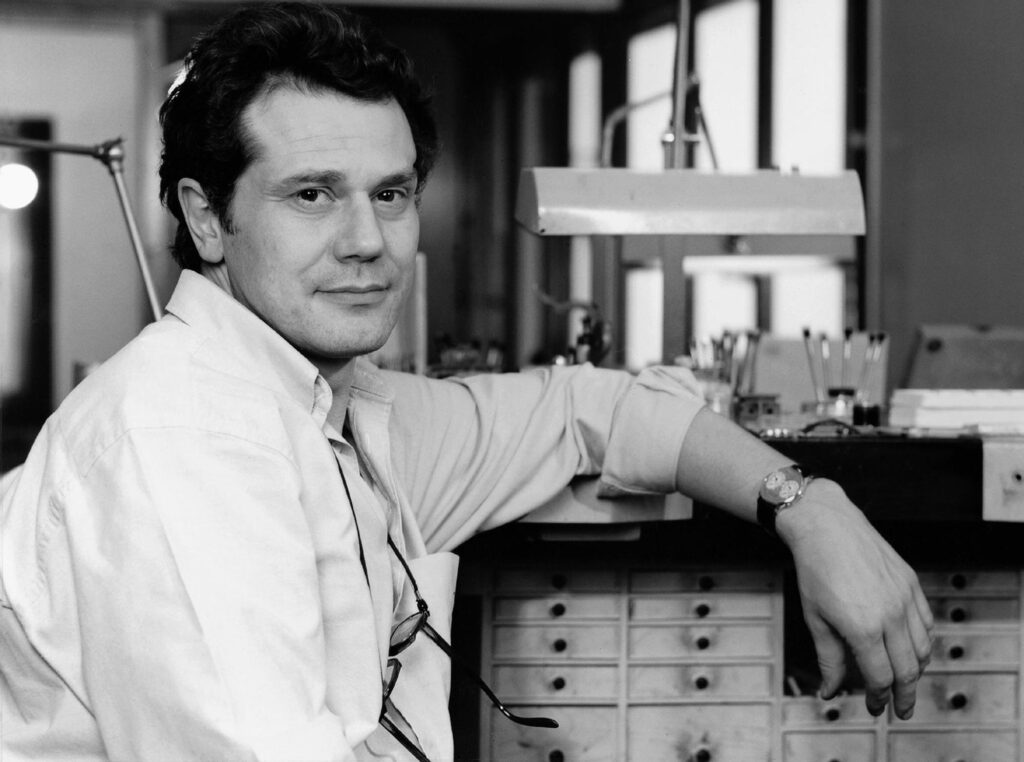
A vertical micro‑manufactory
The brand F.P. Journe is today headquartered in Geneva and remains one of the few watchmakers to be fully vertically integrated. Its workshops design, machine and finish movements in 18‑carat rose gold, craft dial plates and cases in‑house, and assemble each watch by hand. Production is deliberately limited to around 1,000 pieces per year so that artisanship can prevail over scale. Journe insists on controlling every step: cases are polished on site and the tiniest components finished by master finishers. It is this singular focus that gives his watches their distinctive aesthetic and resonance, from the grainy frosting of the dials to the slender blued hands.
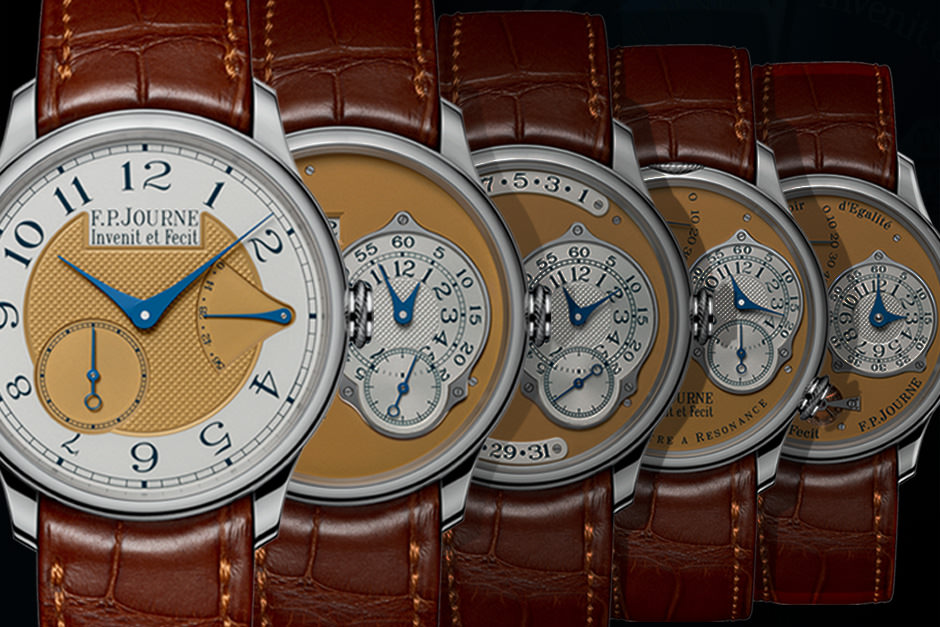
A vocabulary of mechanical poetry
Journe’s catalogue reads like a compendium of modern horological breakthroughs. The Tourbillon Souverain married a one‑minute tourbillon with a constant‑force remontoire, improving chronometric stability; the Chronomètre à Résonance harnesses twin oscillating balance wheels that “breathe” in sync, cancelling out errors; and the Octa caliber introduced an automatic movement with a 160‑hour power reserve, long before extended reserves became fashionable. More recently, the Sonnerie Souveraine and Répétition Souveraine have elevated chiming complications to miniature works of art; and the playful FFC (Francis Ford Coppola) Digital Hours watch interprets time via a moving hand that counts hours with its fingers. Behind each invention lies a quest for mechanical purity and poetic expression.
Journe’s approach is not about chasing trends or making “statement” watches; instead he explores how to coax greater precision, reserve or emotion out of classical architecture. The company’s vertically integrated structure enables such experimentation. And while the brand has won seven distinctions at the Grand Prix d’Horlogerie de Genève, including three top Aiguille d’Or awards, Journe remains uninterested in mass marketing. In 2018, a minority stake was sold to Chanel, but he retained creative control.
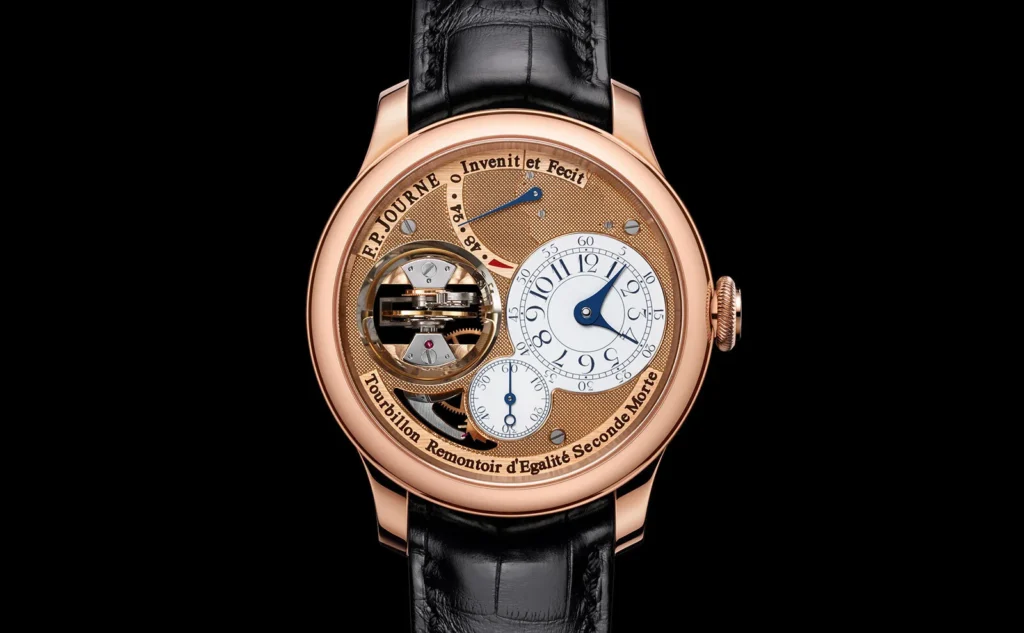
Intimacy and independence
What makes F.P. Journe stand apart is not simply technical wizardry but the intimacy of its creations. Each watch feels like the product of a single mind – lean, elegant and idiosyncratic. Journe favors warm metals, uncoated rose‑gold movements visible through sapphire backs, and fluid typography that references French Art Deco. At his boutiques in Geneva, Paris, Tokyo and New York, collectors meet the watchmakers and see how plates are engraved and bridges polished. The brand also maintains an elogative electromechanical line, élégante, whose quartz movement sleeps when unworn to preserve a 10‑year battery life.
François‑Paul Journe built his maison on conviction: that time should be measured by the honesty of craft, not by marketing spin or celebrity endorsements. After 40 years at the workbench, he continues to draw blueprints and file components himself. In an era when many brands outsource or industrialise, F.P. Journe stands as a beacon of old‑world independence, a workshop where invention and manufacture remain inseparable.