
Between Myth and Masterpiece: The Woman Who Paints with Photography
In the extraordinary visual universe of Anastasiia Maiskaya, time becomes wonderfully irrelevant. Renaissance elegance encounters contemporary photography, ancient mythology finds new protagonists, and the human figure emerges from darkness with the mysterious beauty of a centuries-old painting. Her photographs possess a quality that is increasingly rare in an age of instant images: they invite the viewer to remain, to question, and to discover something beyond the immediately visible. Drawing upon her academic background in art history and costume design, Maiskaya has developed a distinctive artistic language in which photography becomes a medium for exploring memory, identity, mythology and the enduring fascination of the human form. Her work exists somewhere between the classical museum and the contemporary imagination, revealing an artist whose fascination with the past is inseparable from her desire to reinterpret it.
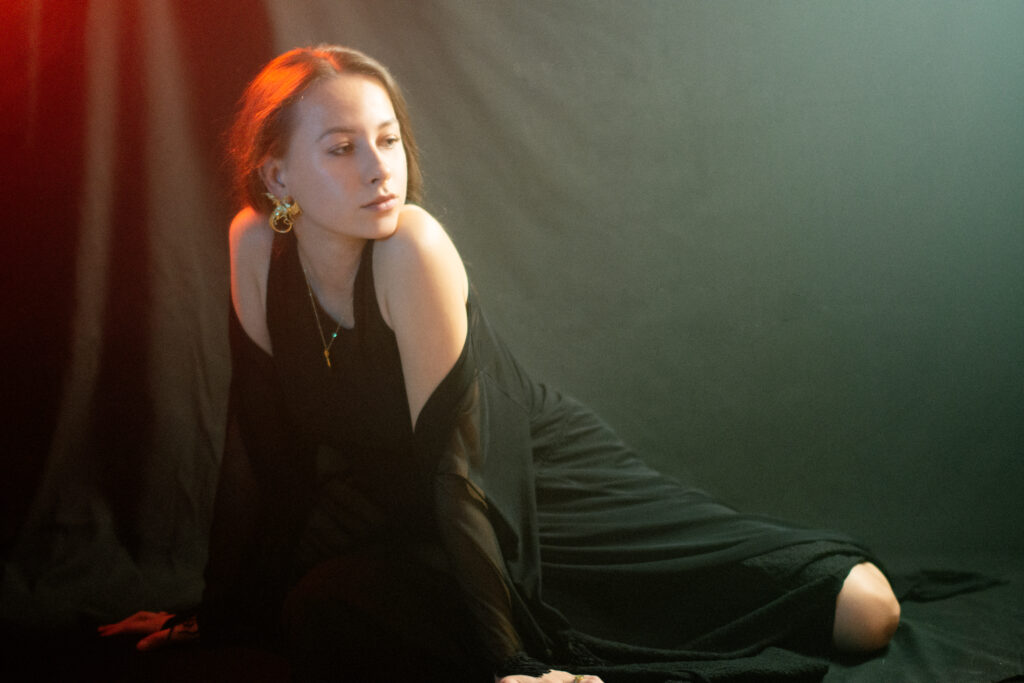
The first encounter with Maiskaya’s photography can be unexpectedly disorienting. Her compositions frequently possess the depth, theatricality and carefully orchestrated lighting associated with European Old Master paintings, yet their subjects belong unmistakably to the contemporary world. Figures emerge from dark backgrounds, draped fabrics introduce movement and sculptural elegance, and carefully controlled gestures suggest narratives that extend beyond the boundaries of the image. The effect is both familiar and mysterious. One recognises the visual vocabulary of classical painting, but the story itself remains open to interpretation. This tension between recognition and uncertainty has become central to Maiskaya’s artistic identity, allowing her photographs to operate as independent works rather than straightforward representations of their subjects.
Her relationship with art began long before photography became her principal medium. From childhood, Maiskaya explored different artistic disciplines, developing a fascination with the history of painting, sculpture, architecture and the cultural traditions that shaped them. She subsequently pursued university studies in art history and costume design, acquiring an academic foundation that would profoundly influence her visual imagination. This background is particularly important when considering her work, because her photographs are constructed with an awareness of the artistic principles that governed European painting for centuries. Composition, proportion, gesture, symbolism and the relationship between light and shadow become essential elements of her creative process. The camera provides the means of producing the image, but the intellectual foundations belong to a much older artistic tradition.


The Renaissance occupies a particularly significant place within this visual philosophy. During the fifteenth and sixteenth centuries, European artists transformed the representation of the human figure through a renewed engagement with classical antiquity, the study of anatomy and increasingly sophisticated approaches to perspective and light. Painting became a means of exploring not only physical beauty but also human emotion, spiritual belief and philosophical questions about existence. Maiskaya’s photography draws upon this heritage, particularly the understanding that the human body can function as a vehicle for storytelling and symbolic expression. Her subjects are frequently presented with a sculptural stillness, their gestures and costumes contributing to compositions that suggest allegory rather than conventional portraiture.
Yet her work is not an attempt to reproduce historical paintings through contemporary technology. Its interest lies in the transformation of inherited visual traditions into new narratives. Maiskaya has described her fascination with combining classical art and modernity, using photography as a canvas through which familiar stories can acquire different meanings. Her influences extend beyond the Renaissance to ancient mythology, folklore, legends and the artistic traditions of different cultures. These references provide a vocabulary through which she can explore themes that remain relevant across generations, including beauty, vulnerability, identity and the complex relationship between humanity and the natural world. The result is an artistic practice that acknowledges the authority of history while insisting upon the creative freedom of contemporary interpretation.

Travel has played an important role in expanding this perspective. Since 2016, Maiskaya has explored different countries and cultures, drawing inspiration from their histories, artistic traditions and mythological narratives. Her travels have included periods living in California and the Caribbean region of Mexico, while her biography also describes a life divided between Bali and Saint Petersburg. These experiences have contributed to a visual imagination that moves beyond a single national or artistic tradition. The encounter with different landscapes, belief systems and cultural histories has encouraged her to approach familiar themes from alternative perspectives, adding layers of symbolism and narrative complexity to her compositions.
The influence of mythology is particularly visible in her fascination with figures who seem to inhabit a world suspended between reality and imagination. Ancient legends have long provided artists with a means of exploring human desires, fears and aspirations, allowing universal emotions to be expressed through symbolic characters and extraordinary events. Maiskaya approaches these traditions with a contemporary sensibility, using photography to construct images that resemble fragments of larger, unwritten stories. Her subjects may suggest goddesses, heroines, warriors or figures drawn from an imagined historical past, yet their identities are rarely confined to a single interpretation. This openness allows viewers to bring their own memories and cultural associations to the work, transforming the encounter with an image into a personal experience.

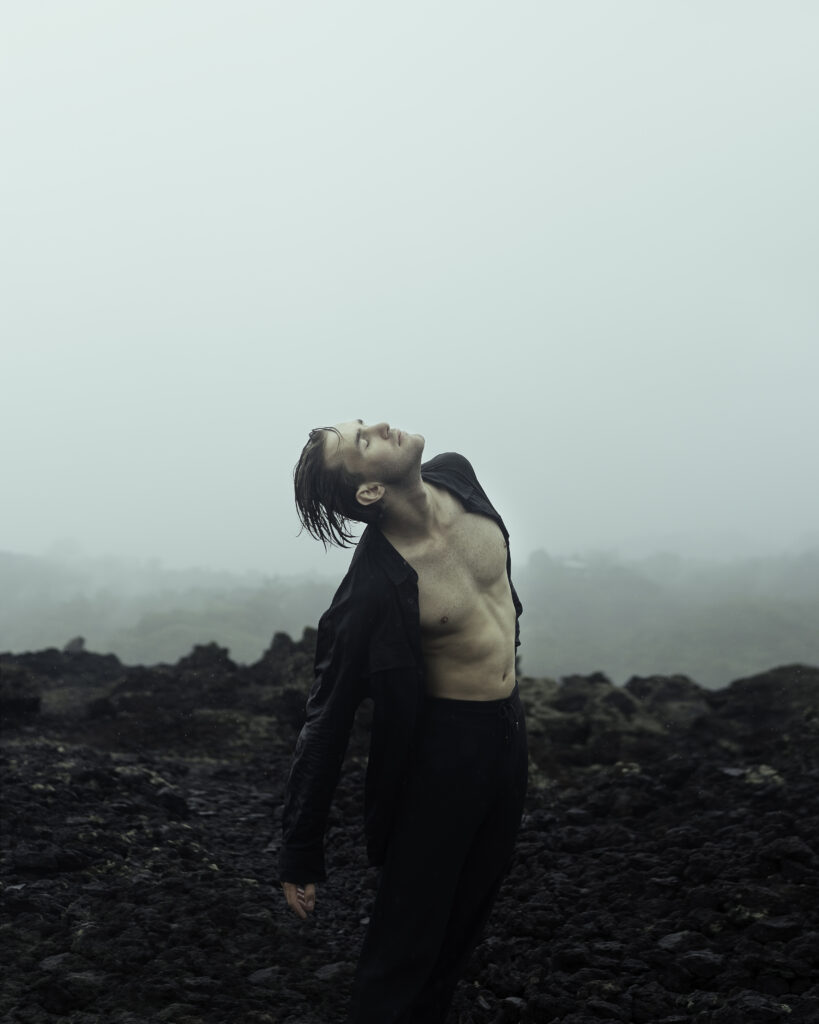
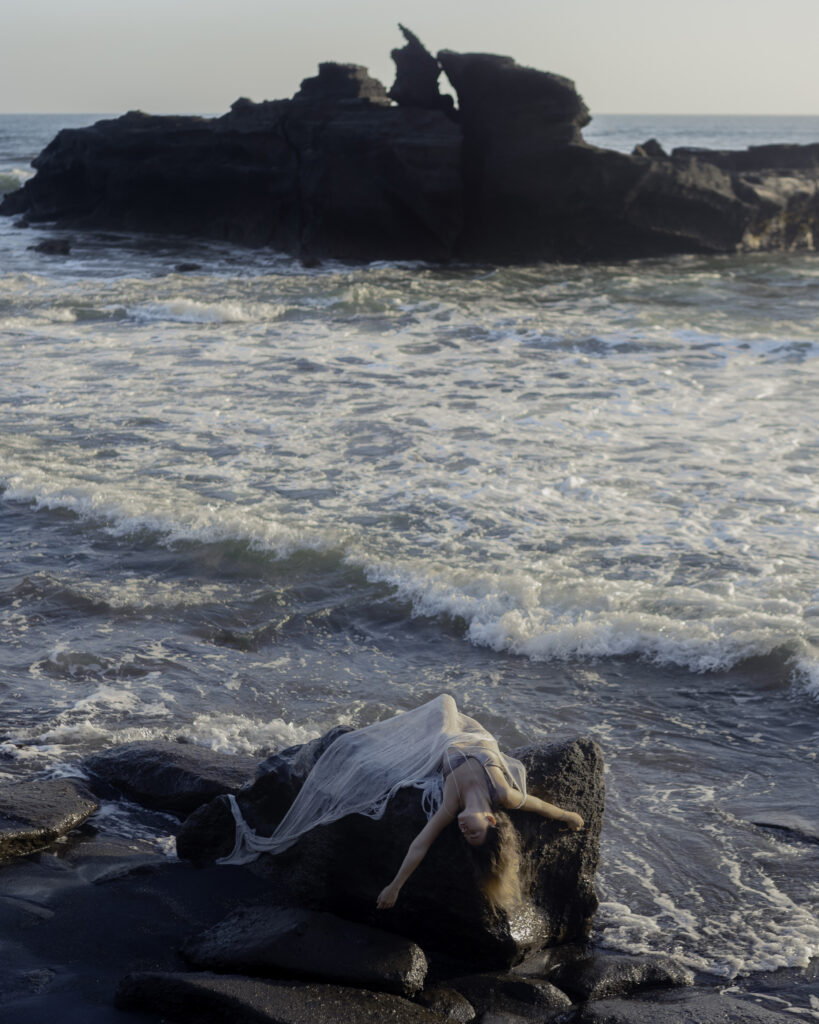
Her use of the human figure deserves particular attention. Throughout the history of Western art, the body has served as a central subject through which artists have explored ideals of beauty, spirituality, mortality and identity. In Maiskaya’s photographs, the figure frequently becomes both the protagonist and the symbolic centre of the composition. The body is approached with a sculptural sensitivity, its relationship with fabric, light and surrounding space creating a visual language that recalls classical statuary as much as painting. There is often an intriguing ambiguity in these representations, with the subjects appearing simultaneously powerful and vulnerable, distant and emotionally present. Rather than presenting beauty as a purely decorative quality, the images invite reflection upon the meanings that different cultures and historical periods have attached to the human form.
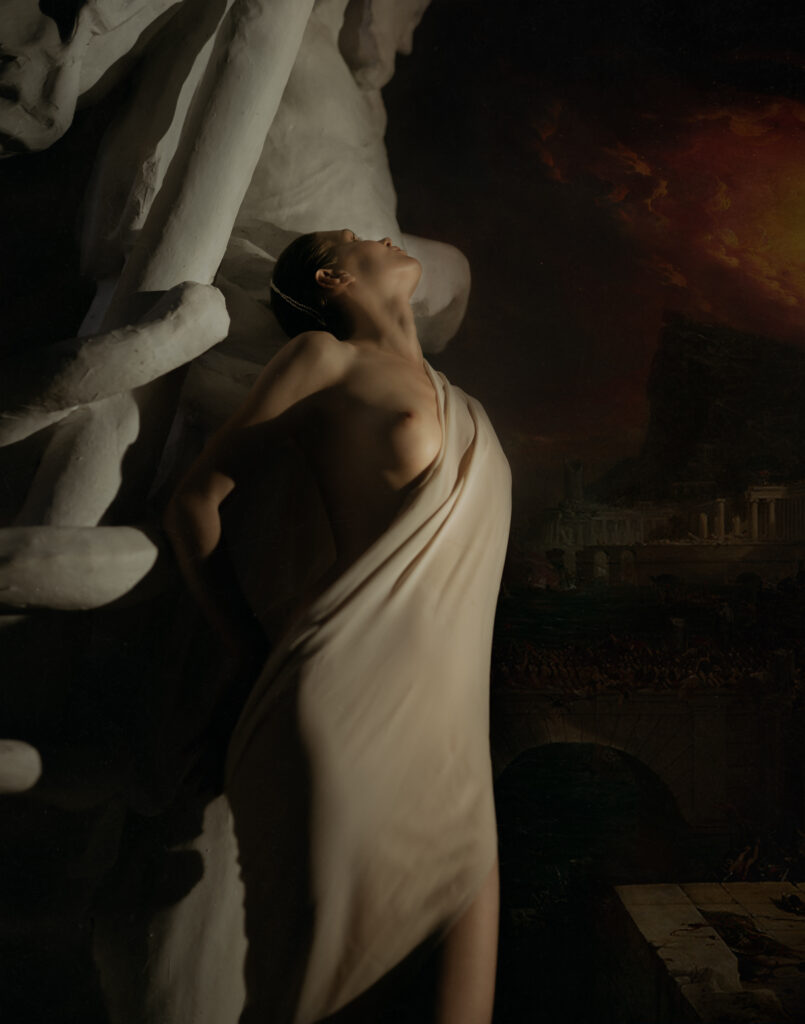
Costume is another essential component of this artistic world. Maiskaya’s academic training gives her a particular understanding of how clothing can communicate historical identity, social meaning and psychological character. Drapery, rich textiles and carefully considered silhouettes frequently become structural elements within her compositions, shaping the movement of the image and contributing to its narrative atmosphere. A length of fabric may suggest the elegance of a Renaissance portrait, the ceremonial character of an ancient civilisation or the theatrical drama of a mythological scene. Through these choices, clothing becomes part of the storytelling rather than an accessory added for visual effect. The relationship between the body and its costume creates an important bridge between historical reference and contemporary artistic expression.
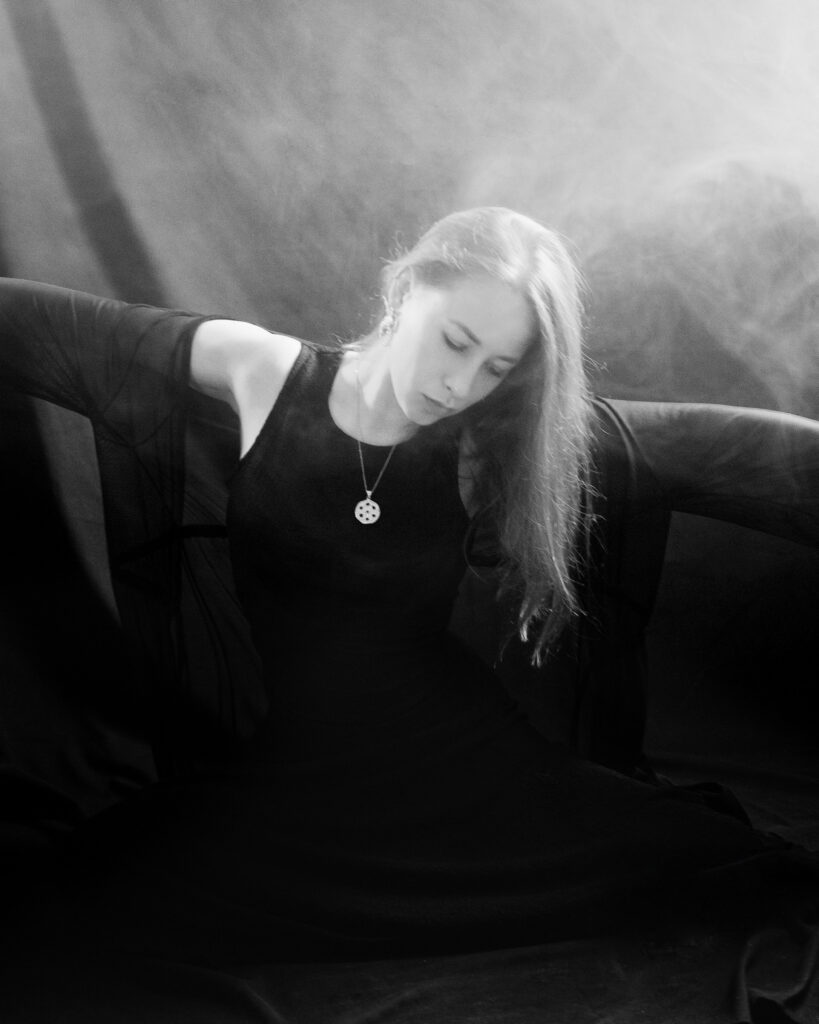
Equally distinctive is her treatment of light. The dramatic contrasts that appear throughout her portfolio evoke the tradition of chiaroscuro, the artistic technique through which light and darkness are used to create depth, atmosphere and emotional intensity. Developed and refined by generations of European painters, this approach became particularly powerful in the work of artists such as Caravaggio, whose figures emerge from darkness with extraordinary physical and psychological presence. Maiskaya’s photographic compositions often employ a related visual sensibility, allowing illumination to direct attention towards the face, hands or carefully arranged folds of fabric while other elements remain concealed. The resulting atmosphere encourages the viewer to engage with the image gradually, discovering its details through the movement between shadow and light.
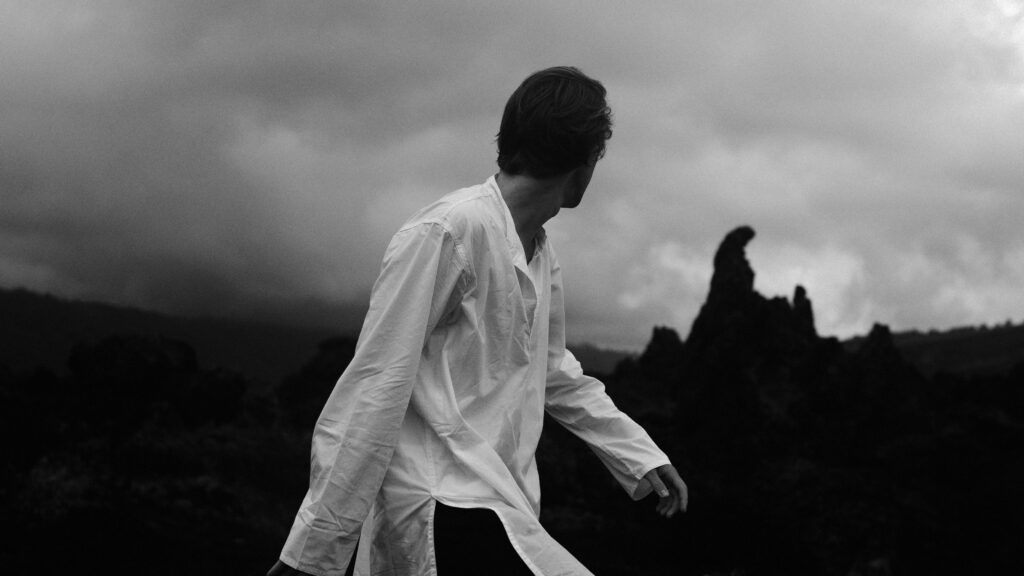
This painterly quality also reveals the importance of deliberate construction within her artistic process. Her photographs are conceived as compositions in which the relationship between the subject, costume, environment and lighting contributes to a unified visual idea. The distinction matters because it places her work within the broader tradition of staged fine-art photography, where the camera is used to create an imagined reality rather than merely record an existing one. The final image becomes the result of artistic interpretation, informed by historical research, visual references and a carefully developed aesthetic sensibility. For Maiskaya, photography offers the possibility of combining the apparent immediacy of the photographic image with the narrative freedom traditionally associated with painting.
Her work has gradually reached audiences through exhibitions and artistic events across Europe, Asia and the United States. In 2022, her exhibition history included Art Crush in Ghent, Belgium, and M1565 Miami Art Week, associated with The Royal House of Medici. The following year brought participation in several international projects, including Visual ART Impact in Bologna, MUSE HIVE and Bali Art Week in Indonesia, and ImageNation Paris Photo OFF at Joseph Le Palais Galerie in Paris. Her participation in the Paris exhibition is particularly noteworthy because the event brought together photographers exploring the representation of the body, providing an international context for the themes of identity and physical expression that appear throughout her work.

The international exhibition programme continued in 2024 with events in Bali and the NFC Summit in Lisbon, while her listed 2025 appearances included Primavera Digitale in Florence and ROAR in Bologna. These projects reflect her engagement with both traditional exhibition environments and newer artistic communities, particularly those exploring the relationship between photography and digital culture. She has also been involved in curatorial activities, including Visual ART Impact in Bologna and Bali Art Week, suggesting an interest in the wider presentation and exchange of contemporary artistic ideas. Her biography lists works held in private collections and appearances in publications including ARTEGO, Marvelous Art Magazine, OSSMA and Marika Magazine.
Maiskaya’s practice also extends into the world of digital art and NFTs, an area that has introduced new possibilities for artists working with photographic and digitally constructed imagery. Her presence on platforms such as SuperRare, Foundation and OpenSea reflects an interest in the ways contemporary technology can transform the distribution, ownership and presentation of art. The relationship between her classical visual influences and these new digital environments is particularly intriguing. While her photographs frequently evoke artistic traditions developed centuries ago, the technologies through which they can be exhibited and collected belong to an entirely different cultural moment. This combination reflects a broader transformation within contemporary art, where historical aesthetics and emerging digital formats increasingly occupy the same creative space.
Her involvement in virtual exhibition environments further expands this relationship between physical and digital artistic experiences. Through online galleries and immersive platforms, artworks can be presented to audiences beyond the geographical limitations of conventional exhibition spaces. For an artist whose work draws upon histories and legends from different cultures, these possibilities offer another way of connecting with international viewers. Yet the significance of the technology ultimately depends upon the strength of the artistic vision behind it. In Maiskaya’s case, the historical references, narrative construction and painterly qualities of the images remain central, regardless of whether they are encountered as photographic prints, digital editions or within a virtual gallery.

Alongside her fine-art practice, Maiskaya continues to work within portraiture, fashion and commissioned photography. Her portfolio includes studies of women and men, romantic narratives and editorial imagery, demonstrating an ability to apply her visual sensibility across different contexts. This relationship between fine art and fashion is particularly natural given her background in costume design and her interest in the symbolic possibilities of clothing. Both disciplines depend upon an understanding of character, presentation and visual identity, allowing photography to become a meeting point between artistic imagination and contemporary style.
Perhaps the most compelling quality of Maiskaya’s work is her refusal to separate visual beauty from intellectual meaning. Her artistic philosophy is informed by the belief that history, mythology and classical culture remain essential to understanding contemporary creative expression. The images may initially attract attention through their dramatic compositions, striking subjects or extraordinary painterly atmosphere, but their lasting interest lies in the questions they introduce. They encourage viewers to consider how beauty has been represented across different historical periods, how familiar myths continue to influence contemporary imagination and why the human figure remains such a powerful subject within art.
This relationship between beauty and meaning is especially relevant at a time when photography has become one of the most widely produced and consumed forms of visual communication. Digital platforms have transformed the speed with which images are created, distributed and forgotten, encouraging an almost continuous flow of visual material. Within this environment, Maiskaya’s carefully constructed compositions offer a different experience. Their historical references, symbolic details and dramatic use of light encourage a slower form of engagement, recalling the pleasure of standing before a painting and allowing its narrative to reveal itself gradually. The images ask to be considered as complete artistic statements, rather than as fleeting moments within an endless sequence of photographs.
There is also a fascinating dialogue between femininity, strength and representation within her visual universe. Many of her compositions explore the presence of women through imagery that draws upon the traditions of portraiture, mythology and classical allegory. Their subjects often possess a quiet authority, expressed through posture, gesture and the deliberate relationship between the figure and the surrounding environment. The result can evoke the visual language of queens, goddesses or legendary heroines, while remaining open to contemporary interpretations of identity and self-expression. This ambiguity is important because it allows the photographs to move beyond conventional representations of femininity, inviting viewers to consider the different meanings that power, beauty and vulnerability can assume.
Ultimately, Anastasiia Maiskaya belongs to a contemporary artistic conversation concerned with the relationship between inherited cultural traditions and new forms of expression. Her academic training provides a foundation in the history of art, while her travels and engagement with digital culture introduce perspectives that extend beyond the conventional boundaries of photography. The resulting work is distinctive in its ambition to create images that operate simultaneously as visual compositions, historical references and imagined narratives. It is an approach that requires both technical control and an understanding of the emotional possibilities of storytelling.
For Maison Blanche, Maiskaya represents an intriguing artistic sensibility, one that celebrates the enduring relevance of classical beauty while exploring the freedom of contemporary photographic creation. Her work invites audiences to rediscover the visual richness of Renaissance painting, the symbolic power of ancient mythology and the extraordinary expressive possibilities of the human form. Through carefully composed light, sculptural figures and narratives that move between reality and imagination, she has developed a photographic world that feels both historically familiar and entirely personal. In an era defined by the constant production of images, Anastasiia Maiskaya reminds us that photography can still possess the depth, mystery and emotional resonance of a painting, offering not merely something beautiful to observe, but an invitation to imagine the stories that exist beyond what the eye can see.