
The Art of Living Above Tokyo
Tokyo is a city that reveals itself gradually. Beneath its extraordinary skyline lies a world of contradictions, where centuries-old traditions coexist with some of the most ambitious expressions of modern life, and where the pursuit of perfection can be found as easily in a modest neighbourhood restaurant as in the most sophisticated architectural landmark. There is an unmistakable energy to the Japanese capital, a rhythm shaped by millions of individual lives moving with remarkable precision through one of the world’s largest metropolitan landscapes. Yet what makes Tokyo truly fascinating is not its scale, but its ability to create moments of extraordinary intimacy within it. Behind the glass towers and illuminated avenues are quiet gardens, carefully arranged flowers, beautifully considered interiors and an understanding of hospitality that remains deeply rooted in Japanese culture. It is within this fascinating intersection of tradition and modernity that ANA InterContinental Tokyo has established its identity, offering an international expression of luxury shaped by the unmistakable spirit of Japan.
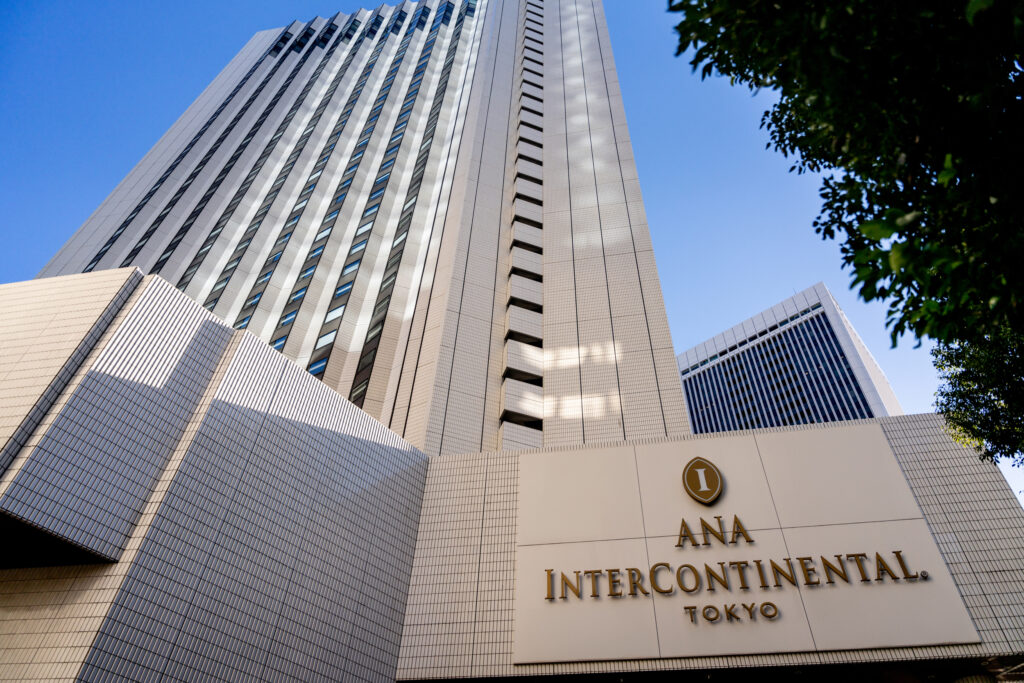
Located in Akasaka, within the sophisticated urban development of Ark Hills, the hotel occupies a particularly compelling position in the capital. This is a Tokyo of embassies, international business, cultural institutions and elegant residential neighbourhoods, where the intensity of the city is balanced by a more composed atmosphere. Roppongi, Toranomon and the historic surroundings of the Imperial Palace are within reach, yet Akasaka retains a personality of its own, combining contemporary architecture with smaller streets where traditional restaurants and discreet establishments continue to thrive. ANA InterContinental Tokyo belongs naturally to this environment. Rather than attempting to transport guests into an imaginary version of Japan, it offers a perspective on the country as it exists today: confident, cosmopolitan and constantly evolving, while remaining deeply attentive to the details that define its cultural identity.
The hotel’s history is closely connected to Tokyo’s emergence as one of the world’s great international capitals. Opening in 1986 as the ANA Hotel Tokyo, it became part of a generation of prestigious properties created to accommodate the growing movement of international executives, diplomats and travellers arriving in Japan during a period of extraordinary economic ambition. Over the decades, the property evolved into ANA InterContinental Tokyo, combining the global hospitality traditions of InterContinental with the Japanese understanding of service, discretion and precision. This dual identity remains central to its appeal. It is an international grand hotel in the fullest sense, yet its most memorable qualities often emerge from gestures and details that feel distinctly Japanese.

In a city celebrated for its architectural experimentation, the hotel’s character is defined less by visual extravagance than by the experience of arrival. Entering from the busy streets of Akasaka, guests encounter the reassuring scale of an established luxury property, where public spaces accommodate the constant movement of international visitors without losing their sense of order. There is something particularly comforting about this kind of hospitality in Tokyo. The city can be exhilarating, but it can also be overwhelming, especially for travellers encountering its vast geography for the first time. A hotel that provides an immediate sense of familiarity, calm and effortless organisation becomes more than a place to sleep. It becomes a point of orientation within the metropolis.
The hotel’s most significant recent chapter arrived in 2025, following an ambitious fifteen-month transformation that reimagined its guestrooms, suites, restaurants and social spaces. Under the concept Icon Reborn, the renovation introduced 801 revitalised rooms and a design language inspired by Japanese craftsmanship, particularly the art of origami. The reference is thoughtful rather than literal. Origami is fundamentally concerned with transformation: a flat surface acquires dimension through precision, patience and carefully considered folds. Applied to the interiors, the idea becomes a metaphor for discovering Tokyo itself, a city that unfolds through countless layers of culture, architecture and human experience. The redesigned accommodations combine contemporary international comfort with subtle Japanese influences, creating rooms that feel sophisticated without becoming unnecessarily decorative.

The guestrooms and suites are particularly compelling for the way they balance the hotel’s metropolitan identity with an atmosphere of privacy. Tokyo is a city of immense visual stimulation, and the ability to retreat into a beautifully proportioned room overlooking its skyline becomes a pleasure in itself. Soft textures, carefully selected materials and contemporary furnishings introduce warmth, while expansive windows bring the city into the experience without allowing its intensity to dominate. The hotel’s suites develop this philosophy further, with categories inspired by elements of Japanese culture and nature. Among them, the Mizu Suite takes its name from the Japanese word for water, offering approximately 52 square metres of contemporary comfort, natural light and a restrained aesthetic influenced by Japanese simplicity. It is a particularly appealing interpretation of urban luxury, where generous space, privacy and thoughtful design become more important than ornamental grandeur.
Perhaps the hotel’s most distinctive expression of contemporary hospitality is found in Club InterContinental, occupying the 35th and 36th floors. Following the renovation, the expanded two-level lounge offers a remarkable perspective over Tokyo, creating a world that feels almost suspended above the city. From this elevation, the capital begins to reveal its extraordinary geography: towers and residential neighbourhoods extending towards the horizon, major avenues tracing their paths between buildings and, depending on the weather and direction, distant landmarks emerging from the immense urban landscape. The lounge combines private seating, dining and social spaces, allowing guests to move naturally between work, relaxation and conversation throughout the day. Breakfast becomes a quieter alternative to the energy of the main restaurants, while afternoon refreshments and evening cocktails provide opportunities to appreciate the changing light over the city.

There is something especially captivating about Tokyo when viewed from above. At street level, the city can feel almost infinite, its neighbourhoods connected by an extraordinary network of railway lines, underground passages and busy avenues. From the upper floors of ANA InterContinental Tokyo, that apparent complexity becomes a remarkable composition. During the day, the skyline reveals the density and ambition of modern Japan; after sunset, countless illuminated windows transform the metropolis into an extraordinary landscape of light. The contrast between these two perspectives is one of the great pleasures of staying in a high-rise hotel in Tokyo. The city that feels so animated and energetic below becomes almost contemplative from a distance.
Dining has always occupied an important place within the identity of ANA InterContinental Tokyo, reflecting the extraordinary culinary diversity for which the Japanese capital is celebrated. With thirteen restaurants, bars and lounges, the hotel offers an unusually broad gastronomic experience, moving between Japanese traditions and international influences. This variety feels particularly appropriate in Tokyo, where dining is approached with exceptional seriousness regardless of whether the setting is a modest neighbourhood establishment or a celebrated restaurant. The Japanese understanding of culinary excellence places enormous value on seasonality, technique, presentation and respect for ingredients, principles that extend naturally into the culture of luxury hospitality.
Among the hotel’s most atmospheric dining destinations is UNKAI Japanese Restaurant, where traditional Japanese cuisine is presented in an environment inspired by the country’s aesthetic heritage. The restaurant offers a particularly meaningful introduction to washoku, the culinary philosophy in which seasonality, harmony and the natural character of ingredients are essential. Japanese dining is never simply about flavour; it is equally concerned with the relationship between food, ceramics, presentation and the changing seasons. A carefully composed meal becomes an expression of time and place, with colours, textures and ingredients selected to reflect a particular moment of the year. In a city as relentlessly contemporary as Tokyo, this connection to tradition provides a fascinating counterpoint to the world outside.

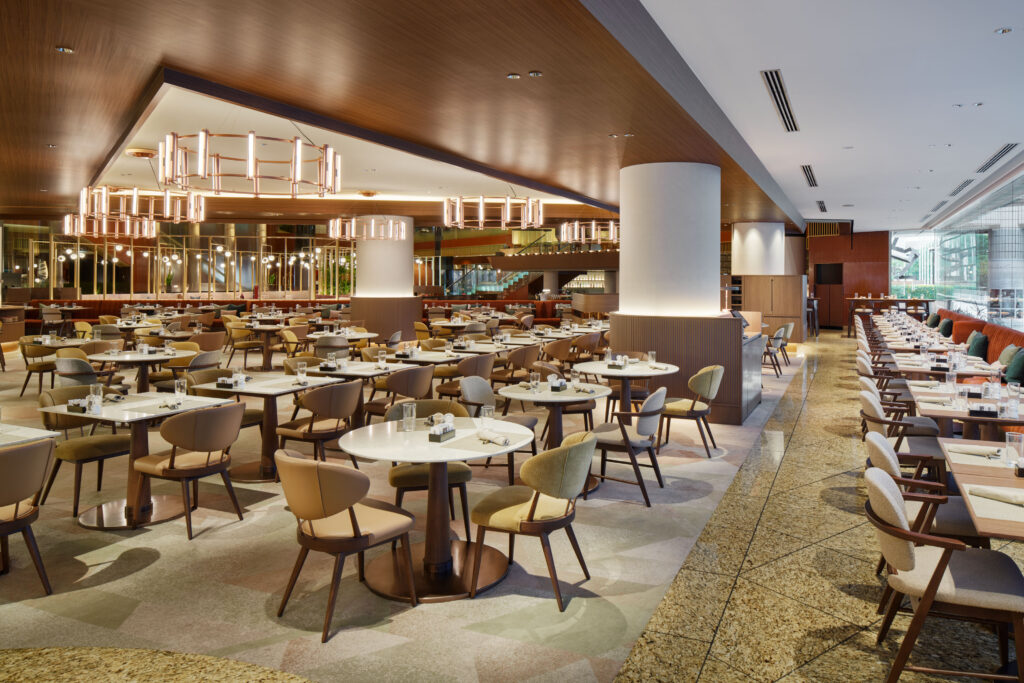
Elsewhere, the hotel’s culinary landscape embraces a more cosmopolitan personality. The renovated Cascade Cafe reflects the diversity of international dining, while the Atrium Lounge offers a social setting for afternoon tea, informal meetings and quieter moments throughout the day. The Genever Lobby Bar introduces another dimension to the hotel’s public spaces, and MIXX Bar & Lounge provides a more elevated, metropolitan atmosphere, particularly appealing as Tokyo begins to illuminate after sunset. These venues give the property the character of a genuine international meeting place rather than a hotel designed exclusively around overnight guests. The presence of local diners and visitors contributes to its energy, connecting the experience of staying at ANA InterContinental Tokyo with the social life of the city itself.
The hotel’s connection to Japanese hospitality becomes most apparent, however, through something considerably less visible than architecture or gastronomy. Japan has developed an exceptional culture of attentiveness, often associated with the concept of omotenashi, in which genuine hospitality is expressed through anticipating needs, respecting personal space and approaching even ordinary interactions with care. At its best, this philosophy creates an experience in which service feels remarkably effortless. Small details are handled with precision, requests are approached thoughtfully and guests are allowed to enjoy their surroundings without unnecessary interruption. In a large international property, maintaining this sense of individual attention requires considerable discipline, and it is precisely this combination of operational sophistication and personal courtesy that gives Japanese luxury hospitality its distinctive reputation.
Beyond the hotel, Akasaka provides an excellent introduction to Tokyo’s many personalities. The neighbourhood combines the sophistication of an international business district with the intimacy of traditional streets, where small restaurants and local establishments exist within walking distance of major contemporary developments. Nearby Roppongi offers some of the city’s most important cultural institutions, including the Mori Art Museum and the National Art Center, Tokyo, while the surrounding districts reveal the architectural ambition that has shaped the Japanese capital over recent decades. A short journey in another direction leads towards the Imperial Palace and the ceremonial heart of Tokyo, where gardens, moats and historic landscapes provide an extraordinary contrast to the modern skyline.
Yet one of Tokyo’s greatest pleasures lies in discovering the city without following an excessively rigid itinerary. A morning might begin among the elegant streets of Ginza, where historic department stores and contemporary fashion houses coexist with specialist boutiques and traditional restaurants. An afternoon could unfold in the gardens of a shrine, followed by a visit to a contemporary art gallery or an unexpected discovery in one of the city’s quieter residential neighbourhoods. Tokyo rewards curiosity because its most memorable experiences are not always the most celebrated. Sometimes they are found in a beautifully prepared bowl of noodles, a tiny shop devoted to a single craft or a peaceful street encountered only because one decided to walk a little farther.
ANA InterContinental Tokyo provides a particularly effective base for this kind of exploration. Its location offers access to different parts of the capital while allowing guests to return to a neighbourhood that feels composed rather than overwhelmingly tourist-oriented. This balance is valuable in a destination as expansive as Tokyo. The most successful city hotels do not attempt to replace the destination with a self-contained world; they provide the comfort, confidence and sense of belonging that encourage travellers to discover more of it. In this respect, the hotel functions as both a retreat and an extension of the city, offering an international standard of comfort while remaining connected to the Japanese culture that makes the destination so extraordinary.
The recent transformation also reflects a broader evolution in the meaning of luxury. Increasingly, sophisticated travellers are looking beyond the traditional symbols of prestige towards experiences that combine design, comfort, cultural identity and genuine personal attention. ANA InterContinental Tokyo’s renovation acknowledges this shift without abandoning the established character that has made the property an important address for decades. Its redesigned rooms introduce a more contemporary visual language, the expanded Club InterContinental creates an elevated sense of privacy, and the renewed dining spaces encourage greater interaction between international guests and the surrounding city. The result is an evolution rather than an attempt to become an entirely different hotel.

As evening arrives, the relationship between the property and Tokyo becomes especially beautiful. From the upper floors, the metropolis begins its gradual transformation into a vast illuminated landscape, while the activity of the streets below continues almost uninterrupted. Guests return from galleries, restaurants, shopping districts and temples, carrying with them different impressions of the same remarkable city. Some choose the intimacy of their rooms, others gather for cocktails or dinner, and those with access to Club InterContinental can watch the lights appear across the skyline from an extraordinary vantage point. It is a moment that captures the essential pleasure of staying here: being surrounded by the energy of Tokyo while enjoying the freedom to experience it at one’s own pace.
What ultimately distinguishes ANA InterContinental Tokyo is its ability to represent several different aspects of the Japanese capital simultaneously. It possesses the confidence and scale of an established international hotel, the contemporary design sensibility of a property entering a new chapter and the cultural attentiveness that remains central to Japanese hospitality. Its location connects guests to Tokyo’s commercial, diplomatic and artistic worlds, while its upper floors provide a perspective that makes the extraordinary size of the city feel almost intimate. Rather than presenting a romanticised version of Japan, the hotel reflects a country comfortable with both tradition and innovation, where the past continues to influence the future without preventing it from evolving.
For travellers seeking to understand Tokyo, this balance is particularly meaningful. Japan’s capital is not a destination that can be fully understood in a single visit, nor is it a place that reveals all its beauty through famous landmarks alone. Its character emerges gradually through the rituals of everyday life, the precision of its design, the extraordinary variety of its cuisine and the quiet consideration that shapes so many human interactions. ANA InterContinental Tokyo offers an elegant place from which to begin that discovery, while providing a reassuring sense of familiarity each time one returns.
The greatest luxury of a hotel in Tokyo may ultimately be this ability to make an immense and endlessly fascinating city feel personal. Beyond the renovated interiors, exceptional views and sophisticated dining, ANA InterContinental Tokyo offers something more enduring: a place within the metropolis where the excitement of discovery and the comfort of belonging can exist together. In a city that is constantly moving, changing and reinventing itself, that balance feels particularly valuable.
MAISON BLANCHE REFLECTION
Tokyo has an extraordinary talent for bringing together ideas that might appear contradictory elsewhere. Tradition and innovation, precision and spontaneity, immense scale and intimate detail coexist with remarkable ease. ANA InterContinental Tokyo reflects this same philosophy, combining the heritage of an established international address with a contemporary vision of hospitality shaped by Japanese aesthetics and cultural sensibility.
Its recent transformation has given the hotel a renewed identity without diminishing the qualities that have defined it for decades. From the thoughtful simplicity of its redesigned suites to the panoramic elegance of Club InterContinental and the diversity of its culinary experiences, the property offers a sophisticated interpretation of modern Tokyo. Yet its greatest appeal is found beyond any individual room or restaurant, in the sense that the hotel understands the city it belongs to and allows guests to discover it without sacrificing comfort or tranquillity.
For Maison Blanche, ANA InterContinental Tokyo represents a particularly compelling expression of Japanese urban luxury: international in outlook, contemporary in design and unmistakably connected to the culture of its surroundings. Above one of the world’s most extraordinary cities, it offers not simply a beautiful place to stay, but a different perspective on Tokyo itself.