
A designer’s dream in sleepy Melides
When French shoe designer Christian Louboutin wanted to share his vision of la vie en rouge with the world, he didn’t choose Paris or Milan. Instead he turned to the tiny Portuguese village of Melides, a sleepy hamlet amid the pine forests and lagoons of the Alentejo coast. Louboutin has holidayed in nearby Comporta since the 1980s. After injuring himself on a trip, he drove to the hospital in Santiago do Cacém, passed through Melides and fell in love with its whitewashed houses and stillness. Soon he bought a fisherman’s house, began entertaining friends there and eventually decided to build a hotel unlike any other.
La vie en rouge
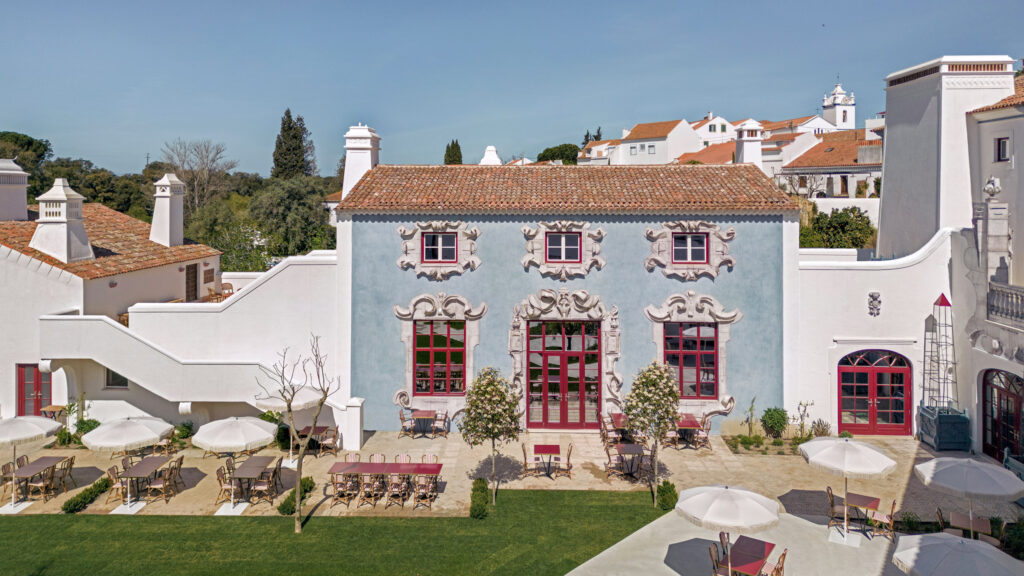
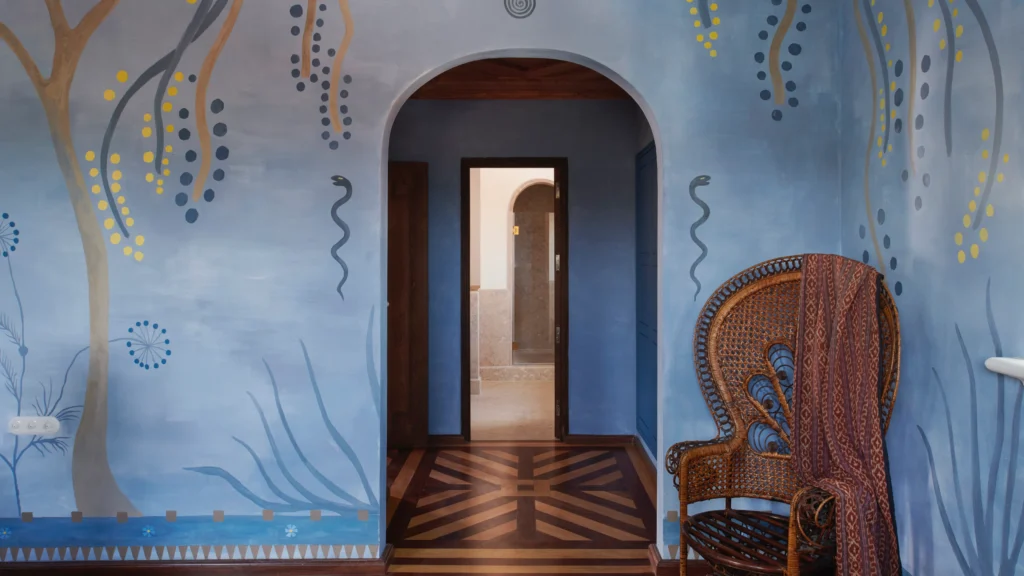
Opened in 2023, Vermelho Melides (vermelho means “red” in Portuguese) is a 13‑room boutique hotel housed in a three‑story villa painted white and sky‑blue. Each bedroom is unique, a masterwork of Iberian artistry with white walls, blue window frames, carved wooden doors and bursts of colour. Louboutin filled the hotel with treasures: azulejo tiles from Azeitão, hand‑painted frescoes by his long‑time collaborator Konstantin Kakanias and antiques sourced from Granada, Seville and beyond. Bathrooms are marble with traditional sinks reminiscent of Spanish farmhouses, and hand‑painted walls tell stories of myth and folklore. Each room is a singular world – some feature canopy beds “worthy of a cardinal” while others boast Moorish tubs.
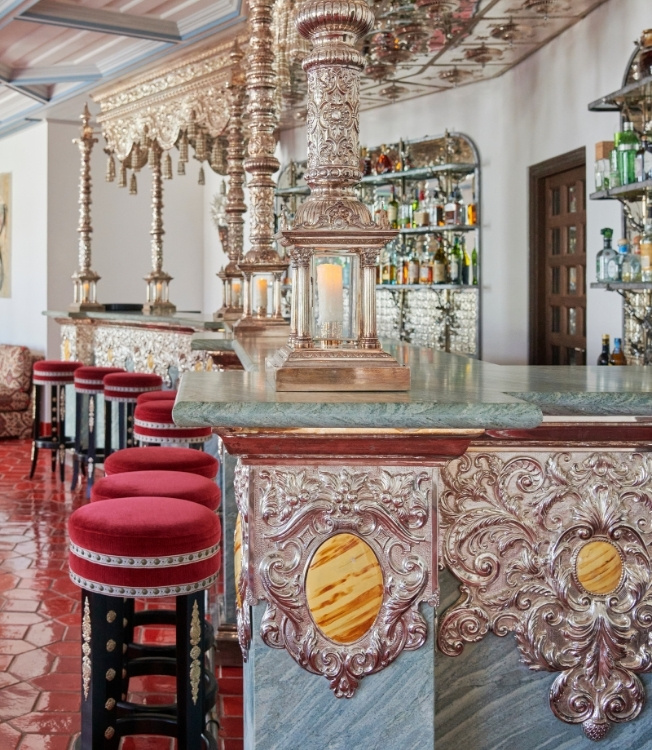
In the reception and lounges, the designer’s playful vision shines through. The bar is lined with glossy scarlet tiles – a tribute to his signature red soles; and a carved silver‑leaf bar imported from Seville sparkles under an Indian glass‑blown chandelier. Sculptures by Italian artist Giuseppe Ducrot guard the entrance, while vibrant textiles by Carolina Irving upholster sofas. Everywhere there are notes of Portuguese, Moroccan, Spanish, Egyptian and French influence; Louboutin’s friend Patricia Medina Abascal ensured the decoration remained luxurious yet eclectic.
A refuge for bohemians and bon vivants
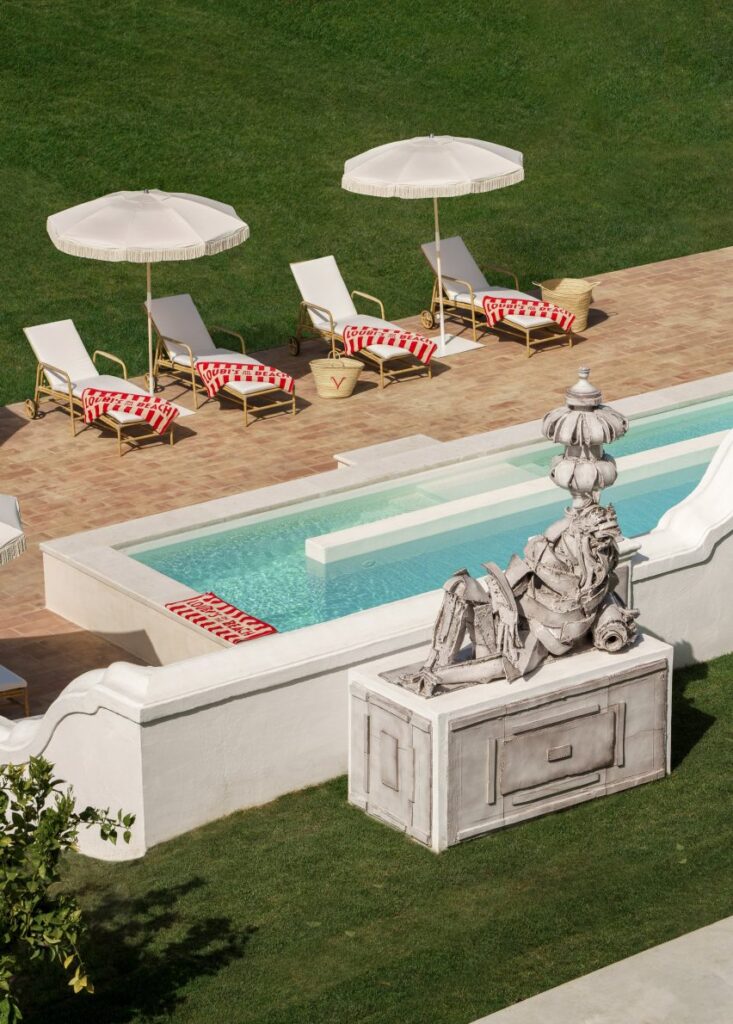
Vermelho isn’t just a design statement; it is meant to be a refuge for “unique people” seeking an unhurried escape. Melides is deliberately under‑developed – phones still lose reception and long siestas are a way of life. Louboutin and his neighbours, including Philippe Starck and Kristin Scott Thomas, are drawn to its simplicity and have vowed not to disrupt the tranquil rhythm. The hotel’s three floors wrap around a garden designed by landscape architect Louis Benech, where guests can sip wine beneath citrus trees and dip in a gated pool. A tiny spa has alabaster walls that filter golden light, and yoga retreats are planned for the future.
The Xtian restaurant seats 60 and is helmed by Portuguese chef David Abreu. Having trained in Macau, Lisbon and the United Kingdom, Abreu interprets Alentejo cuisine with dishes like porco à alentejana (pork with clams), octopus salad and his grandmother’s chicken broth. Seasonal products from the region star alongside local wines and irresistible pastéis de nata. Tableware from local artisan Vida Dura adds to the sensory feast.
The man behind the magic
Louboutin admits he had never designed a hotel before. “I only know how to design houses,” he told the Financial Times. To realise his vision he enlisted architect Madalena Caiado and a network of artisans and friends, from embroiderers in Morocco to ceramicists in Seville. The hotel is part of the Relais & Châteaux collection and has already won accolades such as TIME’s World’s Greatest Places 2024, which praised its joyful, obsessively crafted universe.
Vermelho is just the beginning. Louboutin plans to open two more hotels on the Alentejo coast, one overlooking Melides’s lagoon and another set among pine trees. For now, his first hotel has turned a sleepy Portuguese village into a magnet for fashion lovers, artists and bohemians seeking an off‑beat paradise. In a region known for slow living, Vermelho offers guests the chance to experience la vie en rouge – a world where design, craftsmanship and nature merge in an intimate, unforgettable escape.