
Where the Mountains Remember Japan
There is another Japan beyond the electric skyline of Tokyo, the celebrated temples of Kyoto and the fashionable streets of Osaka. It is a Japan that reveals itself in the silence of mountain forests, in the warmth of mineral waters rising from deep beneath the earth and in small historic towns where centuries of human life remain visible along narrow streets. Hidden among the Rokko Mountains, just beyond the cosmopolitan port city of Kobe, lies Arima Onsen, one of the oldest and most revered hot spring destinations in the country. Its history stretches back more than fourteen centuries, through the reigns of emperors, the lives of Buddhist monks and the ambitions of powerful samurai warlords. Within this remarkable landscape, Arimasansoh Goshobessho offers an exceptionally intimate expression of Japanese hospitality, combining the legacy of one of Arima’s oldest innkeeping families with the privacy of a secluded mountain residence.
To understand the significance of Goshobessho, one must first understand Arima itself. The town occupies a sheltered valley on the northern side of Mount Rokko, separated from Kobe’s bustling waterfront by forested mountains that create the impression of an entirely different world. Although Arima falls within Kobe’s municipal boundaries, its atmosphere bears little resemblance to the modern port city below. Steep lanes wind between traditional wooden buildings, temples and small shops, while steam rises from mineral springs whose waters have attracted visitors for generations. The surrounding mountains change character with the seasons, from the delicate blossoms of spring to the deep greens of summer and the extraordinary crimson and gold of autumn. It is a landscape that seems almost designed for contemplation, yet its reputation was established long before the modern idea of leisure travel existed.
The origins of Arima Onsen belong as much to Japanese mythology as to recorded history. According to an ancient legend, two Shinto deities, Ōnamuchi and Sukunahikona, discovered the healing waters after observing three injured crows bathing in a puddle. When the birds returned apparently restored to health, the deities recognised the extraordinary nature of the spring. The story survives as part of the spiritual identity of Arima, where water has long been associated with purification, renewal and the mysterious powers of the natural world. Beyond mythology, the town appears in the Nihon Shoki, the eighth-century chronicle of Japan, which records a visit by Emperor Jomei in 631. Emperor Kōtoku is also associated with an early imperial visit, establishing Arima’s importance as a destination favoured by the highest levels of Japanese society.
During the Nara period, Arima’s reputation became increasingly connected with Buddhism. The influential monk Gyōki is traditionally credited with establishing Onsenji Temple in the eighth century, helping transform the springs into a place of religious devotion and physical restoration. Centuries later, the monk Ninsai revived the settlement and established twelve lodging houses associated with the Buddhist guardians of healing. This connection between spiritual practice and bathing became fundamental to the town’s identity. The Japanese tradition of tōji, in which visitors remain at mineral springs for extended periods of rest and recuperation, developed around the understanding that bathing could offer benefits beyond ordinary cleanliness. Arima became a destination where the journey itself represented a temporary withdrawal from everyday obligations, allowing travellers to devote time to reflection, ritual and the restorative pleasures of nature.
Arima’s fame extended into the literary world of the imperial court. Around the turn of the eleventh century, Sei Shōnagon, the celebrated author of The Pillow Book, recognised Arima among Japan’s distinguished hot springs. Her observations belong to a period when elegance was expressed through poetry, seasonal awareness and a profound sensitivity to the smallest details of daily life. The cultural prestige of Arima was therefore established not merely through the reputed qualities of its waters, but through its association with the refined aesthetic traditions of classical Japan. To visit Arima was to participate in a practice already celebrated by emperors, courtiers and writers, a remarkable continuity that remains central to the town’s identity today.
Perhaps no historical figure shaped Arima more profoundly than Toyotomi Hideyoshi, the powerful sixteenth-century warlord who played a decisive role in the unification of Japan. Hideyoshi developed a particular affection for the hot springs and visited repeatedly, often accompanied by his wife Nene. His interest extended beyond personal enjoyment. Following earthquakes and periods of destruction, he supported extensive restoration works that helped secure the town’s future as a major bathing destination. The devastating Keichō Fushimi earthquake of 1596 damaged Arima and altered its springs, prompting further improvements under his patronage. His association with the town remains visible in local landmarks, including bridges bearing the names Taikō and Nene, while archaeological remains connected to his bathing facilities can be explored at the Taiko-no-yudono Museum. Few hot spring towns in Japan can claim such an intimate relationship with one of the country’s most influential historical figures.
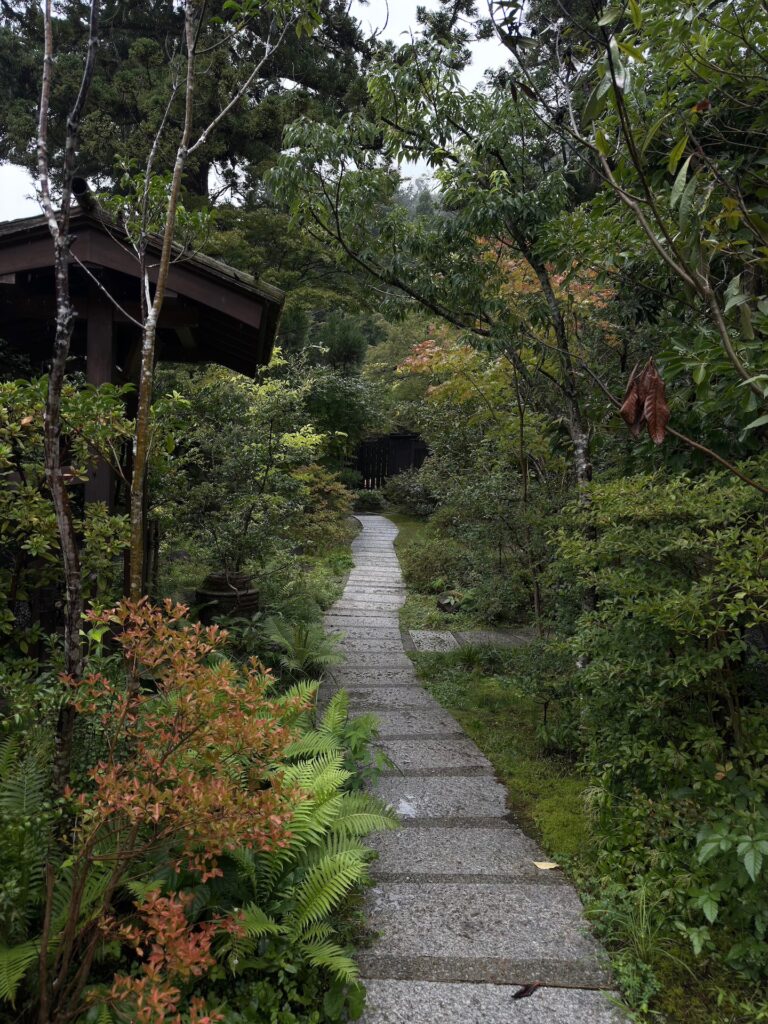
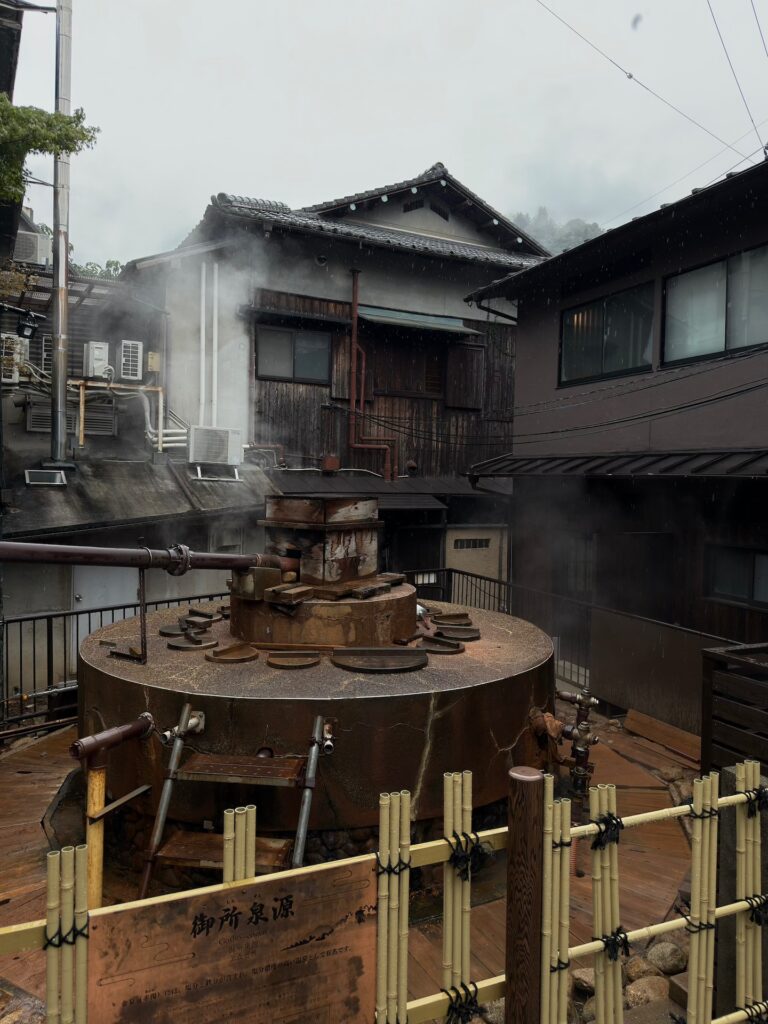
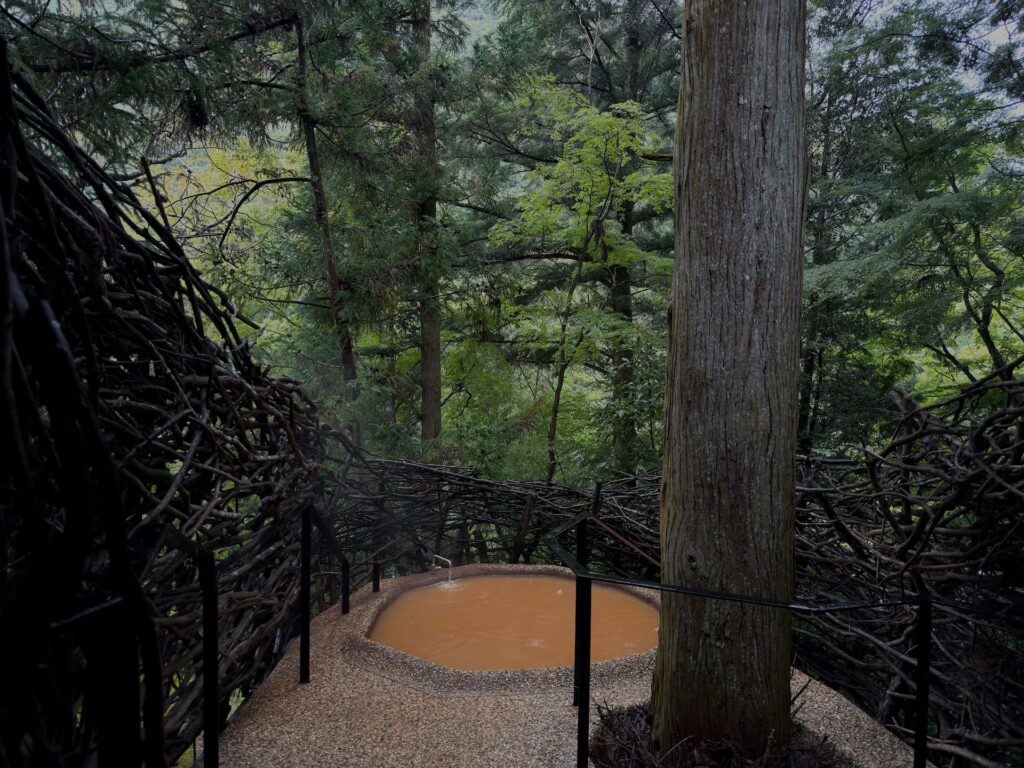
The waters themselves possess an extraordinary geological story. Unlike many Japanese hot springs associated with volcanic activity, Arima’s mineral waters emerge in an area without nearby active volcanic vents. Geological research suggests that their origins are connected to ancient seawater and fluids carried deep into the earth by tectonic processes, heated under immense pressure before gradually returning towards the surface. The town is particularly famous for two distinct types of spring water. Kinsen, or golden water, contains high concentrations of iron and salt, acquiring its characteristic reddish-brown colour as iron oxidises upon contact with the air. Ginsen, or silver water, is clear and associated with carbonated or mildly radioactive mineral springs. Both have long been valued within Japanese bathing traditions, although their historical therapeutic reputations should be distinguished from scientifically established medical benefits. Their importance is cultural as well as physical, connecting contemporary bathing rituals with practices that have endured for more than a millennium.
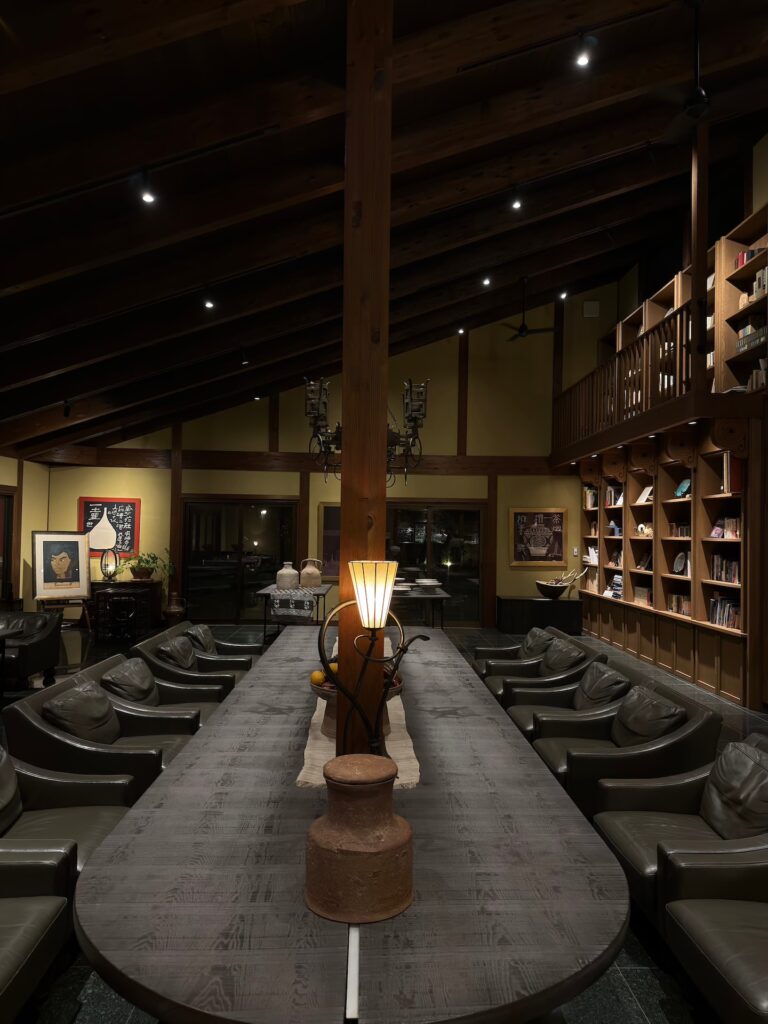
Arimasansoh Goshobessho emerges from this extraordinary heritage, but its own story contains another fascinating chapter in the history of Japan. The property is connected to Tocen Goshoboh, Arima’s oldest established inn, whose origins reach back to the medieval period. The Goshoboh tradition developed through generations of innkeepers who welcomed travellers seeking the celebrated waters, preserving a relationship with the town that few hospitality establishments anywhere in the world can claim. Goshobessho represents a more secluded interpretation of this legacy, conceived as a private mountain retreat rather than a conventional historic inn. Its creation reflects the vision of the family behind Goshoboh, carrying centuries of accumulated hospitality knowledge into a contemporary setting while remaining closely connected to the landscape and traditions of Arima.
The land upon which Goshobessho stands possesses a history of its own. The grounds were once associated with Kiyomizu Temple, a spiritual sanctuary celebrated for its autumn foliage. During the Meiji period, following Japan’s opening to international trade and the establishment of a foreign settlement in Kobe, Arima became increasingly popular among Western residents seeking respite from the port city. A hotel catering to foreign visitors eventually operated on the former temple grounds, introducing another layer to the site’s cultural identity. This meeting of Japanese tradition and Western influence became particularly important during the nineteenth century, when Kobe emerged as one of the principal gateways through which foreign ideas, architecture and lifestyles entered Japan. Goshobessho’s contemporary character reflects this unusual inheritance, combining the intimacy of Japanese mountain hospitality with an architectural sensibility that acknowledges the area’s cosmopolitan past.
Today, Goshobessho comprises just ten private suites, each offering more than 100 square metres of space and its own hot spring bathing facilities. The accommodation is arranged among the greenery of the mountainside, creating a sense of seclusion that distinguishes the property from the more densely developed ryokan of central Arima. Rather than concentrating the guest experience within a single imposing building, the suites are designed to preserve privacy and establish a close relationship with the surrounding forest. The architectural language combines natural materials, generous proportions and contemporary comfort, while the landscape remains the defining presence. Trees, filtered light and the sound of the nearby watercourse give the property an atmosphere that changes continuously throughout the day.
The accommodation includes airy villa-style suites with high ceilings and maisonette-style residences arranged over two levels, connected by spiral staircases. Their interiors offer a distinctive interpretation of luxury, balancing Japanese restraint with the warmth and generous proportions of a private residence. The most memorable feature, however, is the integration of bathing into the living experience. Private hot spring baths allow guests to enjoy Arima’s mineral waters without leaving their accommodation, while dedicated thermal spaces create opportunities for quiet relaxation. In Japan, bathing is traditionally understood as a ritual requiring time and attention, and Goshobessho gives this practice a particularly intimate setting. The pleasure lies in the ability to move naturally between the warmth of the water, the privacy of the suite and the changing atmosphere of the surrounding forest.

The property’s approach to gastronomy is equally connected to its regional identity. Its cuisine, described as Yamaga Kaiseki, draws inspiration from the culinary culture of Arima and Kobe during the Meiji era, combining Japanese seasonal traditions with influences reflecting the region’s international history. The kitchen places particular emphasis on carefully selected ingredients from Hyogo Prefecture and the surrounding waters, including vegetables grown near Arima, seafood from Akashi and the Seto Inland Sea, and premium beef from the Tajima cattle tradition. This relationship with local agriculture and fishing reflects an essential principle of Japanese gastronomy: that the finest cuisine begins with an understanding of geography and seasonality. Rather than allowing elaborate presentation to overshadow the ingredients, the hotel’s philosophy emphasises their natural quality and individual character.
The inclusion of Tajima beef carries particular significance in this region. Hyogo Prefecture is home to the celebrated cattle lineage from which Kobe beef originates, and the international reputation of this delicacy has made the name Kobe synonymous with some of the world’s most sought-after beef. Yet within Japan, the story is more nuanced, involving generations of breeding traditions, strict standards and an agricultural heritage deeply connected to the landscape. At Goshobessho, such ingredients become part of a broader culinary narrative, accompanied by vegetables, seafood and seasonal preparations that express the extraordinary diversity of Hyogo. Dining in this setting becomes an opportunity to understand the region through its flavours, with the quiet atmosphere of the surrounding mountains providing a beautiful counterpoint to the precision of the cuisine.
Beyond the property, Arima invites exploration at a wonderfully unhurried pace. The historic streets of Yumotozaka reveal traditional shops, confectioners and small establishments whose products reflect generations of local craftsmanship. The town is known for its tansan senbei, delicate crackers associated with its naturally carbonated spring water, as well as traditional bamboo crafts and other regional specialities. The public bathhouses Kin no Yu and Gin no Yu introduce visitors to the two celebrated types of mineral water, while Onsenji Temple and the surrounding shrines preserve the spiritual heritage that shaped the town’s development. Walking through Arima offers the pleasure of encountering history not as a collection of isolated monuments, but as part of an inhabited landscape where the past continues to influence everyday life.
The relationship between Arima and Kobe adds another fascinating dimension to the experience. Modern Kobe is one of Japan’s most cosmopolitan cities, shaped by its port, international communities and remarkable position between the Rokko Mountains and Osaka Bay. Following the opening of the port to foreign trade in 1868, the city developed a distinctive architectural and cultural identity, particularly in districts such as Kitano, where Western-style residences remain as reminders of the early international settlement. Kobe also carries the profound memory of the Great Hanshin Earthquake of 1995, which devastated much of the city and became a defining chapter in its modern history. Today, its waterfront, cultural institutions and celebrated gastronomy reveal a city that has rebuilt itself with remarkable resilience. The contrast between Kobe’s international urban character and Arima’s ancient mountain traditions makes this region especially compelling for travellers interested in the many layers of Japanese history.
For centuries, the journey from Kobe to Arima represented a passage from commerce and urban life into a landscape associated with restoration and contemplation. That relationship remains remarkably relevant today. Travellers can experience the sophistication of Kobe’s waterfront and international neighbourhoods before retreating into the mountains, where the atmosphere changes almost immediately. The forested slopes of Mount Rokko create a natural boundary between these two worlds, while the changing seasons give the journey a distinctive character throughout the year. In autumn, when the trees surrounding Arima turn brilliant shades of red and gold, the region becomes particularly beautiful, recalling the centuries-old Japanese tradition of momijigari, the appreciation of autumn foliage.

What makes Goshobessho especially compelling is that it does not attempt to reproduce the atmosphere of a conventional luxury resort. Its identity emerges from a rare combination of historical continuity, geographical seclusion and a highly personal interpretation of Japanese hospitality. The property belongs to a family tradition stretching back centuries, yet its architecture and accommodation respond to contemporary expectations of privacy and comfort. Its cuisine reflects the meeting of Japanese and Western cultures that shaped Kobe during the Meiji era, while its bathing traditions connect guests to waters celebrated since the earliest chapters of recorded Japanese history. These different influences create an experience that feels sophisticated without becoming detached from the place that gives it meaning.
The Japanese concept of omotenashi, often translated as wholehearted hospitality, finds a particularly natural expression in such an intimate environment. At its best, this philosophy is less concerned with elaborate displays of service than with sensitivity, discretion and an understanding of what allows a guest to feel genuinely at ease. Goshobessho’s small scale supports this approach, offering the privacy of an independent residence alongside the attentiveness of a traditional Japanese inn. The experience encourages guests to slow their pace, appreciate the surrounding landscape and rediscover the pleasure of unstructured time. In a world increasingly dominated by constant movement and stimulation, such simplicity can feel exceptionally luxurious.
As evening settles over the Rokko Mountains, Goshobessho reveals perhaps its most beautiful character. The forest gradually darkens, the air becomes cooler and the atmosphere acquires a stillness that feels far removed from the illuminated streets of Kobe. Returning to a private suite after dinner, the ritual of bathing becomes an opportunity to reflect upon the extraordinary history of the place. The same mineral waters that attracted emperors, Buddhist monks, aristocrats and samurai continue to rise from beneath the earth, indifferent to the centuries of political and cultural change that have unfolded above them. The architecture may be contemporary and the comforts unmistakably modern, but the essential experience belongs to a tradition far older than the hotel itself.
Arima’s history is ultimately a story of continuity through transformation. Natural disasters, fires, political upheaval and the arrival of international influences have repeatedly altered the town, yet its identity as a place of restoration has endured. The efforts of monks, the patronage of powerful warlords and the dedication of generations of innkeepers have each contributed to preserving its remarkable cultural heritage. Goshobessho occupies a meaningful place within this history, carrying forward the traditions of one of Arima’s oldest hospitality families while offering a contemporary expression of the Japanese mountain retreat.
For Maison Blanche, Arimasansoh Goshobessho represents an especially compelling interpretation of luxury, one in which the true distinction of a property is measured not by spectacle but by its relationship with history, nature and cultural identity. Its secluded suites, private mineral baths and carefully considered cuisine provide the comforts of contemporary hospitality, yet the experience derives its greatest depth from the extraordinary landscape surrounding it. To stay here is to discover a part of Japan where mythology and recorded history meet, where the legacy of emperors and samurai remains visible along ancient streets, and where the simple ritual of bathing continues to connect the present with more than fourteen centuries of tradition. Hidden among the mountains above Kobe, Goshobessho offers something increasingly rare: the opportunity to experience luxury not as an escape from history, but as a quiet and deeply personal encounter with it.