
Inside the Shah of Iran’s Extraordinary Celebration at Persepolis
History has witnessed countless magnificent feasts. The banquets of Versailles dazzled European royalty beneath glittering chandeliers. The Field of the Cloth of Gold transformed diplomacy into theatre as Henry VIII and Francis I competed through unimaginable splendour. The coronation festivities of the Romanovs represented the final flourish of Imperial Russia before revolution swept away an entire dynasty.
Yet none of them approached the scale, ambition or symbolism of what unfolded beneath the ancient ruins of Persepolis in October 1971. For three remarkable days, the Shah of Iran, Mohammad Reza Pahlavi, attempted something no modern ruler had ever imagined. He invited kings, queens, emperors, presidents and heads of state from across the globe to celebrate not merely his reign, but the 2,500th anniversary of the Persian Empire, tracing its origins to Cyrus the Great. It was conceived not as a state banquet, but as a declaration that Iran remained one of the world’s oldest and greatest civilizations while embracing modernity with extraordinary confidence.
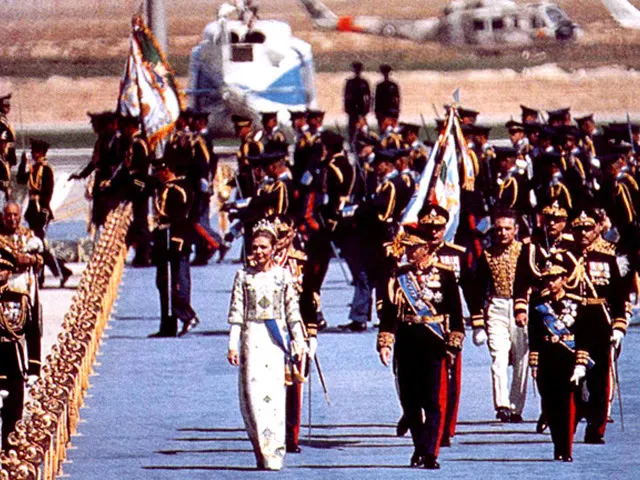
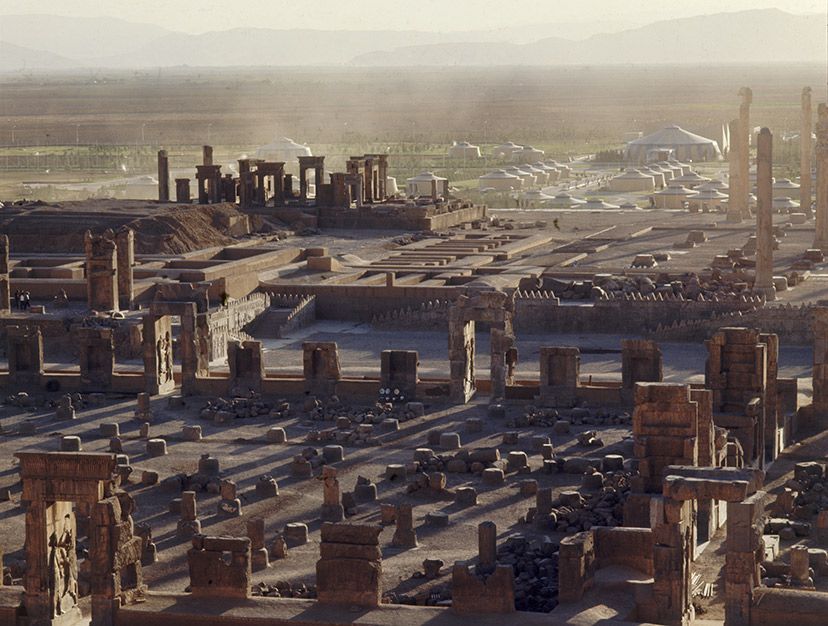
Whether it succeeded remains one of history’s most fascinating debates. What cannot be disputed is its breathtaking magnificence. The celebrations took more than a decade to plan. Nothing was left to chance. Rather than hosting the world’s leaders in Tehran, the Shah chose Persepolis, the ceremonial capital of the Achaemenid Empire founded more than two millennia earlier. It was here, among the monumental columns and weathered stone reliefs that had witnessed the rise and fall of empires, that modern Iran would present itself to the world. A temporary city emerged beside the archaeological site—not a city of canvas tents in the traditional sense, but a remarkable collection of prefabricated luxury suites concealed beneath elegant tent-like exteriors, arranged around landscaped gardens inspired by Persian geometry. French architects, decorators and engineers worked for more than a year to complete what journalists would later call the most luxurious campsite in history.
The landscape itself had to be transformed. Thousands of mature trees were transported from Europe. Roses, flowers and shrubs were planted across the desert. Irrigation systems were installed where almost nothing had previously grown, while thousands of songbirds were released into the newly created gardens in an attempt to recreate the atmosphere of a Persian paradise described in ancient poetry. It was an astonishing feat of logistics, one that sought not merely to host distinguished guests but to transport them into another world entirely.
The guest list reflected the extraordinary ambitions of the event. More than sixty monarchs, presidents and heads of state accepted the invitation. Emperor Haile Selassie of Ethiopia arrived alongside Prince Philip and Princess Anne representing Britain, King Hussein of Jordan, Prince Rainier and Princess Grace of Monaco, President Tito of Yugoslavia, Nicolae Ceaușescu of Romania and countless other dignitaries from every continent. Rarely before—or since—has such a concentration of political power gathered around a single dining table. It was diplomacy expressed through ceremony rather than negotiation, with every place setting carefully arranged to reflect the delicate hierarchy of international protocol. If architecture established the stage, gastronomy became its grand performance.
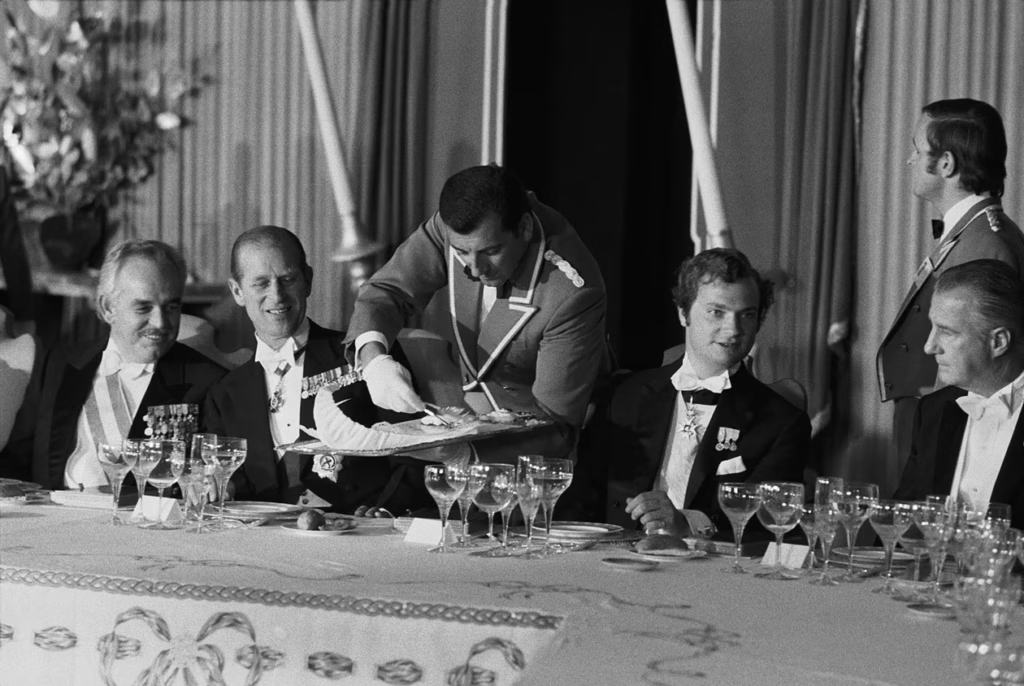
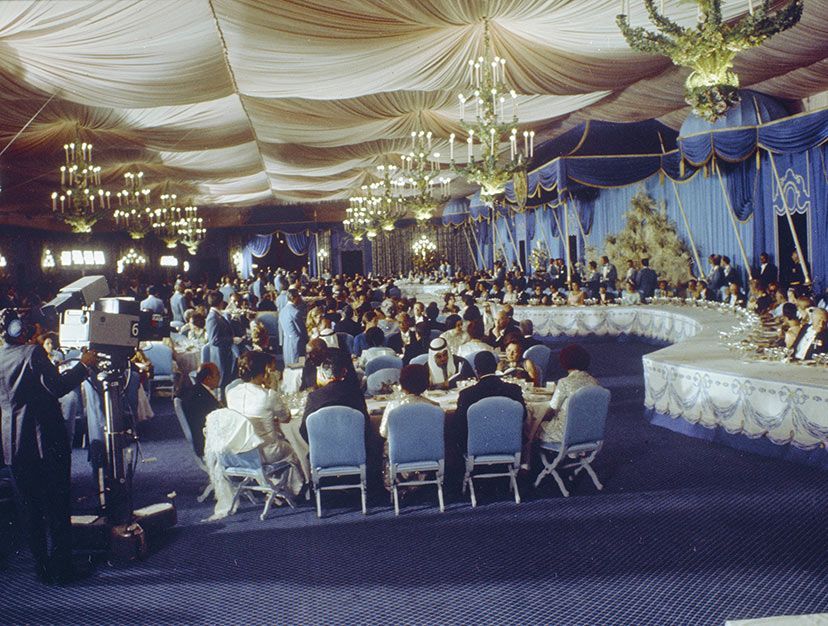
The Shah turned to Maxim’s de Paris, then regarded as the finest restaurant in the world, entrusting it with creating a banquet unlike any ever served in modern history. Maxim’s temporarily closed its celebrated Paris restaurant for nearly two weeks while chefs, waiters, sommeliers and equipment were transported to Iran. Legendary hotelier Max Blouet emerged from retirement to supervise the operation personally. More than 150 tonnes of kitchen equipment travelled from France, accompanied by Limoges porcelain, Baccarat crystal, the finest linen by D. Porthault and uniforms designed by Lanvin. Every detail reflected the highest standards of French haute cuisine and European craftsmanship.
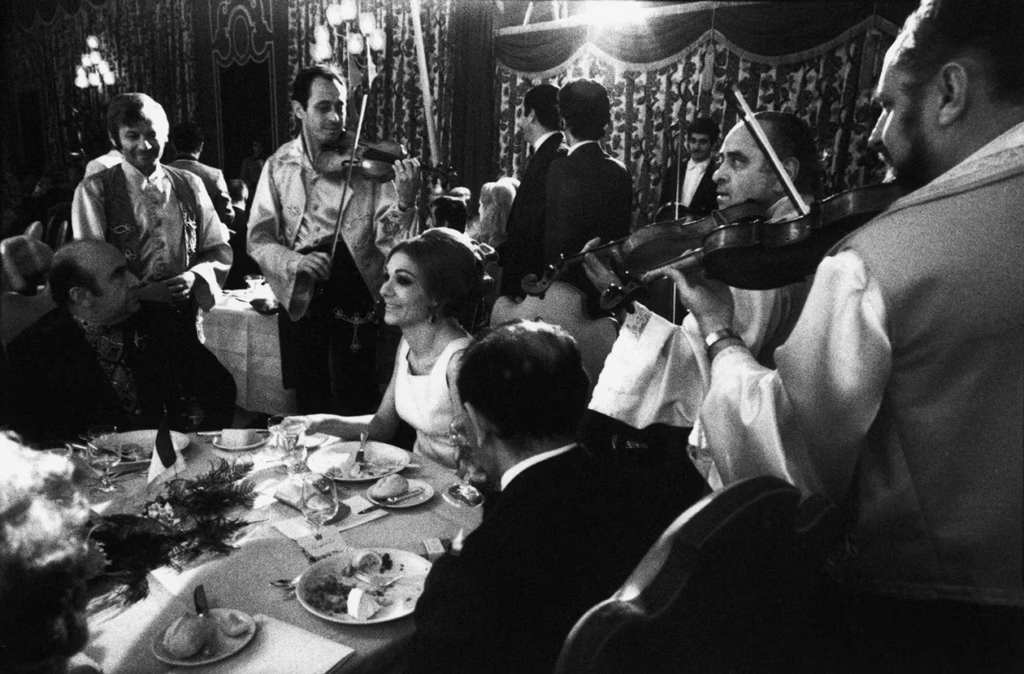
The menu itself became legendary. Guests began with quail eggs filled with caviar before moving to delicately prepared seafood, refined French specialities and the now-famous roast peacock, a dramatic centrepiece presented beneath its restored plumage as a tribute to imperial banquets of earlier centuries. Champagne sorbet cleansed the palate before further courses of lamb, truffles and seasonal delicacies arrived in flawless succession, accompanied by some of the world’s finest wines and Champagnes. The dinner lasted more than five hours beneath a magnificent crimson pavilion illuminated by enormous crystal chandeliers, while music drifted softly through the evening air. After dessert, guests emerged into the ancient ruins of Persepolis for an extraordinary son et lumière performance that transformed the archaeological site into a living theatre of Persian history.
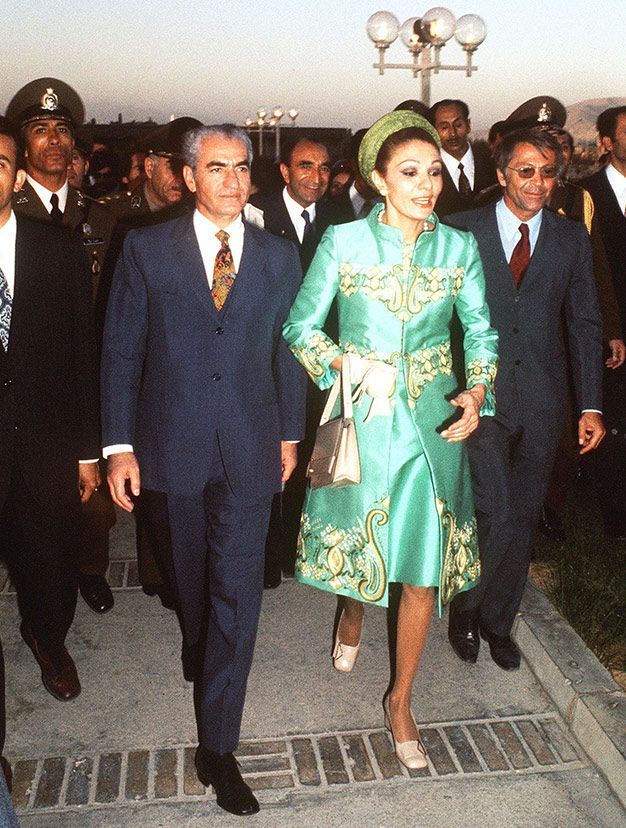
The visual language of the celebrations proved equally extraordinary. Two hundred and fifty red Mercedes-Benz 600 limousines transported guests between Shiraz and Persepolis. Military precision governed every arrival and departure. Servants moved almost invisibly through the banquet hall while orchestras performed specially commissioned works. Fireworks illuminated columns that had stood for twenty-five centuries, creating a remarkable dialogue between antiquity and modernity. It was not simply a celebration; it was an exercise in statecraft through beauty, intended to convince the world that Iran stood among the great civilizations of history while confidently embracing the future.
Yet grandeur often carries its own contradictions. Even as international newspapers marvelled at the splendour of Persepolis, critics questioned the immense cost of the celebrations and the political message they conveyed. Estimates varied widely—from the official figures to much larger contemporary claims—but the symbolism of such extraordinary extravagance during a period when many Iranians continued to experience economic inequality became impossible to ignore. Journalists praised the organisation while simultaneously describing the event as an unparalleled display of royal excess. In the years that followed, the Persepolis celebrations became inseparable from broader debates surrounding the final years of the Pahlavi monarchy. Historians continue to disagree about the precise financial cost and the celebrations’ long-term political impact, but most agree that they remain among the most controversial state ceremonies of the twentieth century.
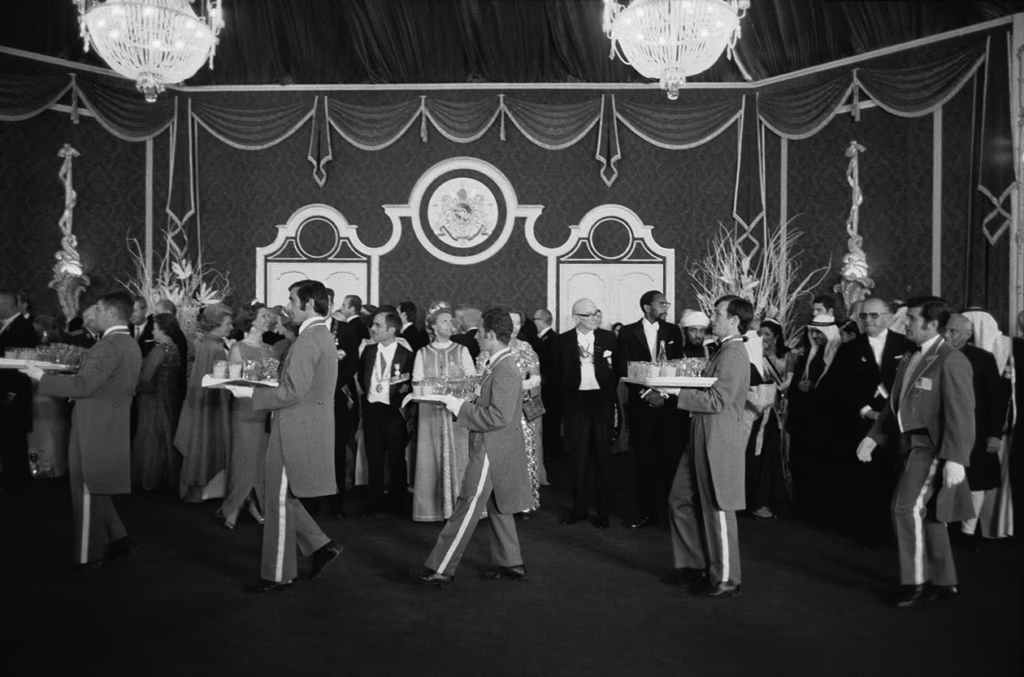
With the benefit of history, it is tempting to see Persepolis only through the lens of what followed. Eight years later, the Iranian Revolution would sweep away the monarchy entirely, transforming the celebrations into a symbol invoked by both critics and admirers of the Shah. Yet reducing those remarkable days to politics alone risks overlooking their astonishing achievement as an exercise in architecture, hospitality, design and cultural diplomacy. Never before had an archaeological site been transformed with such imagination. Never before had so many world leaders dined together beneath a temporary palace built solely for one extraordinary occasion. Never before had gastronomy, history and national identity been woven together with such theatrical precision.
Today, more than half a century later, the banquet at Persepolis continues to fascinate precisely because it represented the end of an era. It was the final great imperial celebration before the modern world abandoned such unapologetic displays of monarchical splendour.
Maison Blanche Reflection
Luxury has always been about more than wealth. At its highest expression, it becomes theatre, memory and symbolism woven together into experiences that transcend ordinary life.
The Shah’s celebration at Persepolis remains unforgettable not because it was the most expensive banquet ever imagined, nor because it gathered kings beneath crystal chandeliers in the middle of the Iranian desert. It endures because it marked the final moment when an ancient empire attempted to present itself to the modern world through beauty alone. History would soon take another direction.
But for three extraordinary days in October 1971, beneath the silent columns of Persepolis, the world witnessed what may well have been the last truly imperial banquet.