
The Woman Who Made Silence Sound Beautiful
There are voices that dominate a room. There are voices that command attention through sheer power, reaching impossible notes or overwhelming audiences with technical brilliance. And then there are voices that achieve something infinitely more difficult. They whisper instead of shout. They leave space instead of filling every silence. They invite rather than demand.
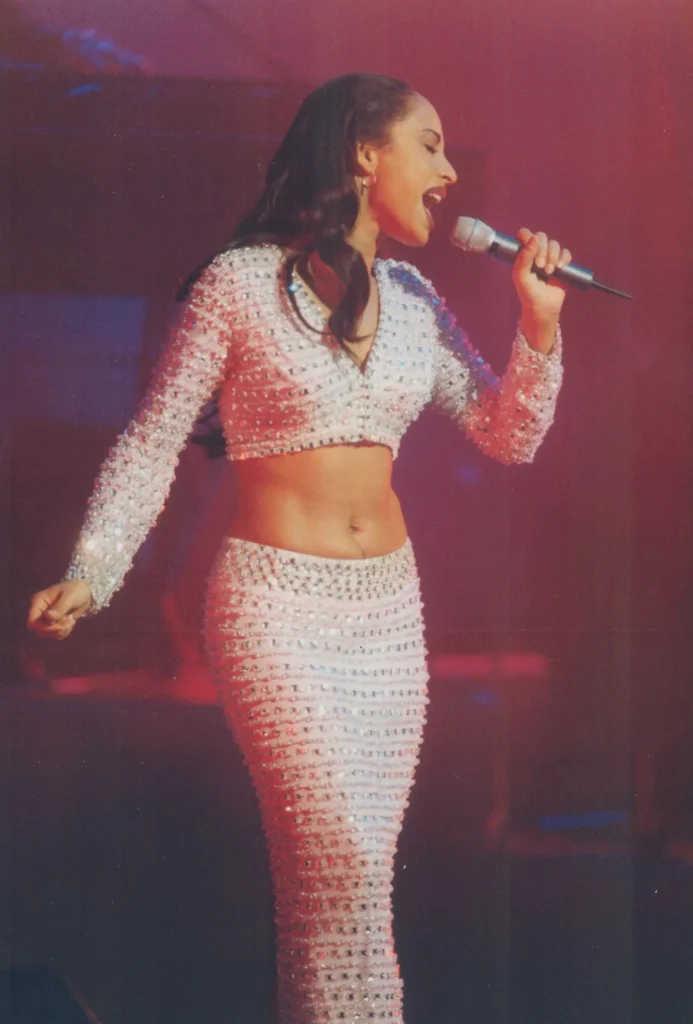
Helen Folasade Adu belongs to that rare company. For more than four decades, the world has simply known her as Sade, a singer whose music has never chased trends, competed for attention or attempted to define a generation. Yet somehow, it has done all three. Her songs have become part of people’s lives with remarkable subtlety, accompanying late-night conversations, long drives through unfamiliar cities, quiet moments of heartbreak and celebrations that never needed loud music to feel complete.
Few artists have understood the beauty of restraint quite like Sade. She has built one of the most remarkable careers in modern music by refusing to become anything other than herself.
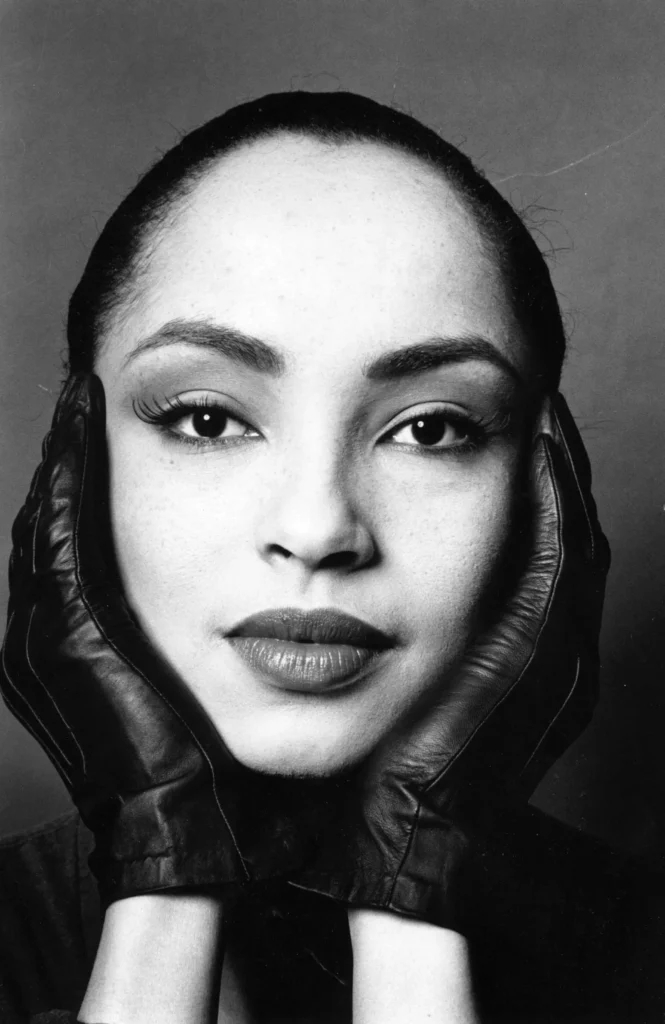
Born Helen Folasade Adu on 16 January 1959 in Ibadan, Nigeria, Sade’s earliest years were shaped by two cultures that would quietly influence her outlook for the rest of her life. Her father was Nigerian, her mother English, and when her parents separated she moved to England as a young child, growing up in Essex far removed from the tropical landscape of her birthplace. The transition between continents might have unsettled many children, yet it gave Sade something that would later become central to her identity—a sense of belonging everywhere and nowhere at the same time. She would always remain slightly outside expectations, observing rather than competing, listening more than speaking.
Music was never the original plan. Long before sold-out concerts and Grammy Awards, she studied fashion at Saint Martin’s School of Art in London, dreaming not of becoming a singer but of designing clothes. Like many creative people, she was drawn first to shape, proportion and elegance before discovering that her greatest medium would be sound. Friends remember a young woman whose quiet confidence made a stronger impression than any attempt to dominate a room. She possessed remarkable beauty, certainly, but beauty alone rarely explains presence. There was something unusually self-contained about Sade, a calmness that seemed almost immune to the frantic energy surrounding London’s creative scene during the late 1970s.
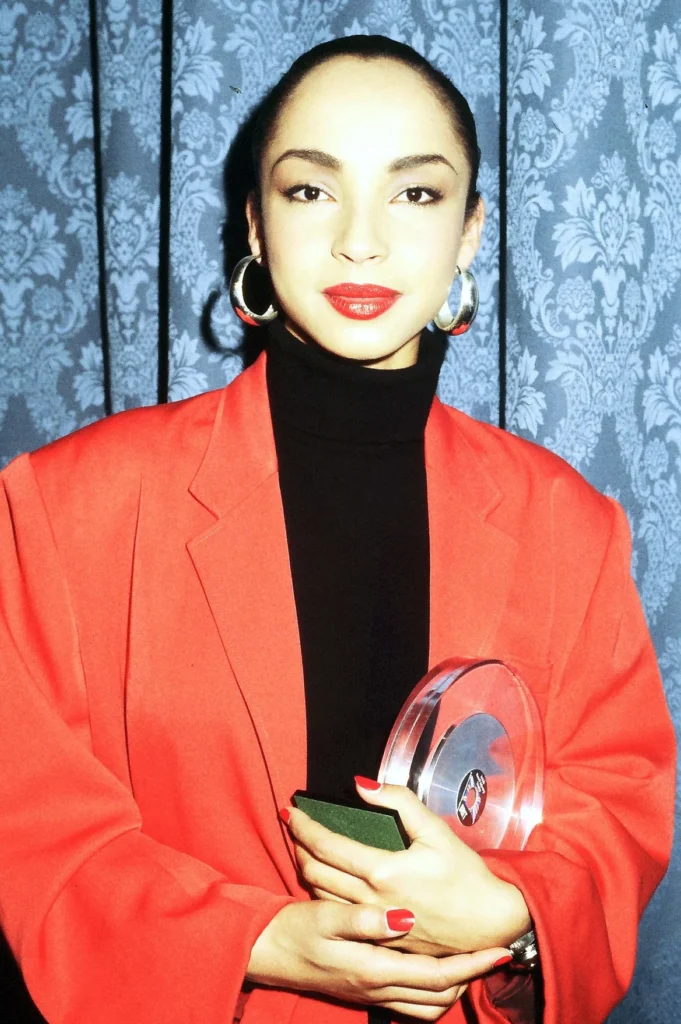
She sang occasionally with the Latin soul band Pride, more out of curiosity than ambition, and it was there that record executives first noticed the extraordinary contrast between her understated stage presence and the emotional depth of her voice. In an era increasingly defined by theatrical performances, extravagant fashion and larger-than-life personalities, Sade simply stood before the microphone and sang. She did not need choreography. She did not need spectacle.
The songs carried everything. When Diamond Life was released in 1984, it felt unlike anything else on the charts. Pop music had embraced excess. Synthesisers grew brighter, production became louder and artists competed relentlessly for visibility. Then came “Smooth Operator,” a song so effortlessly sophisticated that it seemed to belong to another world entirely. Built upon jazz, soul, soft funk and understated rhythm, it introduced listeners to an artist who understood that elegance could be every bit as compelling as drama. Her voice floated above the music rather than overpowering it, creating an intimacy that felt remarkably personal despite its universal appeal.
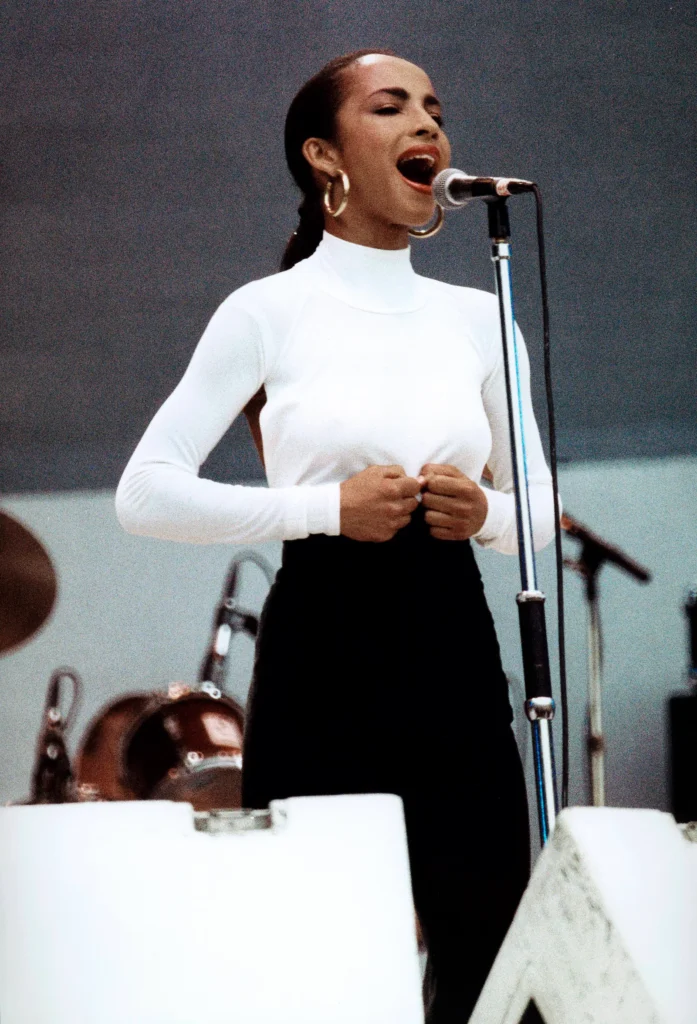
The album became an international phenomenon. Songs such as “Your Love Is King,” “Hang On to Your Love” and “When Am I Going to Make a Living” established Sade not simply as another successful singer but as the voice of a different emotional landscape. She sang about love without sentimentality, heartbreak without self-pity and desire without performance. There was maturity in her music that felt almost revolutionary within popular culture.
Success arrived with astonishing speed. Yet fame never appeared to interest her very much. Unlike so many artists whose careers become inseparable from celebrity, Sade quietly stepped away whenever the noise surrounding her threatened to overshadow the work itself. Years often passed between albums, leaving audiences waiting not because she had disappeared, but because she refused to create music merely to satisfy commercial expectation. In an industry obsessed with constant visibility, she embraced absence. The silence between records became part of her identity, making every return feel less like a marketing campaign than the arrival of an old friend.
Her second album, Promise, confirmed that Diamond Life had not been an accident. “The Sweetest Taboo” became one of the defining love songs of the decade, while “Never as Good as the First Time” and “Is It a Crime” revealed an artist growing increasingly confident in her refusal to follow convention. Rather than chasing the brighter production that dominated the mid-1980s, Sade moved in the opposite direction, stripping arrangements back until every note carried meaning. She understood something many musicians never discover.
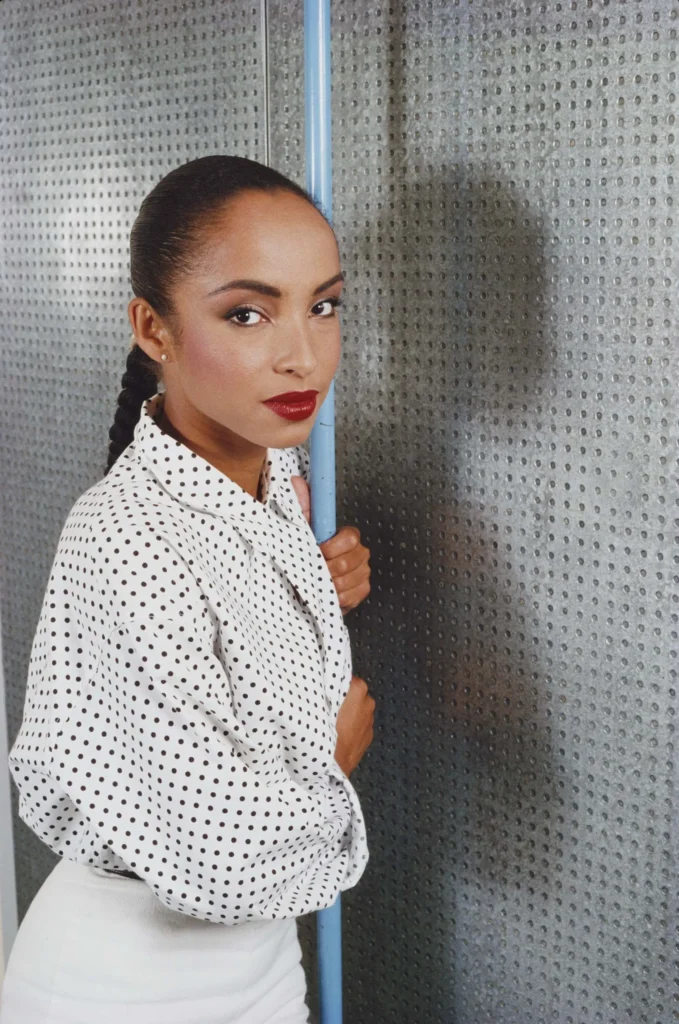
Silence is part of music. The pauses matter as much as the melody. Perhaps this explains why her work has aged with such extraordinary grace. Listening to Sade today is a remarkably different experience from revisiting much of popular music from the same period. Her recordings remain untouched by fashion because they were never attempting to be fashionable in the first place. Jazz harmonies, soul influences, subtle percussion and beautifully restrained arrangements exist beyond trends. They feel timeless because they were built upon emotional truth rather than commercial calculation.
Albums such as Stronger Than Pride, Love Deluxe, Lovers Rock, Soldier of Love and, most recently, the quietly released “Young Lion,” have each reflected different chapters of her life while preserving the unmistakable identity that listeners recognise within seconds. Songs like “No Ordinary Love,” “Cherish the Day,” “By Your Side” and “King of Sorrow” have become deeply personal companions for millions of people across generations. They rarely dominate parties or sporting arenas. Instead, they become the soundtrack to quieter moments, those private experiences where genuine emotion asks for understanding rather than entertainment.
Sade’s extraordinary influence extends far beyond her own recordings. Countless artists have acknowledged her impact, from Beyoncé and Alicia Keys to Drake, Maxwell, Frank Ocean, The Weeknd and countless others who discovered within her music an entirely different way of expressing intimacy. She demonstrated that vulnerability could possess extraordinary strength, that sophistication need never become cold, and that understatement often communicates more powerfully than excess.
Yet perhaps her greatest achievement lies not in awards or album sales, remarkable though both have been. Across a career spanning more than forty years, she has maintained an almost complete separation between public success and private life. She rarely grants interviews. She avoids celebrity culture with remarkable consistency. Living quietly in the English countryside, she has built a life centred on family, close friendships and creativity rather than publicity. In doing so, she has accomplished something increasingly rare.
She has remained mysterious. Not because she carefully protects an image. Because she has never confused visibility with importance.
Looking back across her remarkable career, one begins to realise that Sade never sought to reinvent music. Instead, she reminded audiences of qualities that modern life often forgets to value—patience, subtlety, emotional honesty and elegance. While the world became progressively louder, faster and more impatient, she continued creating songs that rewarded careful listening rather than immediate gratification.
Perhaps that is why new generations continue discovering her work with such enthusiasm. In an age of endless scrolling and constant distraction, Sade offers something almost radical. Stillness.
She reminds us that beauty does not always arrive with great fanfare. Sometimes it enters quietly, settles gently into our lives and remains there for decades without ever needing to announce its presence.

Maison Blanche Reflection
Some artists define a decade. Others define a genre. Sade has done something rarer. She has defined a mood. Her music exists somewhere between jazz and soul, between melancholy and hope, between intimacy and distance. It refuses to belong to any particular moment because it speaks instead to the timeless complexities of love, longing and quiet resilience. More than forty years after the release of Diamond Life, her voice continues to sound exactly as it always has—calm, unmistakable and profoundly human. Perhaps that is why Sade remains one of modern music’s greatest legends. She never tried to be unforgettable. She simply sang the truth, softly enough that the world had to stop and listen.