
There are actors who become famous. There are movie stars who become legends. And then there are those rare individuals whose lives grow larger than the films they leave behind. Long after the final credits have rolled, they continue to exist in photographs, stories and collective memory—not because of the characters they played, but because of the people they were.
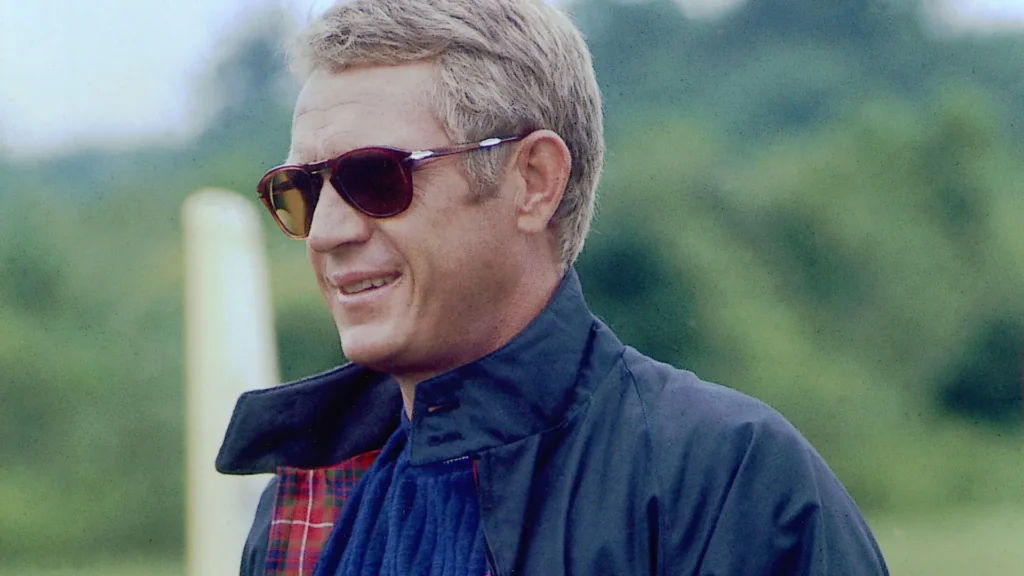
Steve McQueen belonged to that extraordinary fraternity. More than forty years after his death, his image remains instantly recognisable. A pair of Persol sunglasses. A Barbour jacket weathered by use rather than fashion. A Heuer Monaco strapped casually to his wrist. A cigarette balanced between his fingers as though it had simply appeared there. Whether standing beside a Ferrari 275 GTB, riding a Triumph motorcycle across dusty terrain or leaning against the Porsche 917 from Le Mans, McQueen projected something modern culture has struggled to reproduce.
He looked entirely comfortable being himself. Perhaps that is why he still fascinates us. Steve McQueen was never trying to become an icon. The icon emerged almost accidentally.
Born Terrence Stephen McQueen on 24 March 1930 in Beech Grove, Indiana, his early life offered little indication of the mythology that would eventually surround him. His father abandoned the family before Steve was born, and his mother struggled with alcoholism throughout much of his childhood. Stability was a word he barely understood. He moved between relatives, boarding schools and reform institutions, learning at an early age that survival often depended upon self-reliance rather than certainty.
The experiences hardened him without entirely closing him off from the world. Those who knew McQueen often spoke of the contradiction at the centre of his personality. He possessed extraordinary confidence yet carried deep insecurity. He was charismatic without being particularly sociable. Fame fascinated him, yet privacy remained his greatest luxury.
Perhaps because he had spent his childhood searching for somewhere to belong. Before Hollywood, there was the United States Marine Corps. Military life introduced structure into an existence that had previously known very little of it. McQueen was never the model recruit. He challenged authority with the same instinctive independence that would later define his screen presence. Yet the Marines also gave him discipline, mechanical knowledge and an enduring love of machinery that extended far beyond transportation.
Cars and motorcycles became companions rather than possessions. Engines made sense. People often did not. When McQueen arrived in New York during the 1950s to study acting under Sanford Meisner at the Neighborhood Playhouse, Hollywood was still dominated by polished leading men whose performances often reflected carefully constructed studio images. Cary Grant represented effortless sophistication. Gregory Peck embodied quiet dignity. Rock Hudson projected reassuring confidence.
McQueen belonged to an entirely different generation. He brought something rougher. Something less predictable. He spoke with pauses rather than speeches. His silences often communicated more than dialogue. Directors quickly realised that the camera rarely needed him to explain what a character was thinking. His face already had.
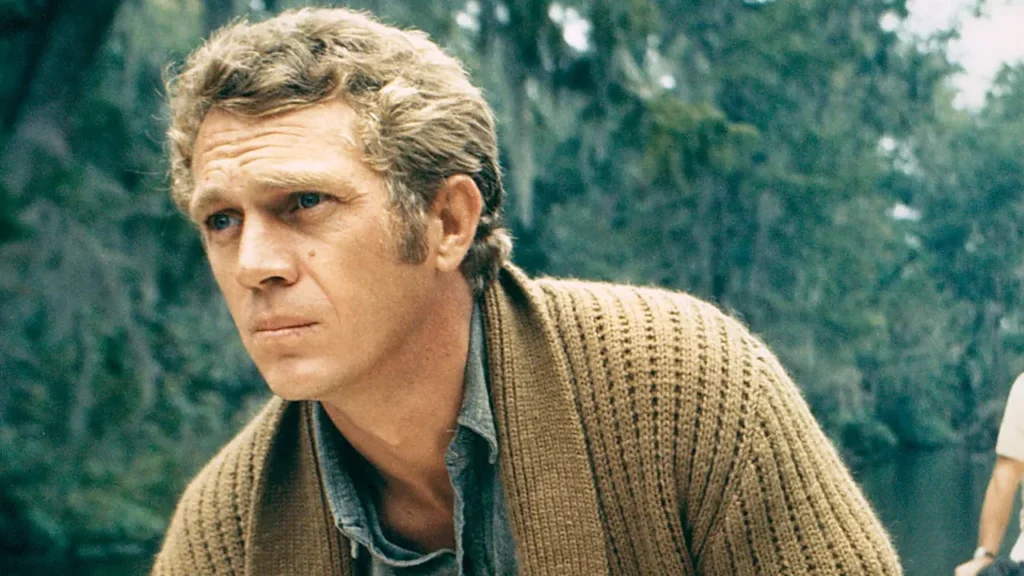
By the early 1960s, films such as The Magnificent Seven announced the arrival of a new kind of leading man. Although Yul Brynner received top billing, audiences frequently found themselves watching the young actor whose confidence seemed to emerge not through dramatic gestures but through remarkable stillness. McQueen understood something that many actors spend entire careers trying to discover.
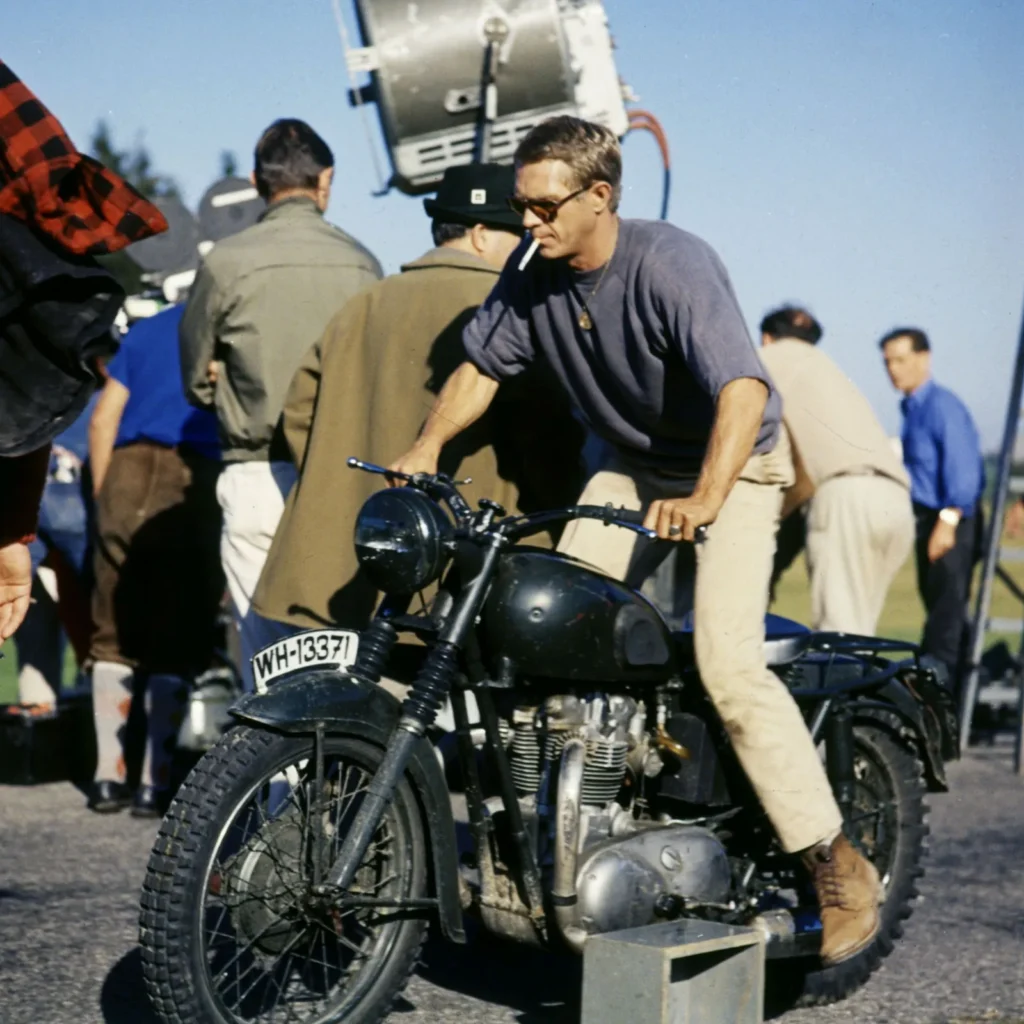
Presence cannot be performed. It either exists or it does not. Then came The Great Escape. Few moments in cinema have become as enduring as Captain Virgil Hilts launching a Triumph motorcycle towards a barbed-wire fence separating freedom from captivity. Although the famous leap itself was performed by stuntman Bud Ekins, much of the riding belonged to McQueen, whose lifelong passion for motorcycles transformed every sequence into something astonishingly authentic. It was not simply an action scene. It became part of cinematic history. Yet perhaps no film revealed Steve McQueen more completely than Bullitt.
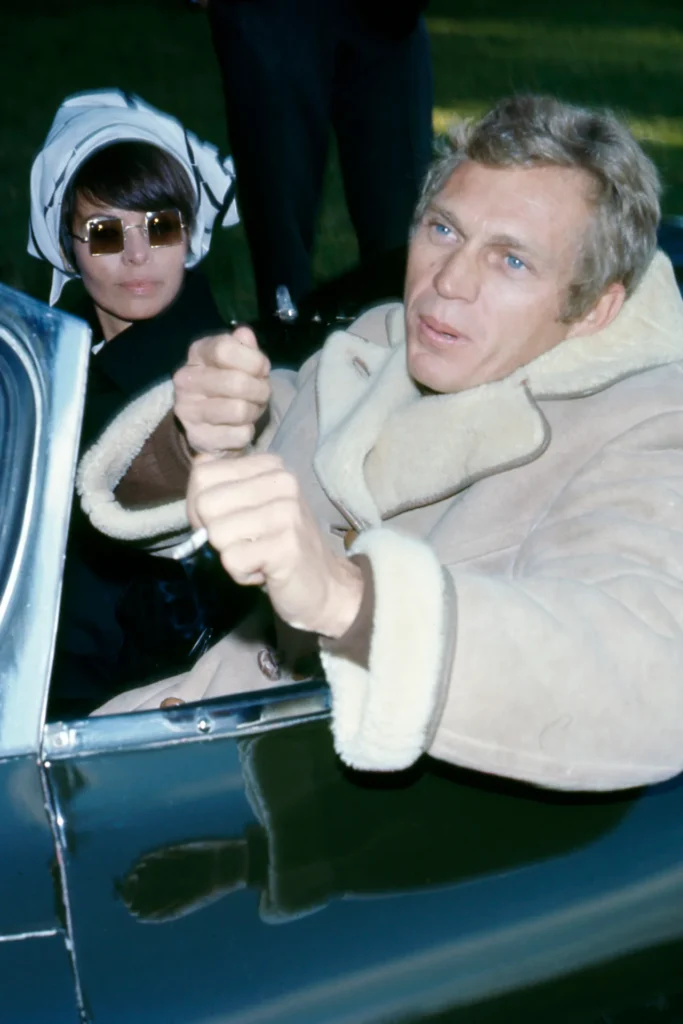
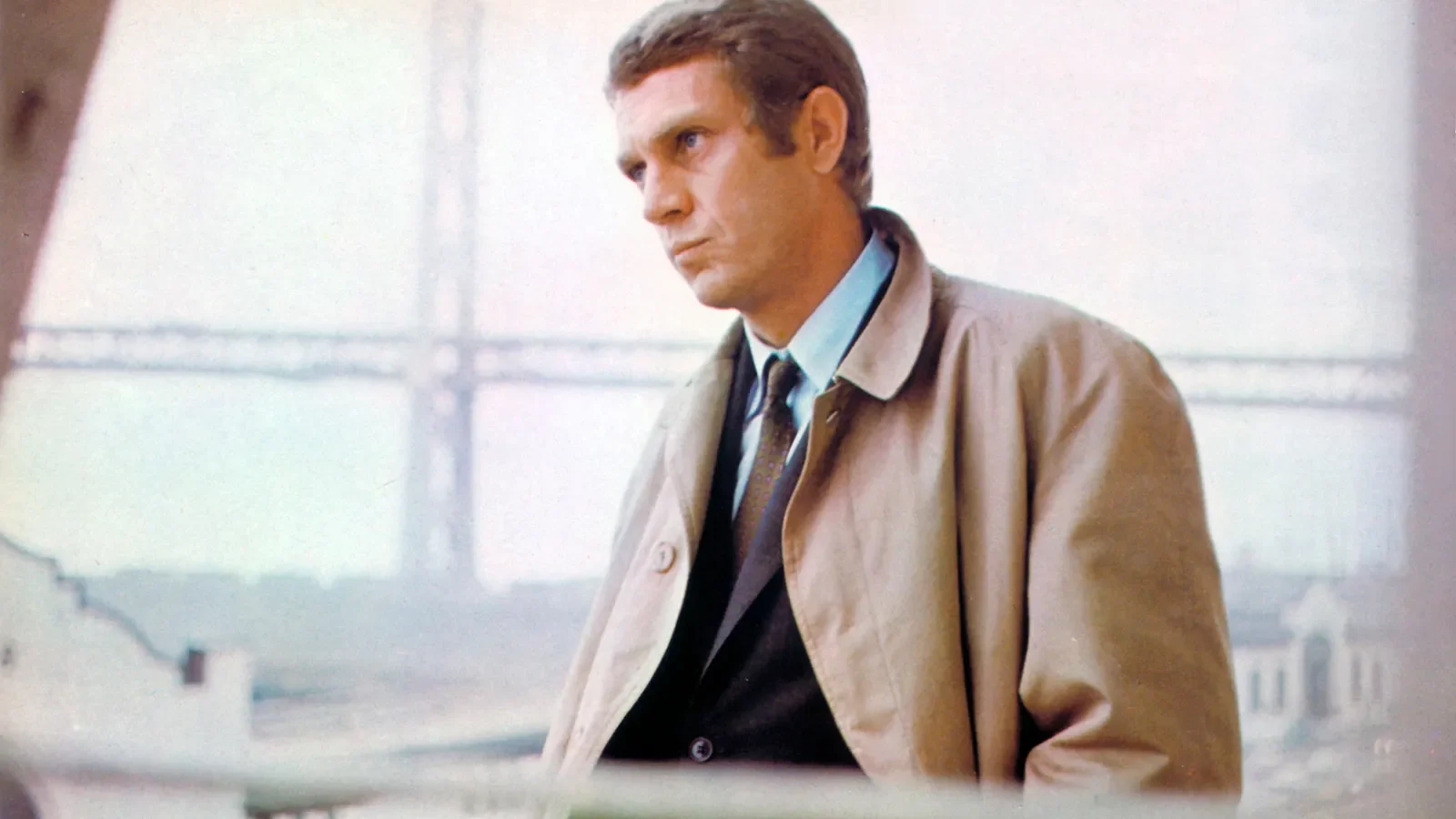
Released in 1968, the film remains one of the defining achievements of American cinema, due in no small part to the legendary car chase through the streets of San Francisco. Modern audiences accustomed to digital effects often forget that McQueen insisted upon extraordinary realism. He performed much of the driving himself, demanding authenticity at every opportunity.
Watching Bullitt today, one notices something remarkable. The Mustang is magnificent. The city is unforgettable. Yet the greatest source of tension remains the man behind the wheel. McQueen understood that true cool required restraint. He never overacted. He never sought applause. He simply existed within the scene, allowing audiences to discover him rather than insisting they admire him. That philosophy extended naturally into his personal life.
Unlike many celebrities, Steve McQueen never appeared interested in luxury as public theatre. His fascination with automobiles grew from engineering rather than status. He collected Ferraris, Jaguars, Porsches and motorcycles because he admired their mechanical honesty. Every machine represented craftsmanship, precision and speed—qualities he respected deeply.
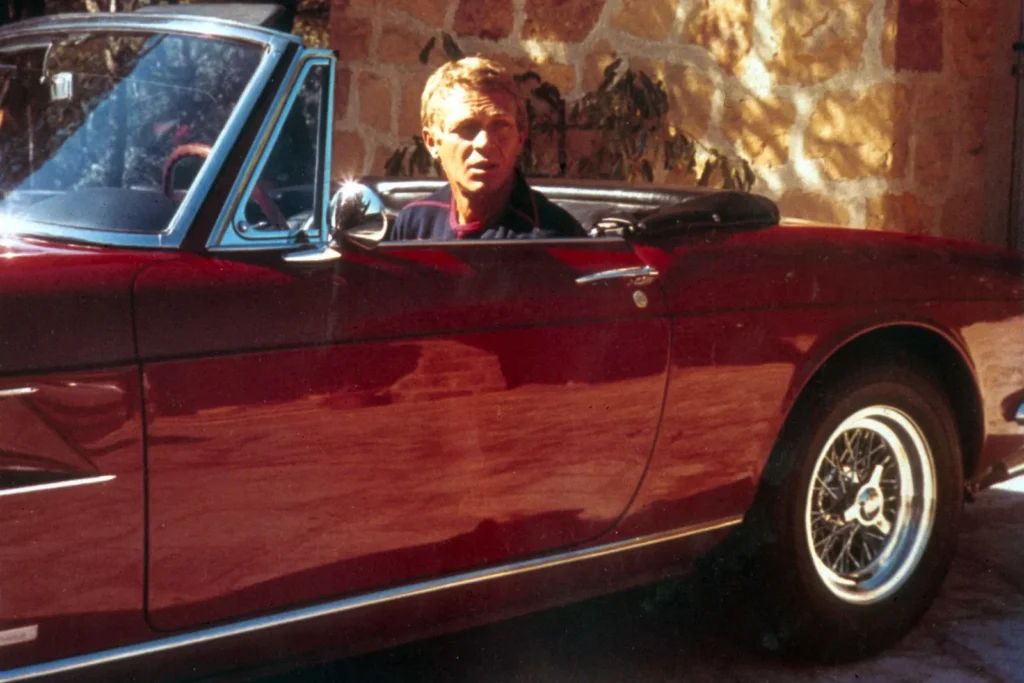
His garage became almost legendary. The Ferrari 250 Lusso. The Jaguar XKSS. The Porsche 356 Speedster. The Ferrari 275 GTB/4. The remarkable 1970 Porsche 911S. Each possessed its own personality. None existed merely as decoration. When he wasn’t filming, McQueen escaped whenever possible. Desert races across Baja California. Motorcycle competitions. Long drives through California with no particular destination.
He entered races under pseudonyms to avoid attracting attention, preferring to be judged by ability rather than celebrity. During the famous 1970 Sebring 12 Hours endurance race, he finished second overall despite competing with a broken foot. The achievement astonished professional drivers. For McQueen, it simply represented another day doing what he loved. Fashion discovered him almost by accident.
He rarely spoke about clothing, yet photographs of Steve McQueen remain among the most influential style references ever captured. Persol 714 folding sunglasses became iconic because he wore them in The Thomas Crown Affair. The blue shawl-collar cardigan. The Harrington jacket. Desert boots. Well-worn Levi’s. Cashmere rollnecks beneath tweed jackets.
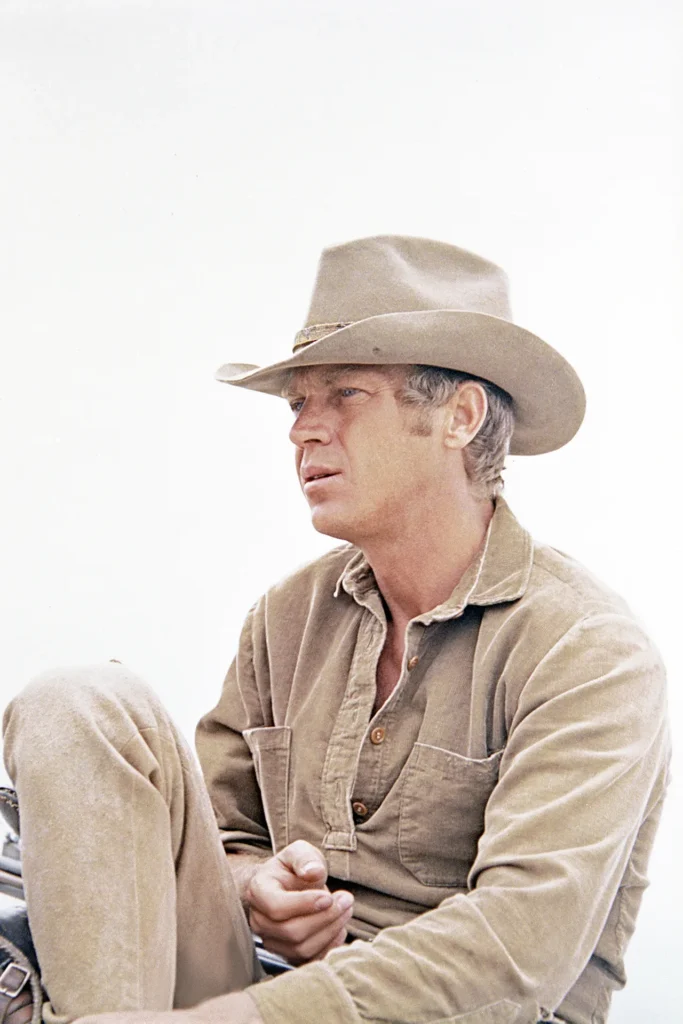
Nothing appeared selected by a stylist. Everything looked genuinely lived in. Modern menswear continues chasing what McQueen possessed naturally. Effortlessness. His influence reaches far beyond cinema.
Ralph Lauren has repeatedly cited him as an inspiration. Designers continue recreating his wardrobe season after season. Vintage watch collectors regard the TAG Heuer Monaco from Le Mans as one of the defining timepieces in horological history. Even those unfamiliar with his films recognise the photographs.
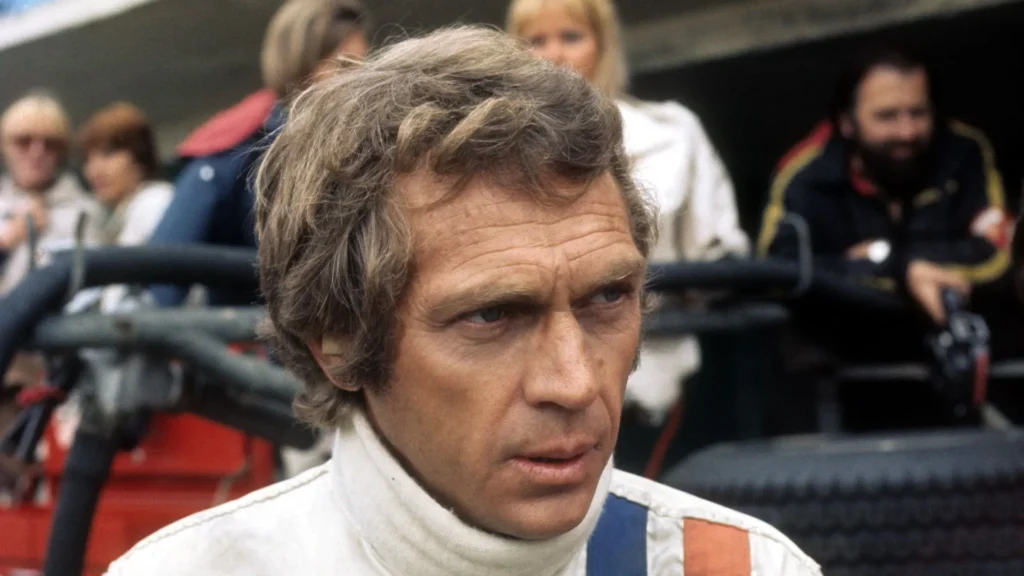
They communicate something beyond fashion. Freedom. Yet Steve McQueen’s greatest film may have been Le Mans. Commercially disappointing upon release, it has since become one of the most admired racing films ever produced. McQueen pursued authenticity with obsessive determination, believing audiences deserved to experience motorsport rather than merely watch actors pretending to drive.
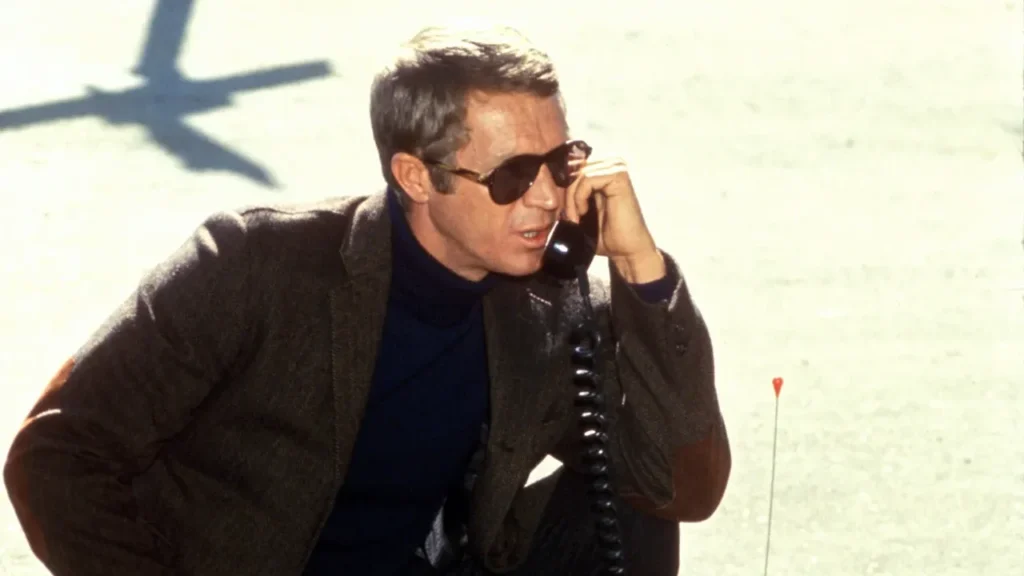
The production became notoriously difficult. Budgets escalated. Studios grew impatient. Relationships fractured. McQueen refused to compromise. The finished film contains remarkably little dialogue because words were never intended to carry the story. Engines did. Many now consider Le Mans his purest expression—not simply as an actor but as a man. He was not performing enthusiasm. He was living it.
In 1979, only months after completing The Hunter, McQueen received devastating news. Cancer. Treatments followed, along with experimental therapies pursued with characteristic determination. Throughout the illness, he remained fiercely independent, refusing to surrender the optimism that had carried him through so much of his life.
He died in Mexico on 7 November 1980 at only fifty years old. Hollywood lost a star. The world lost something more difficult to define.
Today, photographs of Steve McQueen continue circulating across magazines, museums and social media not because nostalgia demands them, but because they represent an increasingly rare ideal. In an age carefully constructed around image, branding and performance, McQueen reminds us that authenticity cannot be manufactured. He never tried to become timeless. He simply refused to become anyone else.
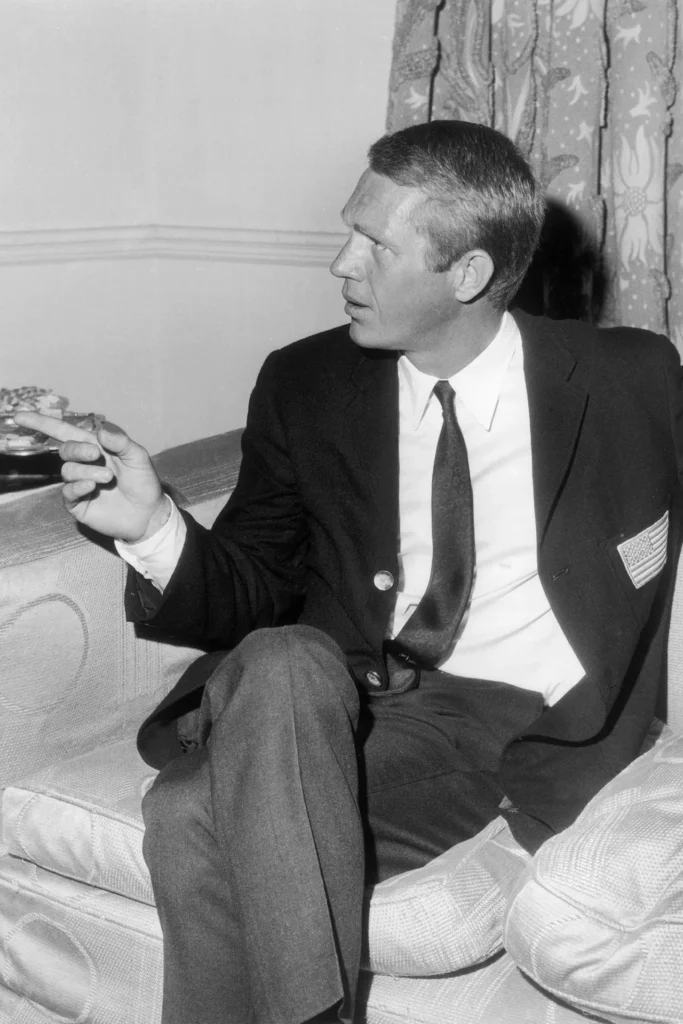
Maison Blanche Reflection
Steve McQueen once said, “I’m not sure whether I’m an actor who races or a racer who acts.”
Perhaps neither description tells the full story. He was a man searching for freedom—in cinema, on motorcycles, behind the wheel of extraordinary automobiles and within a life that had begun in hardship yet somehow became legendary. That search never truly ended. Perhaps that is why his story continues to resonate. Not because he drove the fastest cars. Not because he made unforgettable films. But because he lived according to a principle that feels increasingly uncommon. He chose authenticity over perfection. And in doing so, became something far greater than a movie star. He became a standard against which cool itself is still measured.