
There are places that reveal themselves immediately. The Seychelles is not one of them. Its beauty unfolds gradually, almost reluctantly, asking visitors to abandon the hurried rhythm they have carried with them from elsewhere. The granite boulders that have become the islands’ unmistakable signature appear less like geological formations than ancient sculptures, shaped over millions of years before coming to rest beside beaches where the ocean shifts endlessly between sapphire, turquoise and emerald. Dense forests tumble down volcanic hillsides, rare birds disappear into the canopy, and the scent of cinnamon, vanilla and tropical flowers lingers in the humid air.
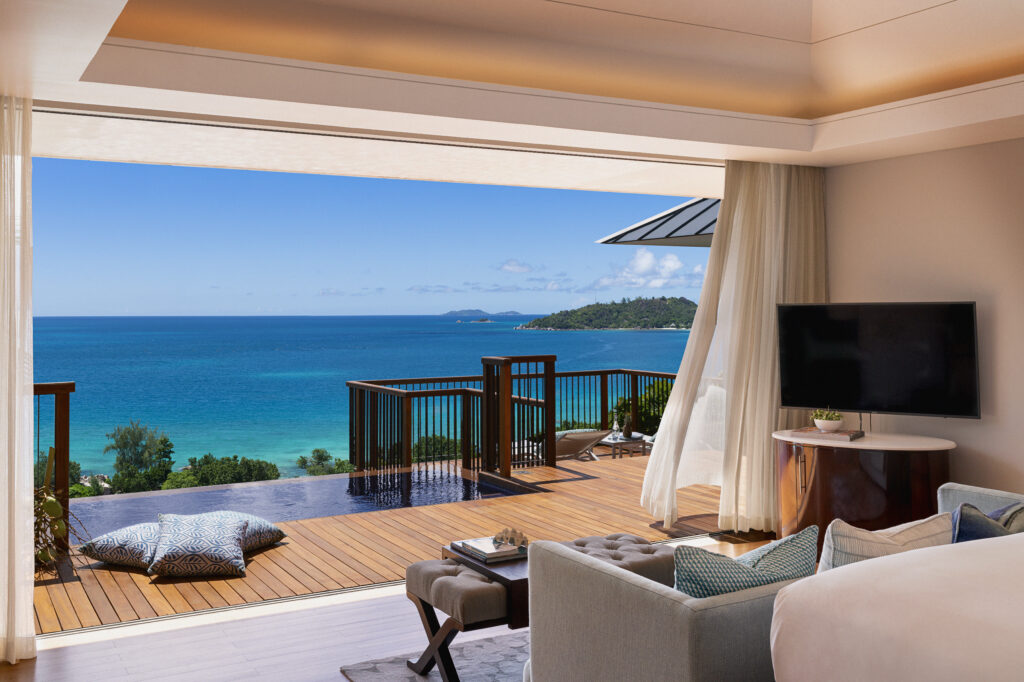
It is a landscape that feels almost prehistoric, untouched by the passage of time. High above the white sands of Anse Takamaka on the island of Praslin, Raffles Seychelles seems to have understood that such beauty requires very little intervention. Rather than imposing itself upon the landscape, the resort follows its natural contours, allowing architecture and nature to exist in quiet conversation. Villas disappear into tropical vegetation, pathways wind gently through palm trees, and every glance towards the horizon is met by the endless blue of the Indian Ocean. Luxury here is not announced. It is discovered.
Praslin itself has always occupied a special place within the Seychelles archipelago. Smaller and quieter than Mahé, yet rich with extraordinary biodiversity, it possesses an atmosphere that encourages exploration rather than spectacle. Just beyond the resort lies the Vallée de Mai, a UNESCO World Heritage Site often described as the original Garden of Eden. Towering coco de mer palms, found nowhere else on Earth, create a cathedral of green where sunlight filters softly through enormous leaves and the sounds of civilisation disappear beneath birdsong. Returning from such landscapes, Raffles feels less like entering a hotel than arriving at a private hillside estate.
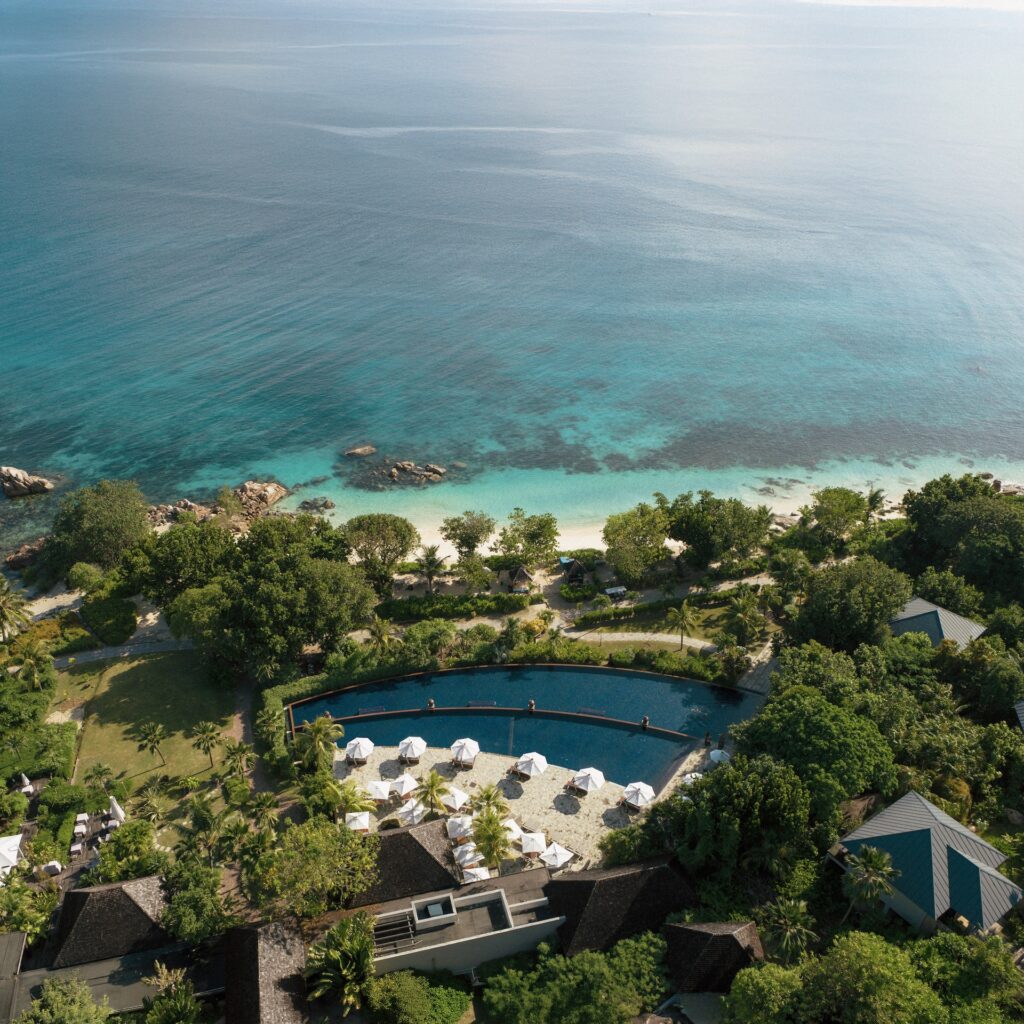
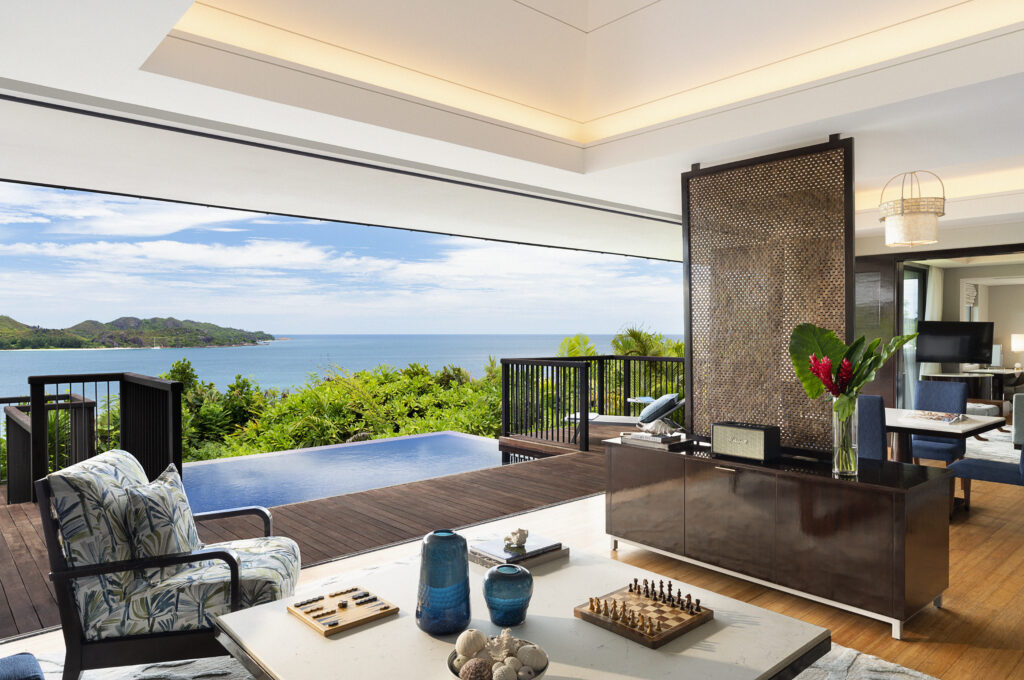
The journey to each villa begins with gently curving paths that climb through lush tropical gardens. Every residence has been carefully positioned to preserve both privacy and uninterrupted views of the sea below. Floor-to-ceiling glass dissolves the boundary between indoors and outdoors, while spacious terraces become natural extensions of the living space. Infinity pools appear to merge seamlessly with the horizon, creating the illusion that the ocean itself begins at the edge of the villa. Yet what makes these spaces memorable is not their scale. It is their restraint.
The interiors draw inspiration from the colours surrounding them rather than competing for attention. Soft timber finishes, natural stone, woven textures and understated furnishings create rooms that feel remarkably calm. Nothing distracts from the landscape beyond the windows. Instead, every design decision quietly directs the eye towards the changing light across the water.
Morning arrives gently at Raffles Seychelles. Before the sun has fully risen above the horizon, the sea is already alive with subtle movement. Gentle waves brush the shoreline below while tropical birds begin their chorus among the surrounding palms. From the terrace, the changing colours of the Indian Ocean become a performance that no architect could ever improve upon. Breakfast is rarely hurried. Fresh tropical fruit, warm pastries, fragrant coffee and locally inspired dishes are accompanied by little more than the sound of the breeze moving through the trees.
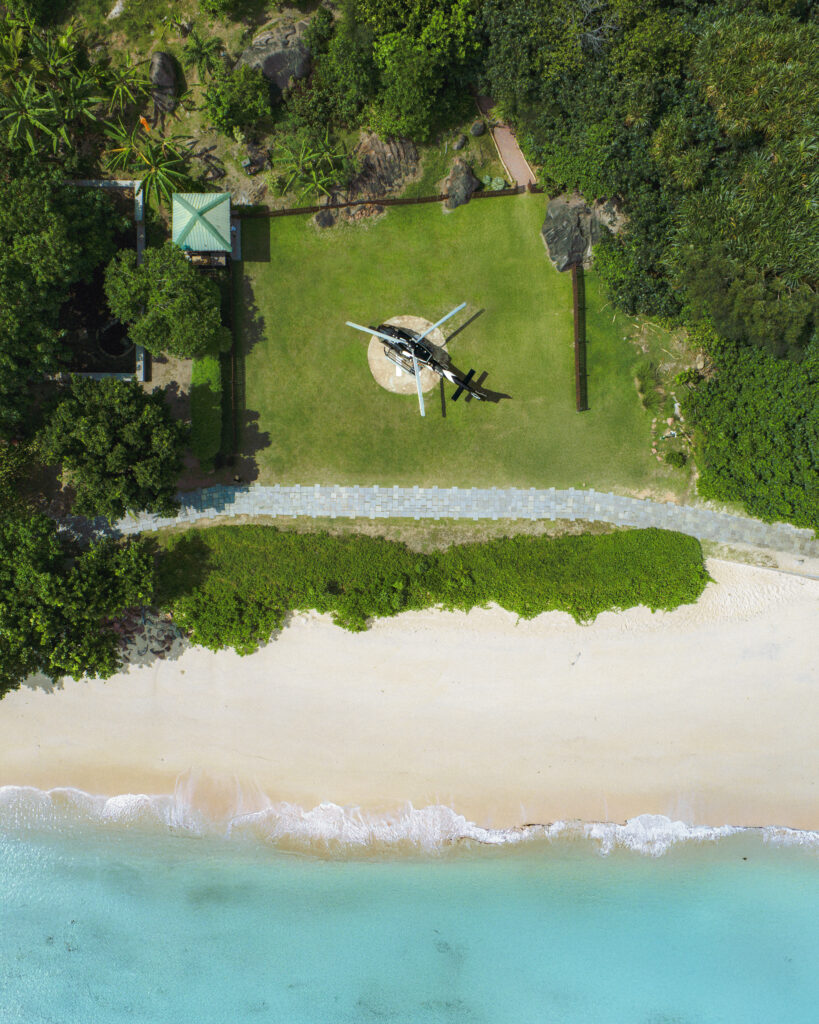
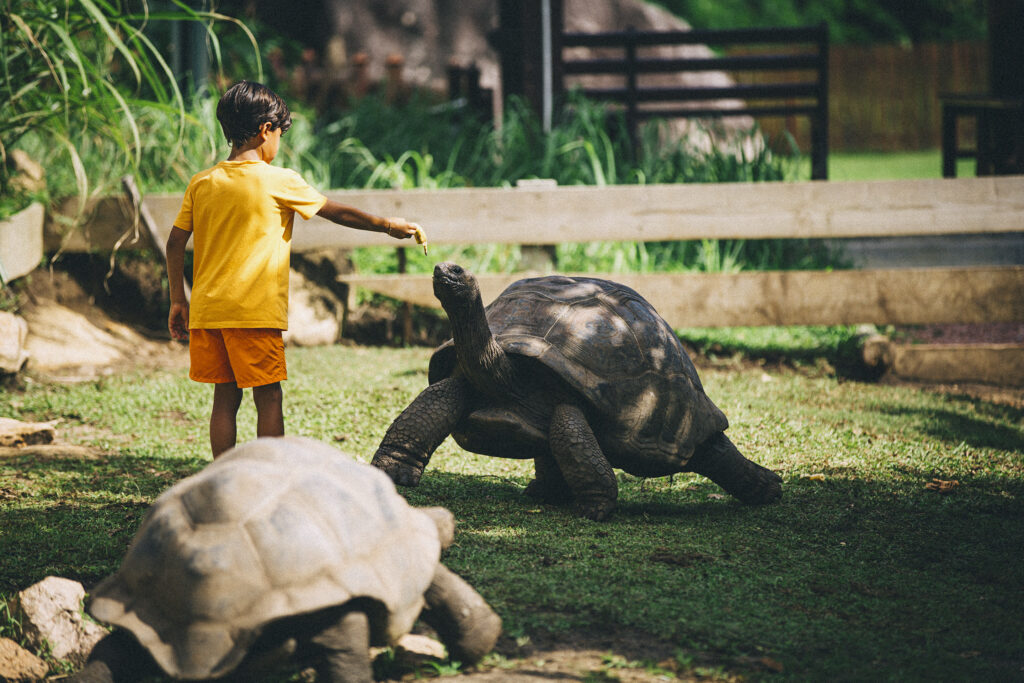
Time begins to lose its familiar structure. Hours become measured not by schedules but by the movement of sunlight across the bay. It is perhaps this unhurried rhythm that defines the experience more than anything else. Unlike destinations built around constant activity, Praslin encourages a quieter kind of exploration. Some guests spend the morning kayaking across impossibly clear water before drifting above coral gardens alive with colourful marine life. Others set out towards nearby islands where giant Aldabra tortoises wander beneath ancient trees or discover hidden coves accessible only by boat. Many choose to do remarkably little at all, allowing books, conversations and long afternoons beside private pools to become the true itinerary. There is a growing luxury in having nowhere to be.
Raffles understands this instinctively. Service unfolds with remarkable discretion. Staff appear precisely when needed before quietly disappearing once more, creating an atmosphere that feels attentive without becoming intrusive. Preferences are remembered effortlessly, names become familiar after only a short stay and every interaction carries the warmth for which Seychellois hospitality has become known. There is no performance of perfection, only genuine kindness delivered with quiet confidence.
Dining reflects the same philosophy. The Indian Ocean has always been a meeting place of cultures, and the cuisine of the Seychelles carries traces of Africa, France, India, China and the Middle East. At Raffles, these influences emerge naturally through menus celebrating local seafood, fragrant spices and seasonal produce grown throughout the islands. Freshly caught red snapper, grilled lobster, octopus scented with lime and coconut curries rich with aromatic herbs capture the extraordinary diversity of the archipelago without unnecessary complication. The finest meals often begin with the simplest ingredients. As evening approaches, the pace slows even further.
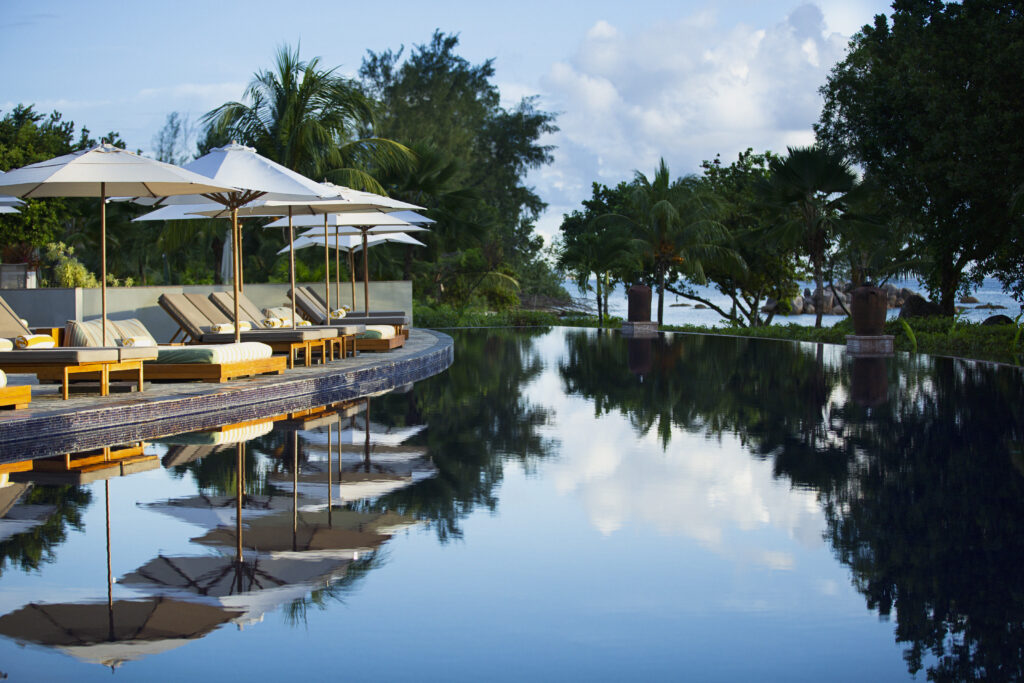
The sun sinks behind neighbouring islands, painting the sky with soft shades of amber, rose and violet before disappearing into the ocean. Candles appear across restaurant terraces while distant fishing boats become silhouettes against the fading light. The tropical air cools slightly, carrying the scent of salt and flowering frangipani through the gardens. It is a scene that repeats every evening. Yet it never feels repetitive.
Perhaps because no two sunsets are ever quite the same. Wellness has always occupied an important place within the Raffles philosophy, and nowhere does this feel more appropriate than in the Seychelles. The spa sits quietly among granite boulders and tropical vegetation, offering treatments inspired by the natural ingredients of the islands. Coconut, vanilla, indigenous botanicals and essential oils become part of rituals designed not merely to relax the body but to reconnect guests with the extraordinary environment surrounding them. Large treatment pavilions open towards the forest, allowing birdsong and the gentle movement of leaves to become part of the experience itself.
Nature is never kept outside. It remains a constant companion. Although the resort provides every imaginable comfort, it is often the island beyond its boundaries that leaves the deepest impression. A short journey leads to Anse Lazio, frequently described among the world’s most beautiful beaches, where smooth granite boulders meet powder-soft sand and water so transparent it seems almost unreal. Nearby, the ancient forests of the Vallée de Mai remind visitors that the Seychelles is not merely a tropical paradise but one of the planet’s most remarkable ecological treasures, home to species found nowhere else on Earth.
Returning to Raffles after exploring these landscapes feels entirely natural. The hotel never attempts to overshadow its surroundings. Instead, it celebrates them.
This perhaps explains why memories of Raffles Seychelles remain so vivid long after departure. Guests rarely speak first about thread counts, infinity pools or architectural details. They remember the changing colour of the ocean before breakfast, the silence that settled over the hillside at dusk, the fragrance carried by warm evening breezes and the extraordinary sense of space that allowed every moment to unfold without interruption. In a world increasingly dominated by constant movement, such experiences have become unexpectedly precious.
Maison Blanche Reflection
The finest destinations do not ask us to do more. They quietly encourage us to need less. Raffles Seychelles understands that true luxury is rarely created through excess. It is found in landscapes that remain largely untouched, architecture that respects its setting and hospitality that knows when to step forward and when to fade gently into the background. Long after leaving Praslin, the memory that remains is not simply of a beautiful resort. It is of an island where the days seemed longer, the light softer and the world, for a little while, wonderfully uncomplicated. Perhaps that is the greatest gift the Seychelles has to offer. Not an escape from life. But a reminder of how beautifully life can slow down.