
Paris has never lacked extraordinary hotels. Its grand boulevards are lined with palaces whose names have become synonymous with elegance, attracting royalty, artists, writers and dreamers for more than a century. Yet among them all, one address has achieved something almost impossible. The Ritz Paris is not simply one of the world’s greatest hotels; it has become part of the mythology of the city itself. To speak of the Ritz is to speak of Paris in its most romantic form, where history is measured not only in years but in conversations, celebrations and unforgettable lives lived beneath gilded ceilings.
Standing proudly on Place Vendôme since 1898, the Ritz has witnessed revolutions in fashion, literature, politics and culture while remaining remarkably unchanged in its understanding of luxury. Trends have come and gone, tastes have evolved and entire generations of travellers have discovered Paris through different eyes, yet the Ritz has continued to embody an ideal that feels almost timeless. It is a place where elegance has never needed to announce itself because it has always existed naturally, woven into every corridor, every salon and every perfectly arranged bouquet of fresh flowers.
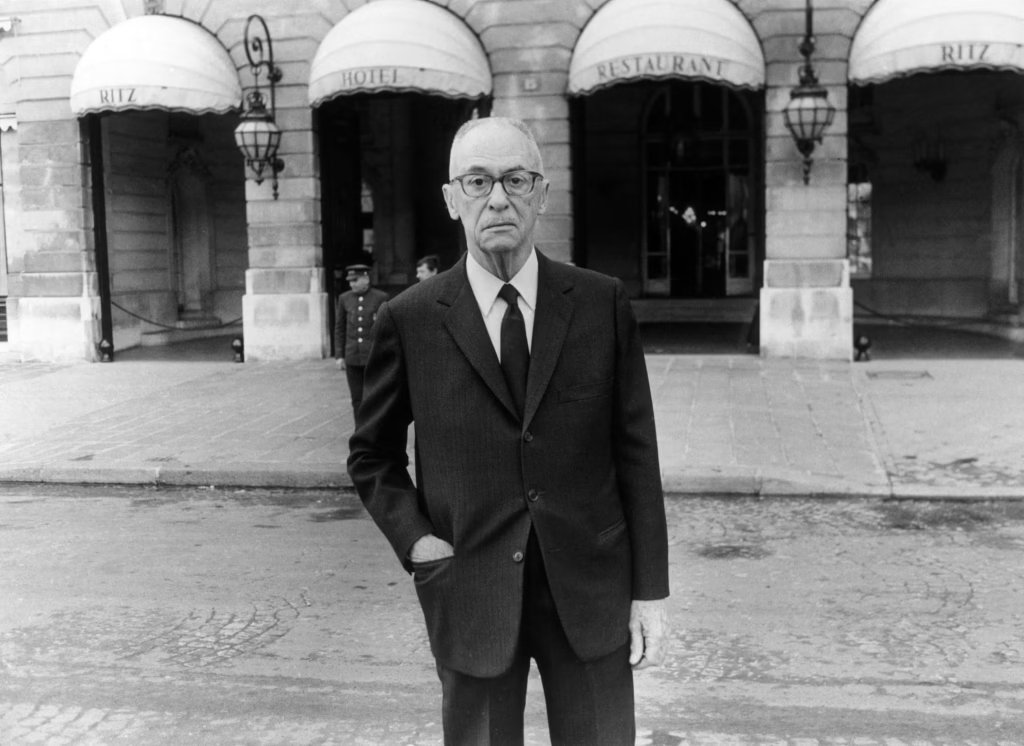
The story begins with César Ritz, a Swiss hotelier whose vision transformed hospitality forever. Long before luxury became an industry, Ritz believed a hotel should offer something beyond magnificent rooms and impeccable service. He imagined a place that felt like the finest private residence in Europe, where guests would experience the comfort of a grand home combined with the sophistication of a royal palace. Together with the celebrated chef Auguste Escoffier, he created an entirely new standard of hospitality, one that would influence hotels across the world for generations to come.
When the Ritz Paris opened its doors on the first day of June 1898, it immediately became one of Europe’s most modern buildings. Every room featured electricity, private bathrooms, telephones and central heating—remarkable luxuries at the time. Yet these innovations were never displayed as technological achievements. They existed quietly, serving comfort rather than spectacle. That philosophy continues to define the hotel more than a century later.
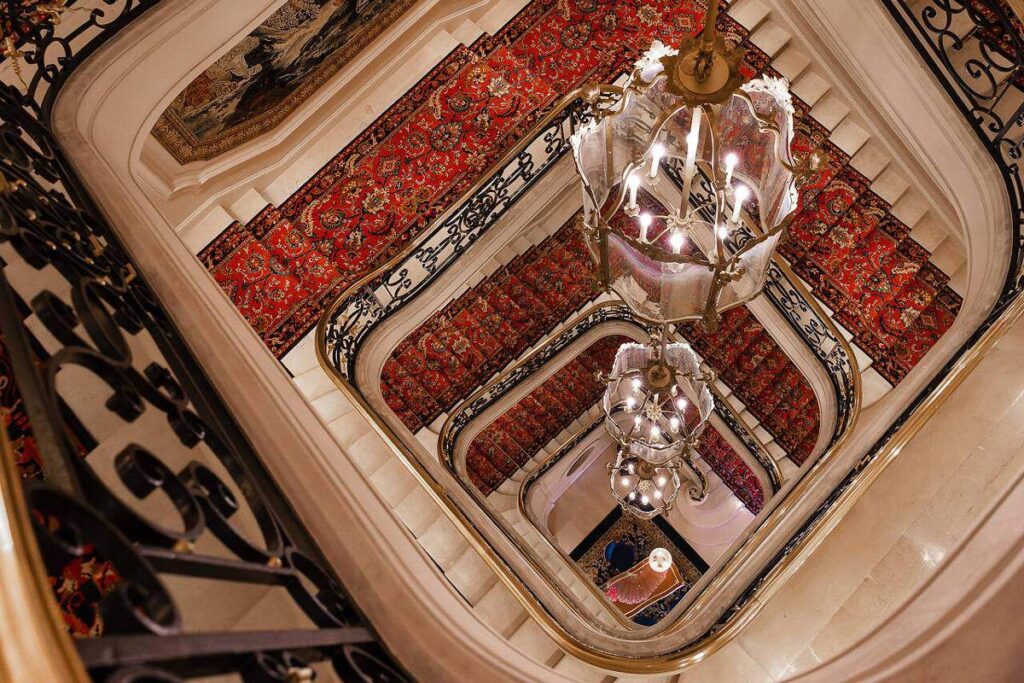
Walking through the revolving doors today, one immediately senses that the Ritz does not belong to any particular era. Marble floors reflect soft afternoon light filtering through tall windows while crystal chandeliers illuminate interiors where Louis XVI furniture, antique mirrors and carefully restored panelling create an atmosphere of remarkable harmony. Nothing feels theatrical. Nothing appears designed merely to impress. Instead, every room possesses the quiet confidence of a place that has welcomed the world for more than one hundred and twenty-five years without ever questioning its own identity.
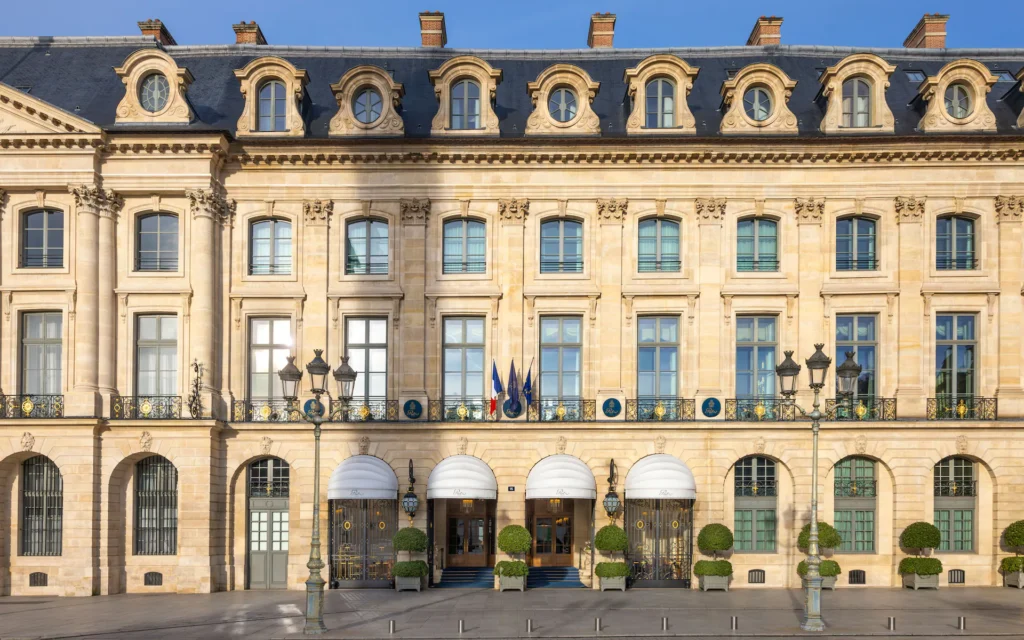
Unlike many luxury hotels that attempt to reinvent themselves with each renovation, the Ritz has always understood that its greatest asset is continuity. Its recent restoration, completed after four years of painstaking work, did not seek to modernise the palace but to preserve its soul. Craftsmen restored centuries-old woodwork by hand, silk fabrics were rewoven using traditional techniques, and historical details hidden beneath decades of alterations quietly returned to view. Modern comforts were introduced with extraordinary discretion, ensuring that guests experience twenty-first-century luxury while believing, if only for a moment, that time itself has slowed.
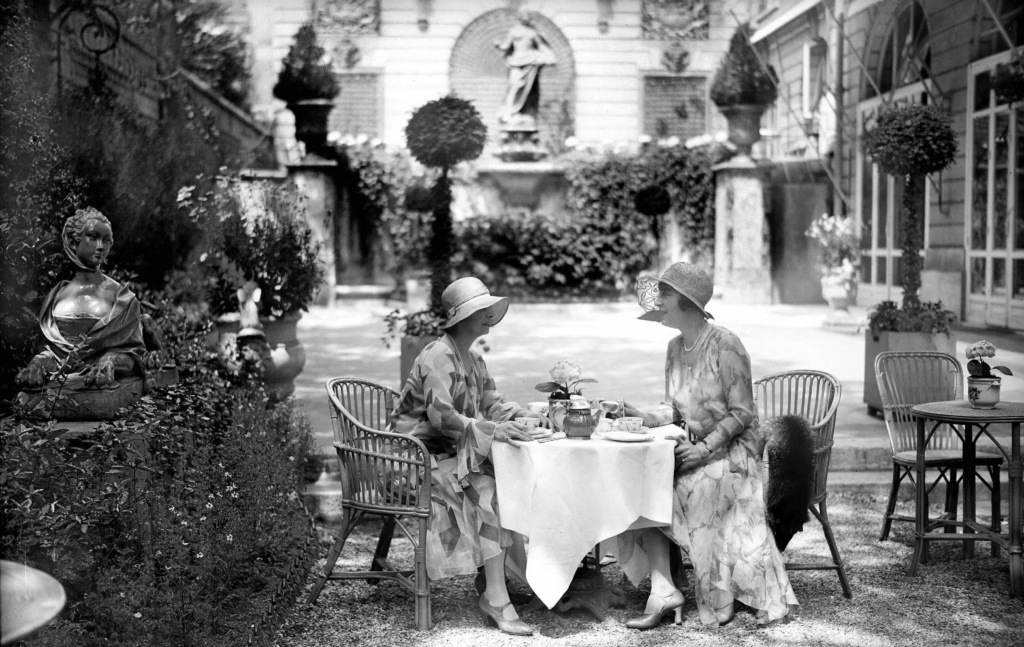
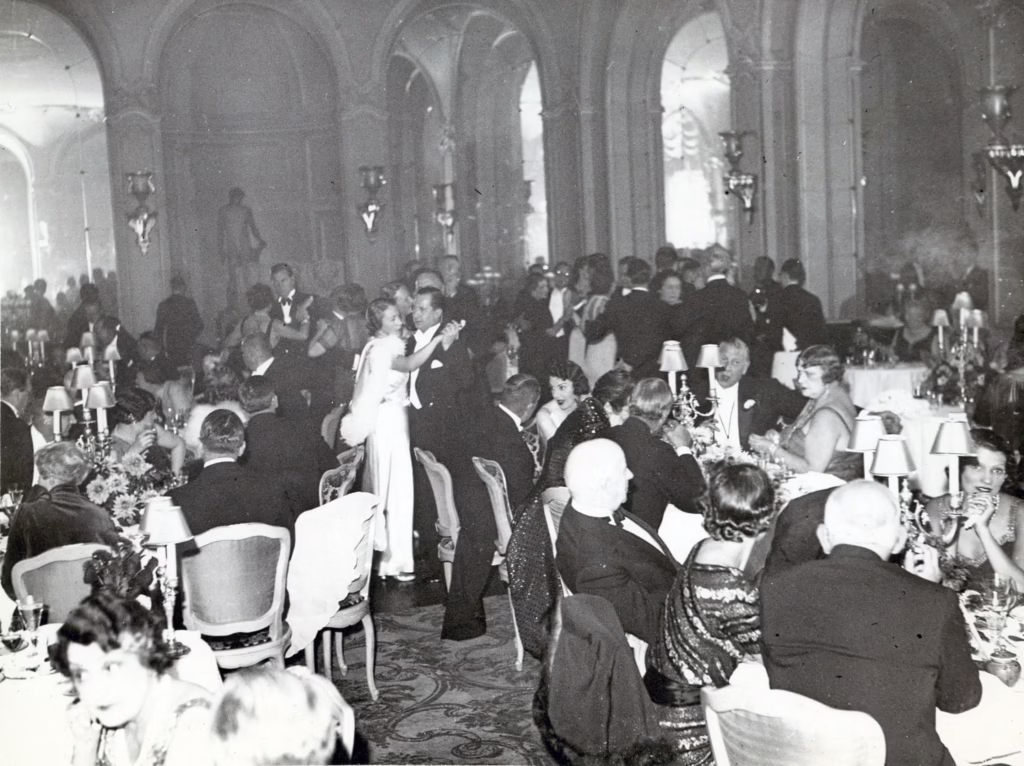
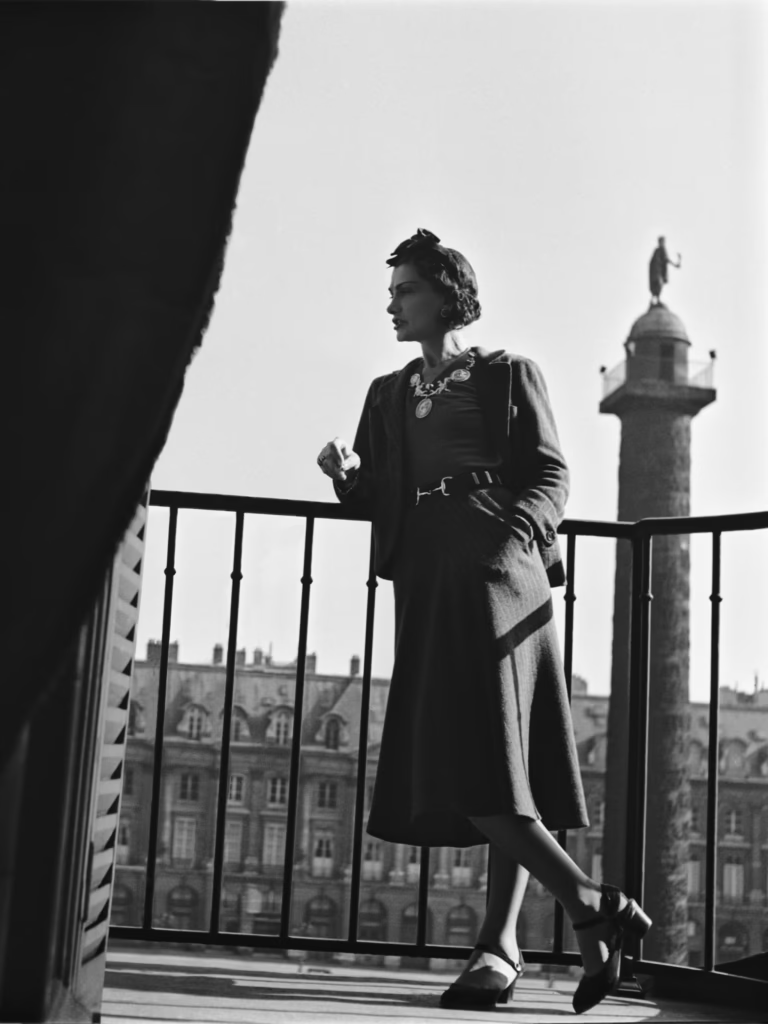
There are few places where history feels so wonderfully alive. Marcel Proust dined here. Coco Chanel lived here for more than three decades, treating the Ritz almost as an extension of her own apartment on Rue Cambon. Ernest Hemingway famously declared that when he dreamed of paradise, it always looked like the Ritz Paris. F. Scott Fitzgerald transformed its atmosphere into literature, while royalty, diplomats, film stars and musicians made its salons their temporary drawing rooms. Even today, one has the impression that another remarkable story is unfolding quietly in the corner of every room.
Perhaps no space better captures the spirit of the hotel than the Bar Hemingway. Hidden within richly panelled walls no larger than an intimate library, it remains one of the world’s most celebrated cocktail bars. Photographs, books and memorabilia honour the writer whose affection for the Ritz became legendary, yet the atmosphere never descends into nostalgia. Bartenders move with extraordinary precision, conversations unfold softly beneath warm lighting and every cocktail arrives with the confidence that perfection requires neither performance nor explanation.
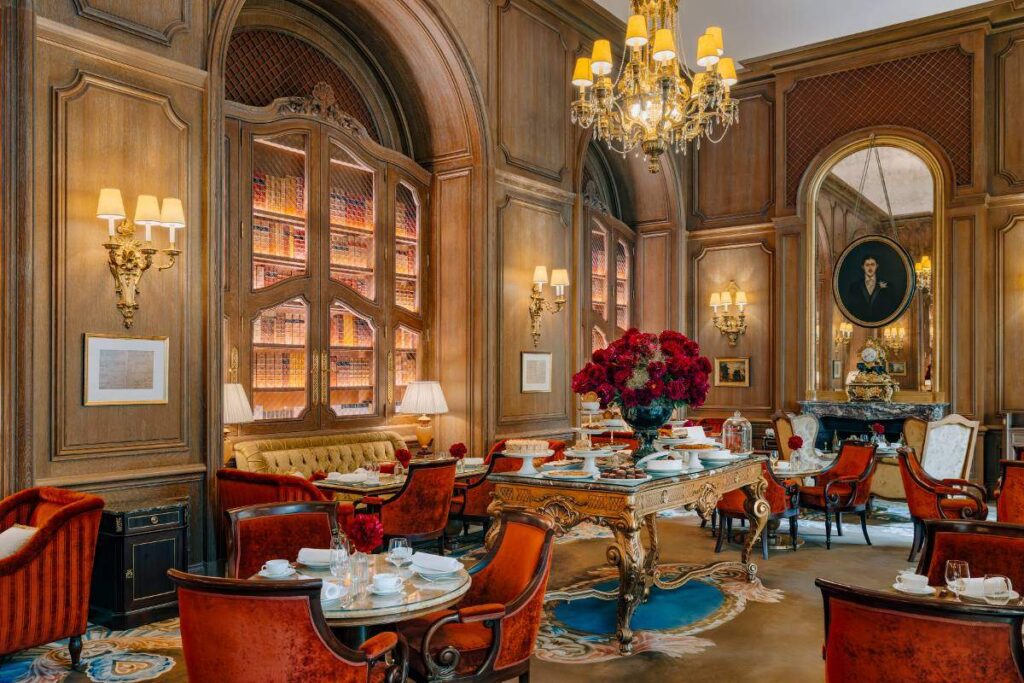
Elsewhere, the Salon Proust offers another expression of Parisian refinement. Afternoon tea here feels almost ceremonial, though never formal. Porcelain cups rest upon silver trays, pastries resemble miniature works of art and the gentle rhythm of conversation encourages guests to linger long after the final sip. Outside, the hotel’s Grand Jardin—one of the largest private gardens in central Paris—offers an unexpected oasis where birdsong briefly replaces the sounds of the city beyond Place Vendôme.
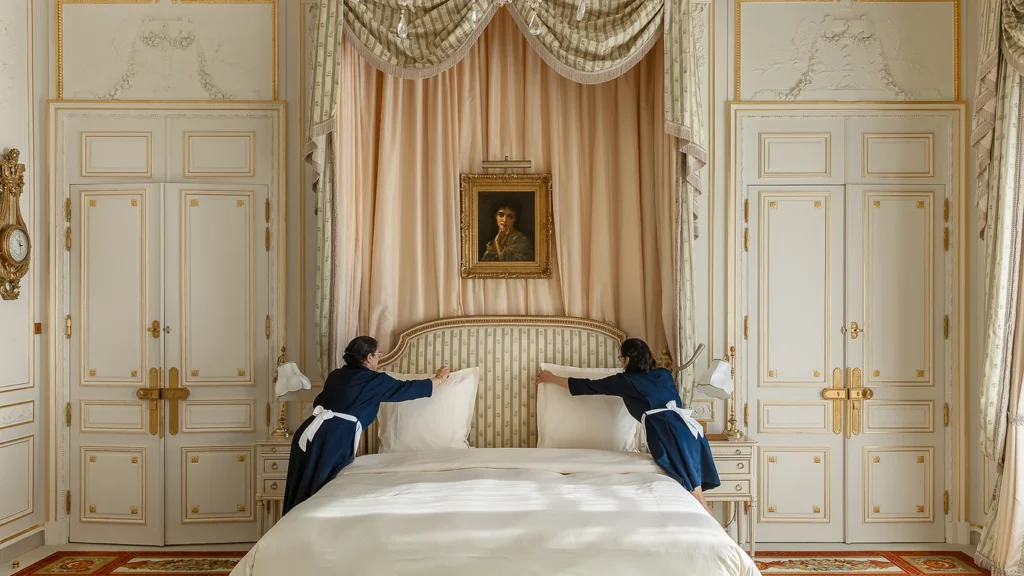
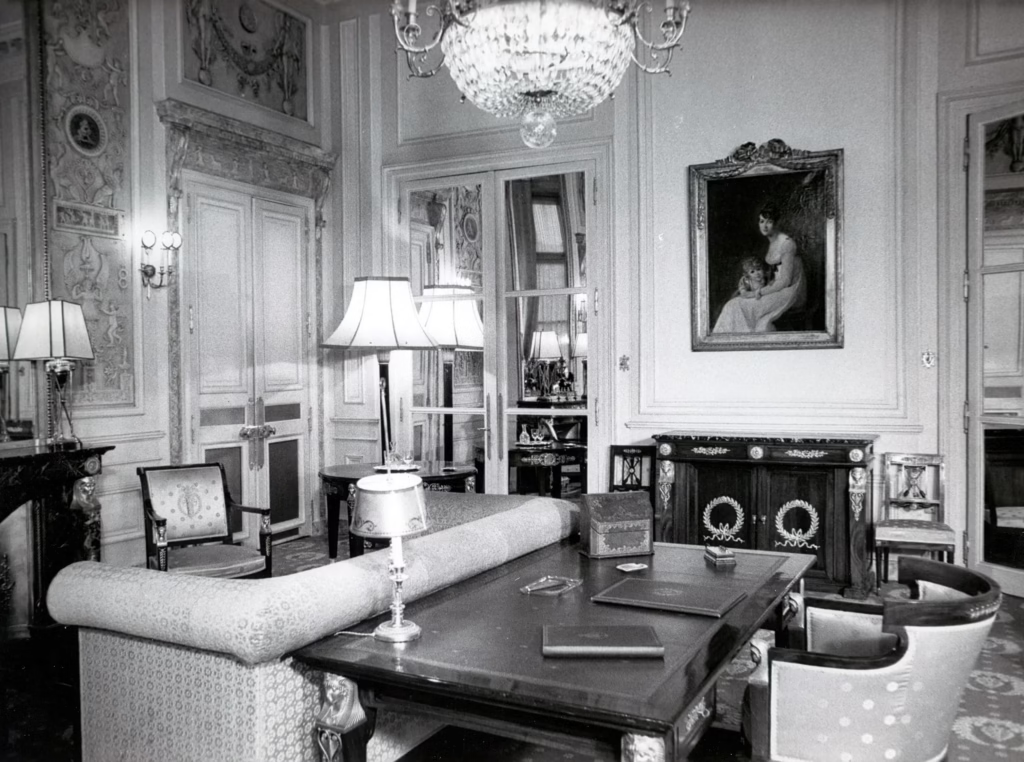
Accommodation at the Ritz has always reflected its broader philosophy. The rooms and suites are not exercises in contemporary minimalism but celebrations of classical French elegance. Rich fabrics, antique furniture, marble fireplaces and carefully selected artworks create interiors that feel collected over generations rather than decorated for effect. Windows frame rooftops, courtyards and the elegant geometry of Place Vendôme, reminding guests that they occupy one of the most distinguished addresses in Paris.
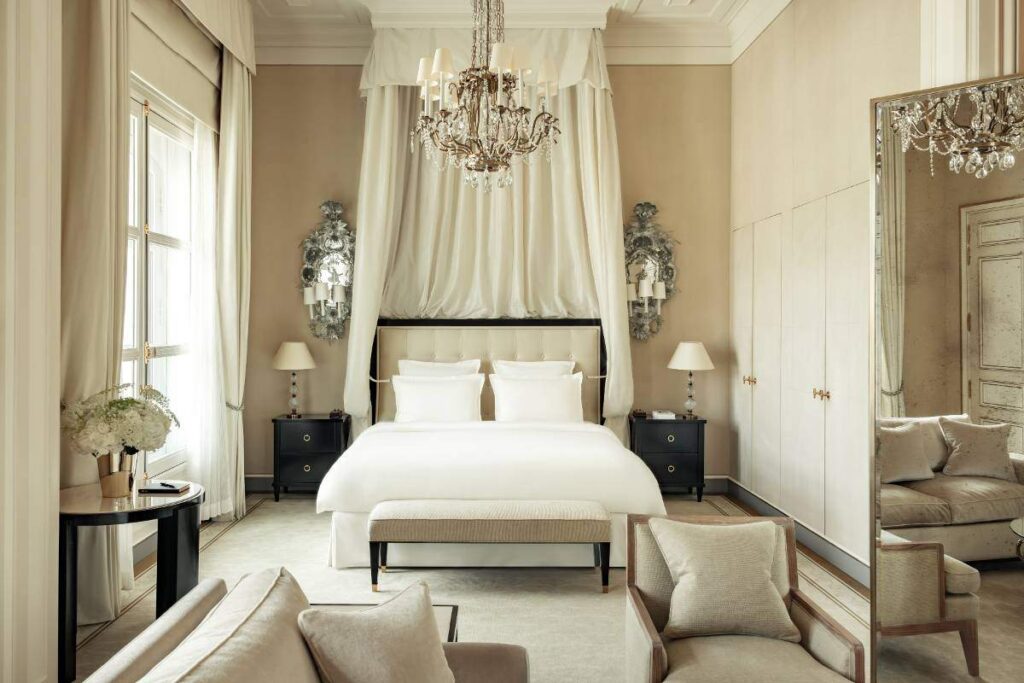
The Prestige Suites elevate this experience still further. Named after some of the extraordinary figures who shaped the hotel’s history, they honour personalities without reducing them to decoration. The Coco Chanel Suite, unsurprisingly, reflects the designer’s refined aesthetic through lacquered screens, mirrored surfaces and subtle black-and-white contrasts that echo her enduring philosophy of elegance. The Marcel Proust Suite invites literary reflection through rich fabrics and intimate spaces where one almost expects the novelist himself to be writing quietly beside the window.
Dining at the Ritz continues the legacy established by Auguste Escoffier more than a century ago. French gastronomy has evolved enormously since those early years, yet the hotel’s culinary philosophy remains rooted in precision, seasonality and restraint. Great cuisine, like great architecture, rarely requires unnecessary complexity. Whether enjoying breakfast beneath sparkling chandeliers, an elegant lunch overlooking the garden or dinner crafted with extraordinary technical mastery, guests encounter food that celebrates ingredients rather than spectacle.
Luxury at the Ritz has never been loud. Perhaps this explains why it continues to attract individuals who value privacy above publicity. While many celebrated hotels have embraced visibility through social media and carefully staged experiences, the Ritz remains wonderfully discreet. Its corridors have always protected conversations, relationships and moments that belonged entirely to those who experienced them. This discretion has become one of its greatest luxuries, impossible to replicate because it cannot simply be designed. It has been cultivated through generations of trust.
What distinguishes the Ritz Paris is not opulence alone. Many hotels possess marble staircases, crystal chandeliers and magnificent suites. Few possess atmosphere. Fewer still possess memory. The Ritz remembers.
It remembers a century of extraordinary lives that unfolded beneath its roof without allowing history to become a museum. Every guest contributes another quiet chapter to a story still being written. There is an extraordinary generosity in that continuity. The hotel asks nothing of its visitors except that they become part of its rhythm for a little while, slowing down enough to appreciate rituals that have almost disappeared elsewhere: breakfast served without hurry, handwritten notes, flowers arranged with remarkable care, conversations uninterrupted by urgency.
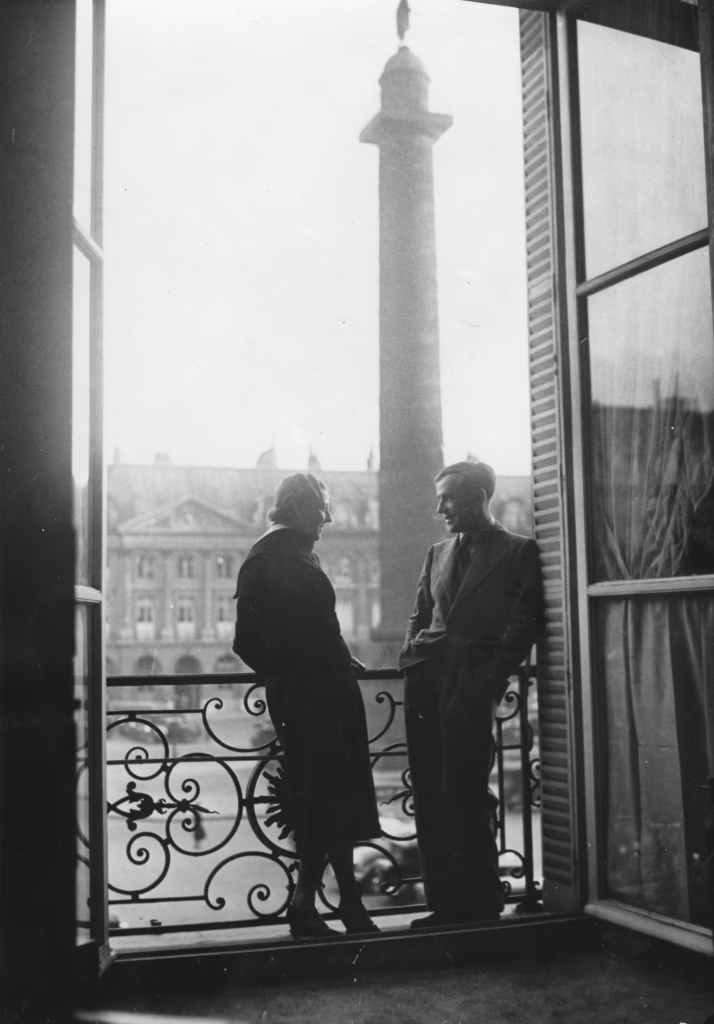
As evening settles over Place Vendôme, the façades surrounding the square glow softly beneath Parisian light. Carriages have long disappeared, replaced by discreet electric cars and quiet footsteps crossing the cobblestones, yet the feeling remains curiously unchanged. Inside, candles illuminate polished silver while the sound of a piano drifts gently through the salons. The city continues beyond the doors, but within the Ritz another pace of life quietly endures.
Perhaps that is why the Ritz Paris has remained one of the world’s defining hotels for well over a century. It has never attempted to keep up with the times. Instead, it has patiently allowed the times to come to it.
Maison Blanche Reflection
The finest hotels are often described as destinations in themselves. The Ritz Paris is something more enduring. It is a living expression of French elegance, a place where history is not preserved behind velvet ropes but experienced through everyday rituals of extraordinary refinement. Its greatest luxury is not found in gold leaf, marble or crystal, but in the rare ability to make every guest feel, if only briefly, that they belong to one of the world’s most beautiful stories. Long after leaving Place Vendôme, what remains is not simply the memory of a magnificent hotel. It is the feeling of having stepped into a timeless Paris that still exists for those who know where to look.