
Some hotels become famous because of the people who stay there. Others become famous because of where they are. Badrutt’s Palace belongs to a far rarer category. It is a hotel that helped create the destination itself.
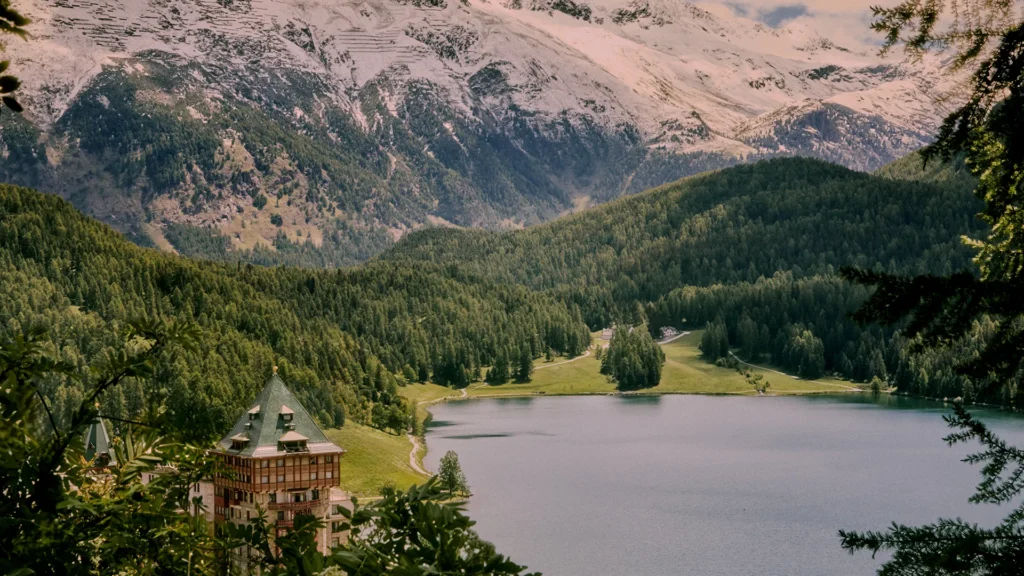
Long before St. Moritz became synonymous with Alpine glamour, winter sports and discreet luxury, Johannes Badrutt looked out across the frozen lake and imagined something few others could. At a time when Europe’s wealthy fled to warmer climates once summer had ended, he believed the mountains possessed a beauty that belonged equally to winter. In 1864, he made a wager that would quietly change the history of tourism.
Inviting several English guests to return during the coldest months of the year, Badrutt promised they would discover sunshine, fresh mountain air and a landscape unlike anything they had experienced. If they were disappointed, he would pay for their journey. They arrived expecting snow and isolation. Instead, they found dazzling blue skies, crystalline light and an Alpine world transformed into something magical. Word spread quickly. What began as one man’s confidence soon became the birth of winter tourism, and St. Moritz would never be the same again.
Today, more than 160 years later, Badrutt’s Palace remains not only the heart of St. Moritz but one of the defining grand hotels of Europe. From almost anywhere in the town, the hotel announces itself before you reach it. Its distinctive tower rises above the Engadin Valley like a fairytale castle, overlooking the lake and surrounding peaks with quiet authority. There is grandeur in its architecture, yet remarkably little pretension. Unlike many historic hotels that preserve their past beneath layers of ceremony, Badrutt’s Palace feels unexpectedly alive.
Its history is everywhere, yet nothing feels trapped by it. Stepping through the revolving doors is like entering another rhythm of life. The lobby hums softly beneath crystal chandeliers. Polished wood, marble floors and fresh flowers greet guests with understated elegance rather than theatrical luxury. Bell staff move effortlessly between arrivals, many greeting returning visitors not as customers but as familiar friends.
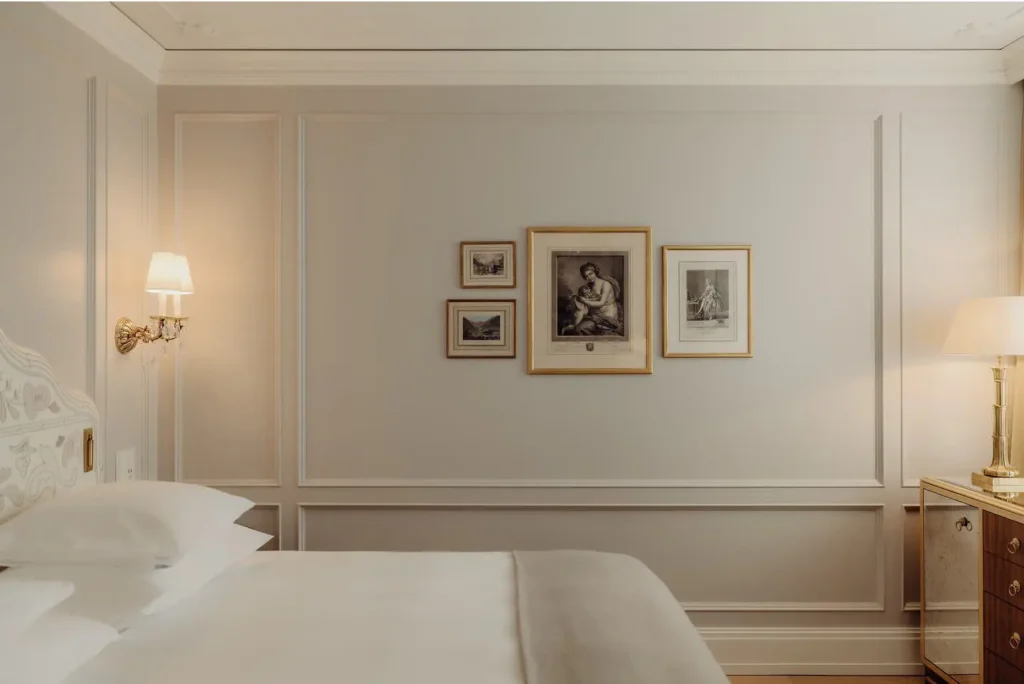
Generations have passed through these halls. Some families have returned every winter for decades, occupying the very same suites where grandparents once watched snowfall drift across the lake. Few hotels cultivate loyalty with such quiet consistency. The guestrooms and suites reflect the same philosophy. Rather than chasing contemporary trends, they embrace timeless comfort. Rich fabrics, handcrafted furniture, marble bathrooms and expansive windows frame one of Switzerland’s most celebrated landscapes. Morning begins slowly.
The first light reaches the snow-covered mountains before spilling gently across Lake St. Moritz. Ski lifts begin moving in the distance while church bells echo softly through the valley below. From many rooms, it is possible to watch the entire town awaken without leaving the warmth of your armchair. Luxury here is measured by perspective. Although skiing remains central to the St. Moritz experience, Badrutt’s Palace has always offered something beyond sport.
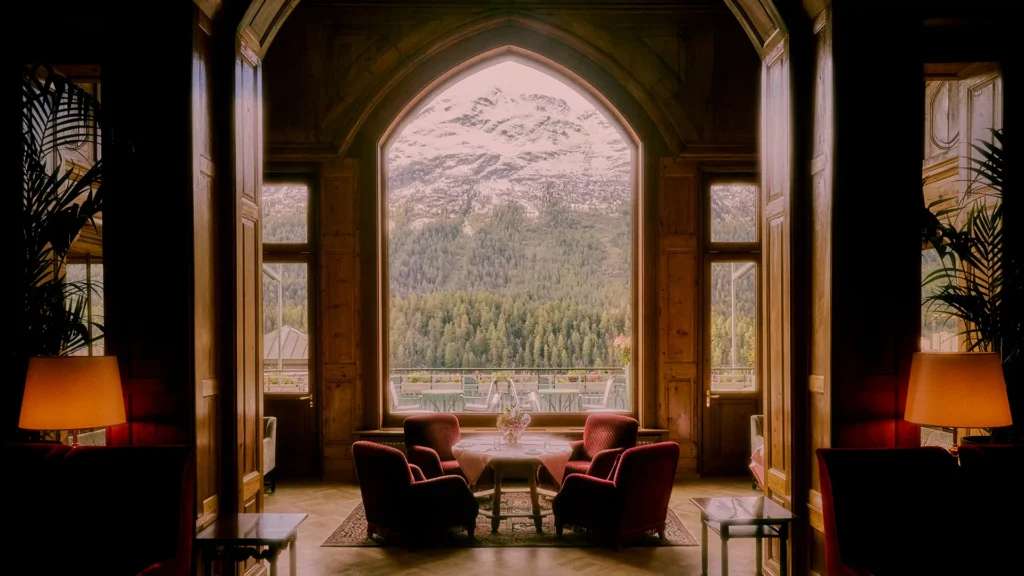
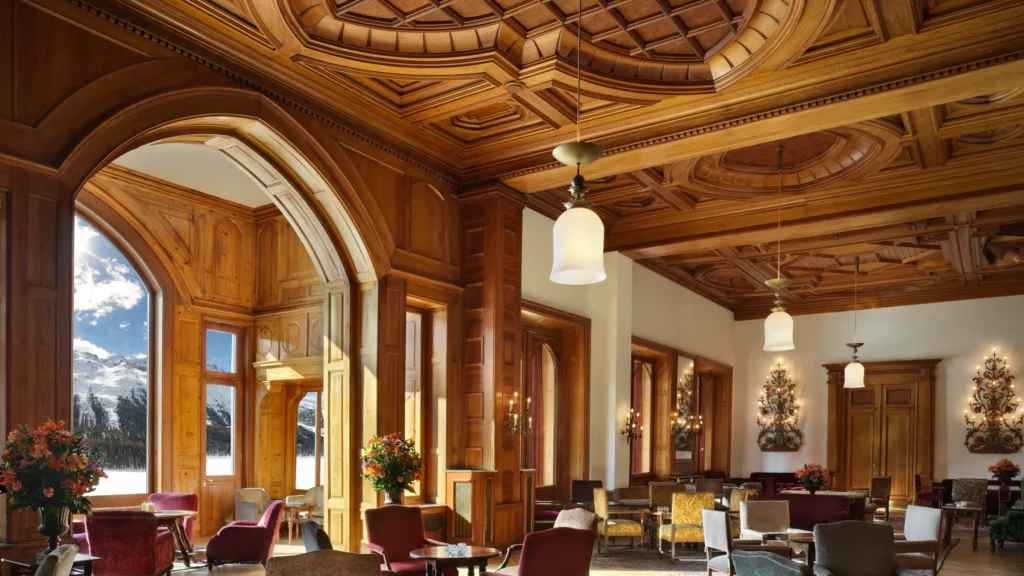
Its guests arrive as readily for conversation as they do for fresh powder. Afternoons unfold over tea in Le Grand Hall, where sunlight filters through tall windows and orchestras occasionally provide a gentle soundtrack to the day’s unhurried pace. Newspapers are read slowly. Conversations linger without urgency. Time seems unusually generous.
There is an unmistakable rhythm to life here. Breakfast becomes a leisurely ritual. Lunch extends comfortably into afternoon. Cocktails appear just as the final glow leaves the mountain peaks. Dinner follows not according to schedule but according to appetite. It is a way of living increasingly rare in modern hospitality. Dining has long been one of the hotel’s defining pleasures.
From refined Italian cuisine to traditional Swiss specialities and contemporary gastronomy, each restaurant possesses its own personality while remaining connected by a common philosophy: excellence without excess. Even the simplest dishes reflect extraordinary attention to detail. Perfect bread. Exceptional butter. Seasonal ingredients allowed to speak for themselves. The confidence of Badrutt’s Palace has never depended upon spectacle. It rests comfortably upon consistency.
Throughout its history, the hotel has welcomed royalty, statesmen, artists, entrepreneurs and film stars, yet discretion has always remained one of its greatest luxuries. Stories circulate quietly through St. Moritz. Charlie Chaplin walking its corridors. Alfred Hitchcock admiring the Engadin light. Audrey Hepburn enjoying peaceful winter escapes. Gianni Agnelli arriving with unmistakable Italian elegance. Modern guests continue the tradition, though the hotel rarely speaks about them. Privacy has become part of its identity. The Palace Wellness occupies another world entirely.
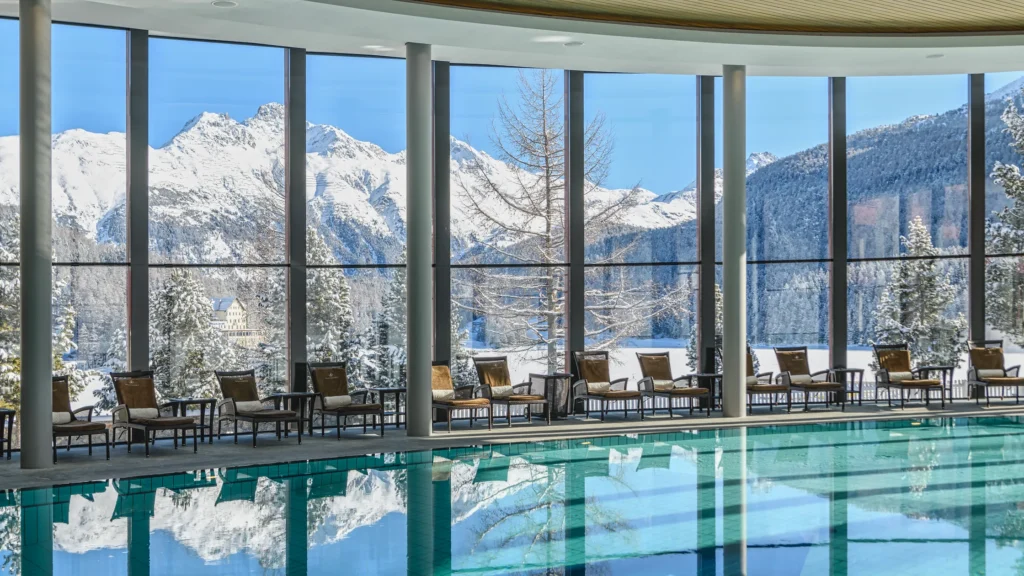
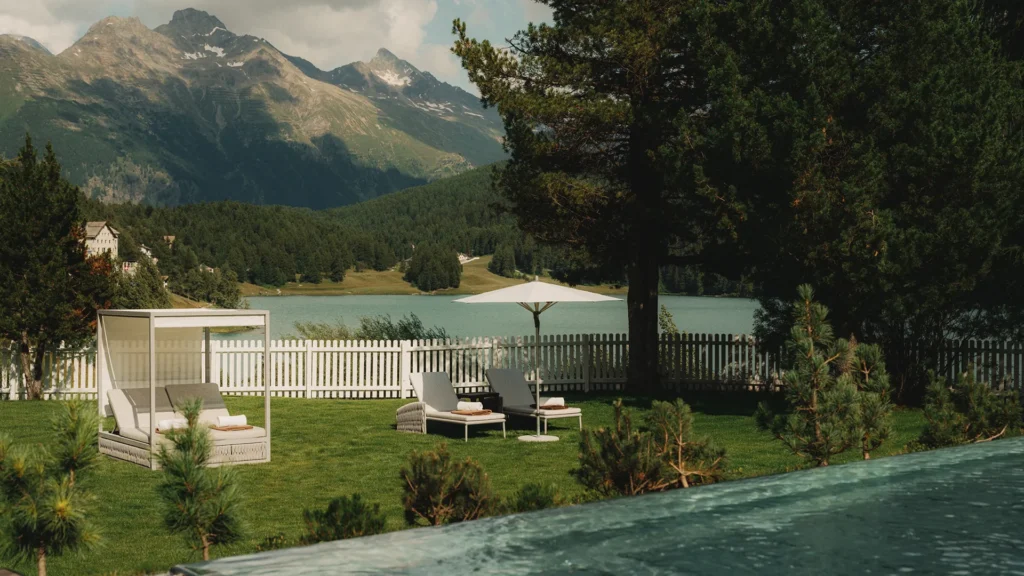
Indoor and outdoor pools overlook the surrounding mountains while saunas, steam rooms and treatment rooms encourage guests to slow down after long days on the slopes. Through large panoramic windows, snow continues to fall beyond the warmth of the spa, creating one of those distinctly Alpine pleasures that photographs never fully capture. Warm water. Cold air. Silent mountains. Simple moments become unforgettable. Perhaps nowhere is the character of Badrutt’s Palace more evident than during evening.
As darkness settles across the Engadin Valley, lights begin reflecting upon the frozen lake while the hotel’s illuminated tower watches quietly over the town below. Inside, fireplaces glow. Champagne glasses catch candlelight. Piano music drifts gently through the corridors. Guests return from dinner wearing cashmere rather than ski jackets. The atmosphere feels sophisticated without ever becoming formal. One begins to understand why so many visitors describe Badrutt’s Palace not as a hotel but as a winter home. What makes the Palace remarkable is not simply its architecture or history. Many grand hotels possess beautiful buildings. Many enjoy spectacular locations. Very few have shaped an entire culture of travel.
Without Johannes Badrutt’s extraordinary wager in 1864, winter holidays in the Alps may have developed very differently. His vision transformed St. Moritz from a quiet mountain village into one of the world’s great winter destinations, inspiring generations of travellers to embrace snow not as something to escape but as something worth celebrating.
That legacy continues every season. Not through nostalgia. But through relevance.
Maison Blanche Reflection
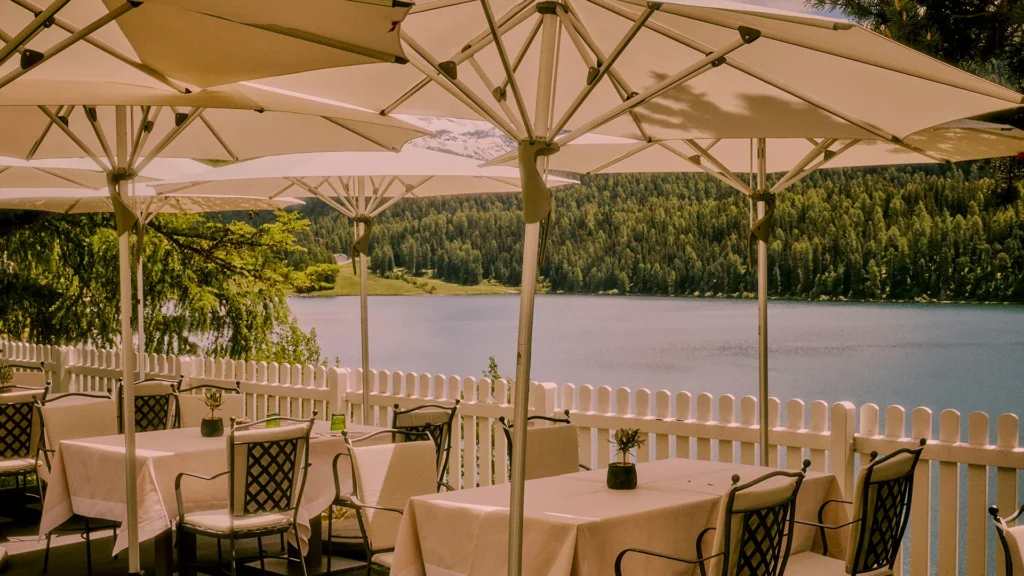
The world’s finest hotels often promise unforgettable experiences. Badrutt’s Palace offers something quieter. It offers continuity. It reminds us that true luxury is rarely about novelty. It is found in traditions preserved with care, service refined over generations and places that understand their identity so completely they never feel the need to reinvent themselves. Standing on its terrace as the late afternoon sun turns the surrounding peaks shades of gold and rose, it becomes clear why travellers have continued returning for more than a century. They are not simply visiting one of Switzerland’s greatest hotels. They are experiencing the place where winter itself became a destination.