
Where the Sea Writes the Story
There are certain places that refuse to be hurried.
Long before you reach Sicily’s southeastern coastline, the island begins quietly announcing itself. It arrives in the changing colour of the sky, in the scent of wild fennel carried by the wind, in the ancient olive groves whose twisted trunks have witnessed centuries unfold beneath the Mediterranean sun. Stone villages appear almost unexpectedly among rolling hills, while distant church towers rise above landscapes where time seems to move according to different rules.
Sicily has never been a destination that reveals itself immediately. It asks something of those who arrive: Patience. Curiosity. A willingness to slow down.
Perhaps that is why those who truly fall in love with the island rarely speak first about its monuments or beaches. They remember instead the morning light spilling across weathered limestone, the quiet rhythm of fishermen returning before sunrise, or the remarkable silence that settles across the countryside once evening begins to erase the heat of the day. It is within this landscape that Villa U MARI finds its place. Not as an object imposed upon nature. But as something that appears to have grown from it. The first impression is almost deceptive.
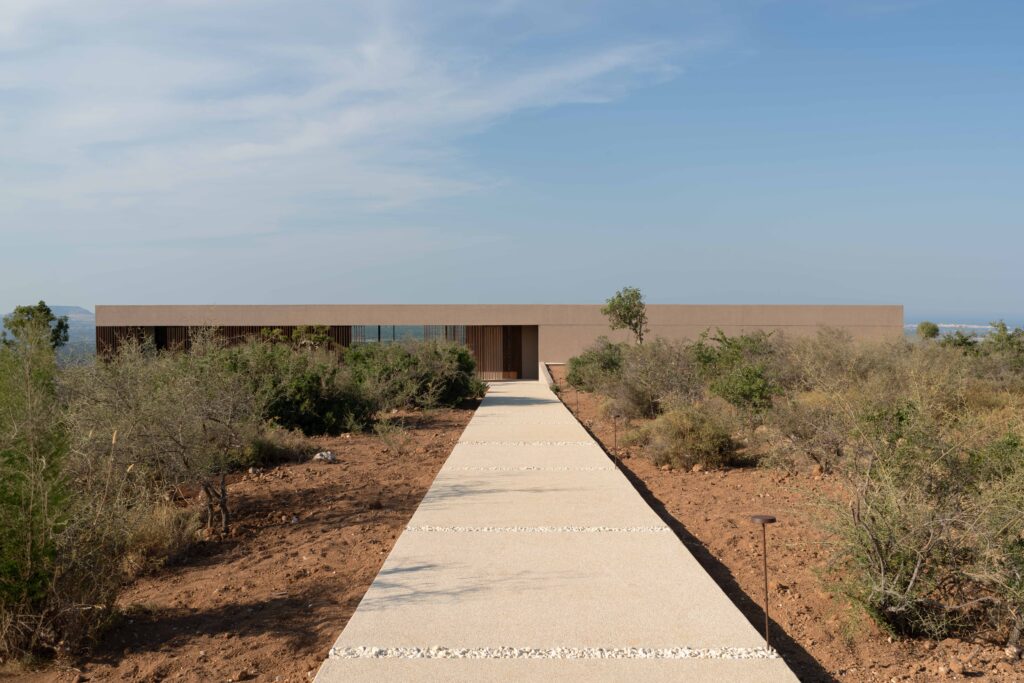
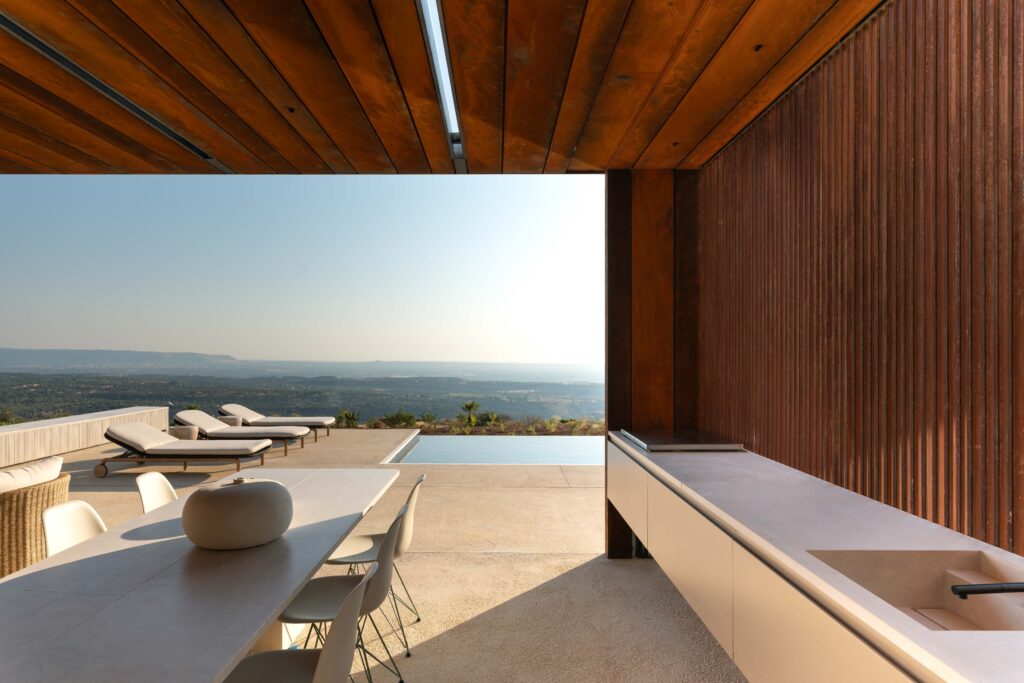
There is no monumental entrance announcing arrival. No theatrical driveway designed to overwhelm. Instead, the architecture reveals itself gradually, emerging from the landscape with remarkable restraint. Its textured exterior render takes its colour from the earthy tones characteristic of southeastern Sicily, shifting subtly as sunlight moves across the surface and through the patios. Pietra di Modica, a natural stone typical of the region, is incorporated into the cement flooring, polished indoors and left with a rougher finish outside. These materials give the house a sense of belonging—as though its colours and textures had been drawn directly from the land around it. This quiet confidence defines everything that follows.
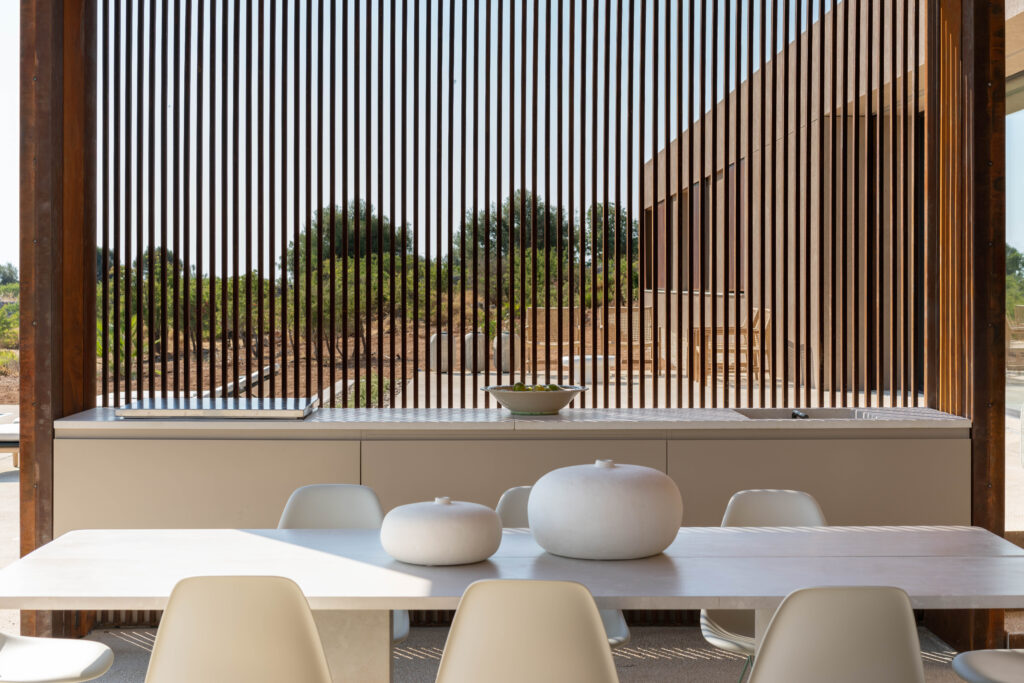
Many contemporary villas attempt to demonstrate luxury through scale. Larger terraces. Bigger swimming pools. More dramatic architecture. Villa U MARI chooses an entirely different conversation. It understands that genuine luxury rarely needs to introduce itself. Instead, it allows silence to become part of the design.
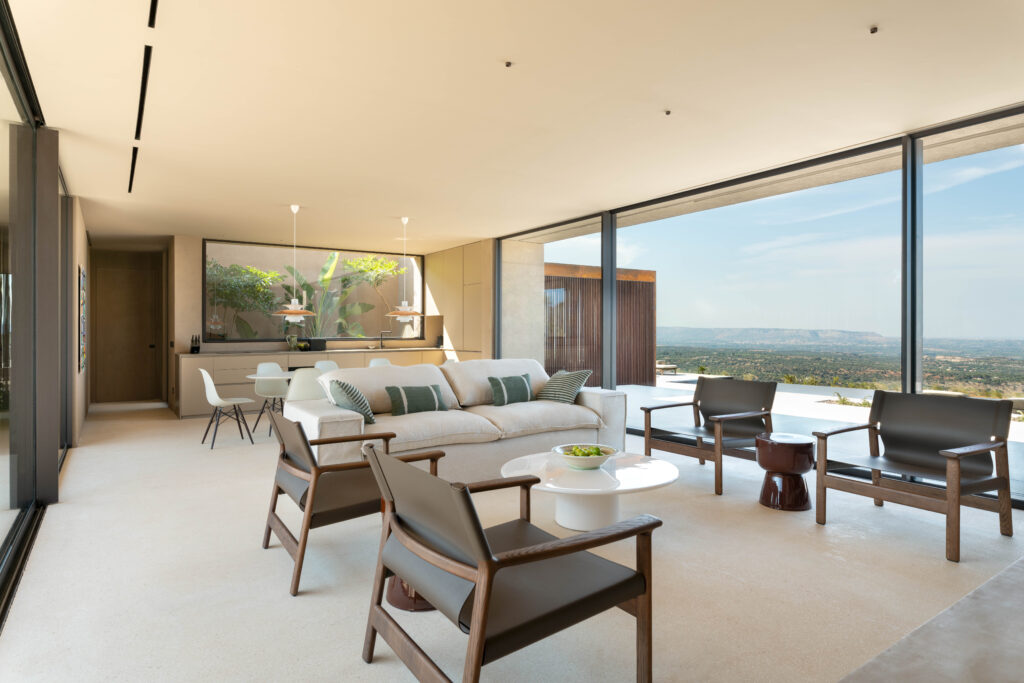
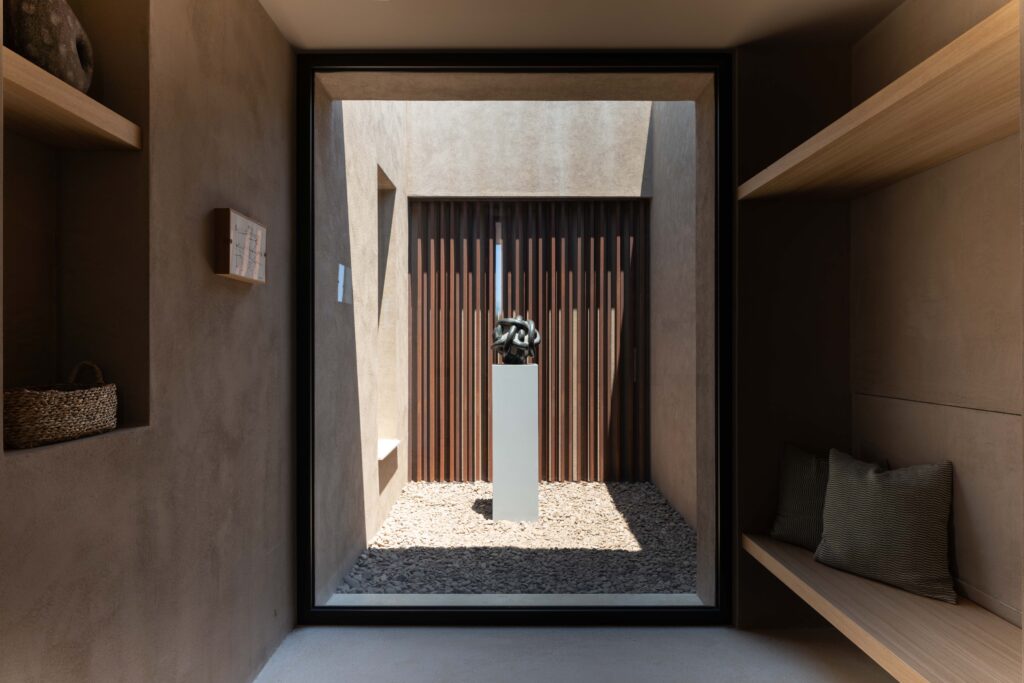
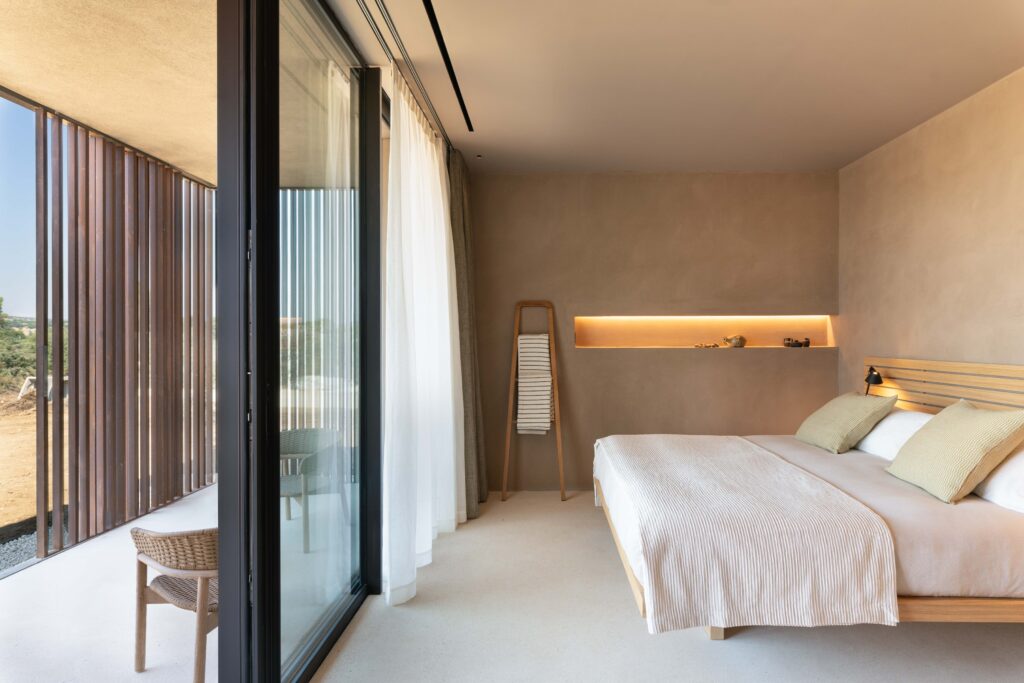
The architects seem to have begun with a single question. How can a house belong completely to its landscape? The answer can be found everywhere. Glass walls dissolve into the horizon instead of framing it. Outdoor terraces extend naturally from the living spaces until it becomes difficult to identify where architecture ends and nature begins. Six patios, five of them planted, draw daylight and greenery deep into the interior, making nature an integral part of the rooms rather than something viewed only from outside. The cement flooring continues seamlessly from inside to outside, reinforcing this sense of continuity. The Mediterranean breeze moves freely through spaces that feel open while still offering complete privacy.
Nothing feels accidental. Every opening has been positioned to capture light rather than simply views. Movable Corten steel panels filter the Mediterranean light and provide shade throughout the day. Together with the planted patios, they create shifting patterns of light and shadow that continually alter the character of the interior. Morning arrives softly from one side of the house, illuminating textured walls before gradually filling the central living space with the warm golden tones unique to southern Italy. By afternoon, sunlight drifts slowly across the floors, creating constantly changing patterns that transform the simplest room into something quietly theatrical. The house never remains visually still. It changes with every hour. Architecture here becomes a conversation with time itself.
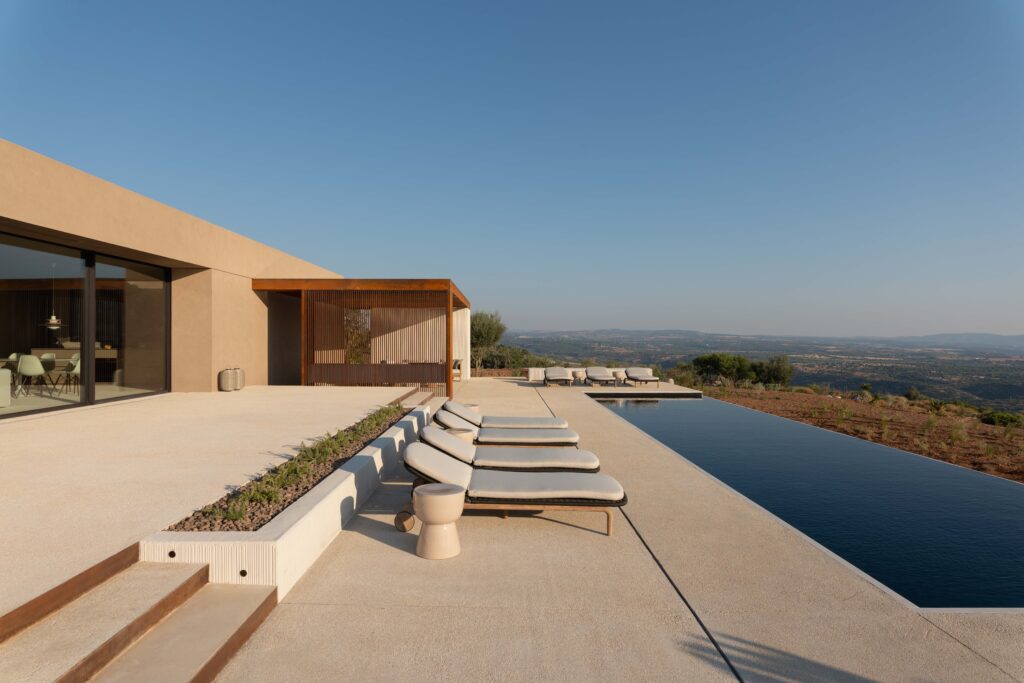
Perhaps that is the villa’s greatest achievement. It understands that luxury is not created by adding more. It is created by removing everything unnecessary. There are no elaborate decorative gestures competing for attention. No oversized chandeliers. No excessive ornament. No attempt to imitate historical Sicily through predictable references. Instead, materials are allowed to speak through their natural character. With the exception of glass, there are no entirely smooth surfaces. Walls, floors and exterior surfaces retain their structure and texture, giving the architecture a tactile presence and the rooms a sense of depth. Timber is allowed to age naturally, while glass exists simply to disappear. The result feels almost Japanese in its restraint, despite being unmistakably Mediterranean in character.
One begins to notice something unexpected after only a short time. The architecture slowly disappears. At first this seems impossible. After all, Villa U MARI is undeniably contemporary. Its clean geometry, disciplined proportions and carefully composed volumes immediately establish a strong architectural identity. Yet as the hours pass, attention shifts elsewhere. Towards the movement of shadows. Towards the changing colour of the sea in the distance. Towards the breeze moving through the surrounding countryside. Towards rosemary growing beside the terraces. Towards birds crossing an uninterrupted blue sky. The building quietly steps back. Nature takes over. Perhaps that was always the intention. Rather than becoming the destination itself, Villa U MARI acts as a frame through which Sicily can be experienced more deeply. It encourages observation. Not consumption. Presence. Not performance. Here, there is no schedule demanding attention. No urgency.
Breakfast naturally becomes a leisurely ritual rather than a meal. Coffee grows cold because conversation matters more than time. Books remain open beside the pool for hours at a time, interrupted only by the occasional decision to swim beneath an impossibly blue sky. Afternoons unfold almost without memory of clocks.
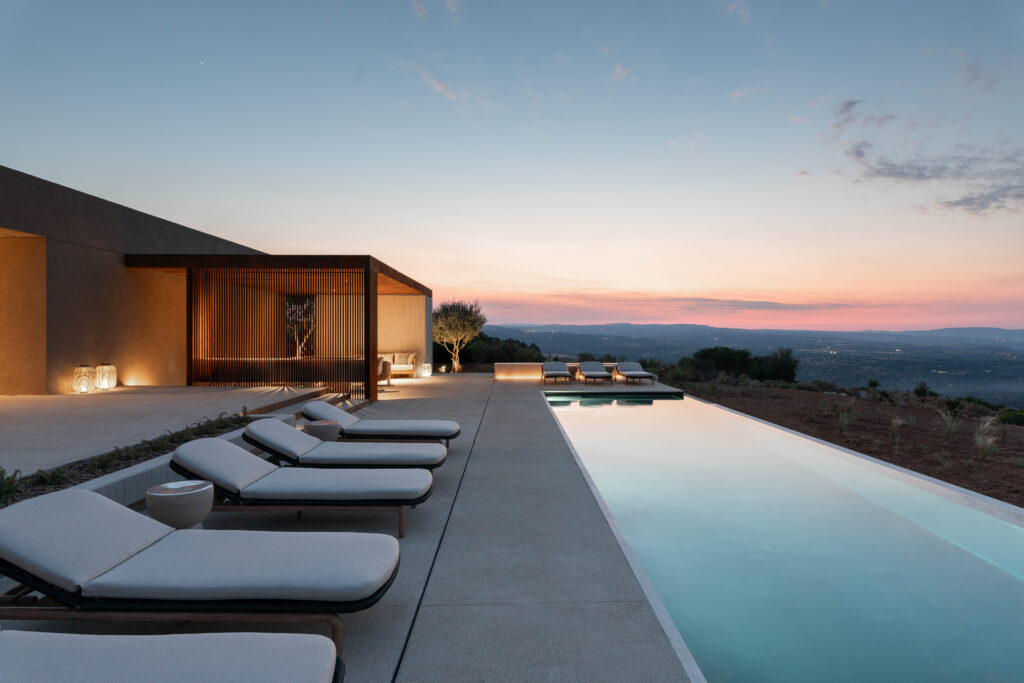
Evenings arrive slowly. The Mediterranean begins reflecting shades of silver before surrendering entirely to darkness. Only then does one realise how rarely silence exists within contemporary life.
Villa U MARI does not create that silence. It simply protects it. And perhaps, in today’s world, there is no greater luxury than that.
For more information, visit www.flowcubetourism.com