
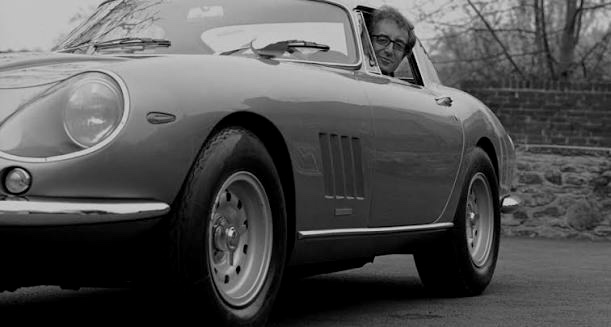
Ferrari’s mystique lives at the intersection of speed, craftsmanship and pure emotion. Born from Enzo Ferrari’s fierce passion for racing, the prancing horse emblem evokes more than horsepower; it speaks to a way of life steeped in Italian style and engineering brilliance. Peter Sellers, the British actor whose incisive humour defined films such as The Pink Panther and Dr Strangelove, fell completely under Ferrari’s spell. His playful relationship with the brand reveals how these cars became both status symbols and personal companions, weaving Italian artistry into the fabric of his life.
Origins of a Legend
Enzo Ferrari’s route to greatness began long before his own factory built any road cars. In 1929 he formed Scuderia Ferrari, a racing stable that prepared Alfa Romeo sports cars for private. The team quickly became a technical outpost for Alfa Romeo and dominated Italian motorsport. After leaving Alfa Romeo in 1939, Ferrari set up Auto Avio Costruzioni and, in the lean wartime years, planned an entirely new sports car. By spring 1947 he tested the 125 S, the first vehicle to carry his name; its Vs12 engine signalled an audacious vision for the post-war era. Ferrari’s blend of racing know how and aesthetic sophistication made his cars irresistible to those who wanted the thrill of competition without sacrificing luxury. The company’s early racing successes laid the groundwork for an enduring road car business, while its Formula One team became a fixture of the world championship from 1950.
Ferrari built its reputation on a series of limiteds production sports and grand touring cars that balanced brutal performance with the elegance of Italian coach building. Models like the 250 GTO, the sharply sculpted Daytona and the F40 combined racing technology with artisanal craftsmanship. The F40, unveiled in 1987 to celebrate the company’s fortieth anniversary, was the last model approved by Enzo Ferrari himself and symbolised decades of innovation. Such cars were coveted by collectors, racing drivers and celebrities alike; owning a Ferrari meant joining an elite club where art and engineering met.
A Comedian’s Taste for Speed and Style
Peter Sellers came of age in postswar Britain, a world far removed from the glamour of Modena and Maranello. His gift for mimicry and improvisation propelled him from BBC radio’s Goon Show to international stardom. Success brought wealth, and Sellers channelled his earnings into motoring. Contemporary and friends joked about his “metal underwear,” a reference to his habit of frequently changing vehicles. He owned an estimated hundred and more cars over his lifetime and flirted with Rolls-Royces, Bentleys, Aston Martins and Ferraris. Sellers treated cars as extensions of his character: sometimes serious statements of taste and wealth, sometimes props for jokes that blurred the line between his screen persona and personal life.
Sellers’ love of Ferraris began in the early 1960s. The Italian marque offered him exotic styling and ferocious performance, but also a kind of theatre: every Ferrari he bought seemed to come with a story. In an era when Britain’s roads were increasingly filled with boxy saloons, a bright Italian coupé made a statement about individuality. Sellers valued that attention, yet he also delighted in subverting the formality of high-end motoring with practical jokes and anecdotal mischief.
The 250 GTE: First Love on Film
In 1962 Sellers took delivery of a Ferrari 250 GTE, the first four seat road car to bear the prancing horse. With its 2+2 configuration and elegant profile, the GTE appealed to family men who wanted racing pedigree with practicality. Only fifty-four right hand drive examples were built for the British market, making Sellers’ car a rare prize. Painted in Chinese White, it was delivered to him on the set of the crime caper The Wrong Arm of the Law. Unimpressed with the colour—he joked that the sun might “tan” the coachwork to a warmer hue—he nonetheless fell deeply in love with the machine. Sellers’ affection for the GTE went beyond admiration. He insisted that the Ferrari appear alongside him in the film, turning it into a stylish co star. The interplay between actor and automobile blurred reality: Sellers was a globetrotting star; his Ferrari, the cinematic embodiment of mid century glamour. In real life, he pushed the GTE as hard as he pushed his comedic performances, savouring its Vs12 growl and agile handling. The car taught him that Ferraris could be both daily companions and personal statements, fusing artistry with utility.
The 500 Superfast: Grandeur with a Prankster’s Twist
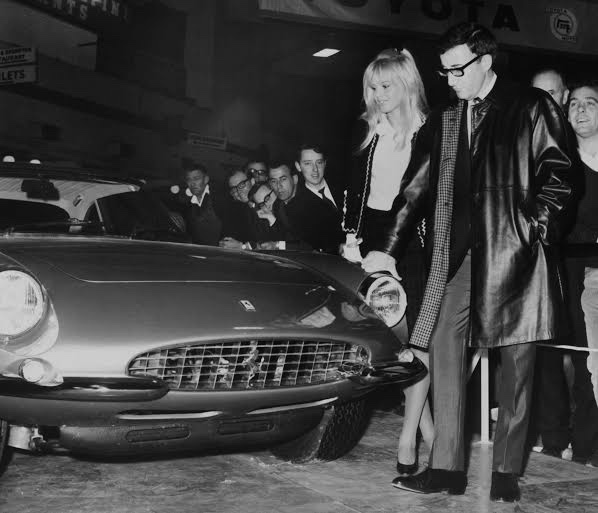
By 1965, Sellers’ tastes evolved towards the exclusive 500 Superfast. Conceived as the ultimate grand touring coupé for Ferrari’s most discerning clients, only thirty-six examples left Maranello. Its five litre “Colombo” Vs12 delivered nearly 400 horsepower and a top speed approaching 280 km/h. The Superfast was the last of Ferrari’s long running America series, a line of powerful coupes tailored for wealthy clients who sought continent crossing speed wrapped in understated luxury.
Sellers embraced the car’s exclusivity—and used it as a stage for humour. On one occasion he invited fellow comedian Spike Milligan to locate a mysterious squeak coming from the Superfast’s boot. As Milligan climbed inside, Sellers shut the lid, jumped behind the wheel and drove off, leaving his friend to rattle around while he laughed uproariously. The episode speaks to his unique relationship with his Ferraris: he revered their engineering and beauty but refused to treat them as untouchable relics. Instead, they became props in elaborate gags that reflected his surreal sense of fun.
The 275 GTB/4: A Swiss Sojourn with a Celeste Blue Companion
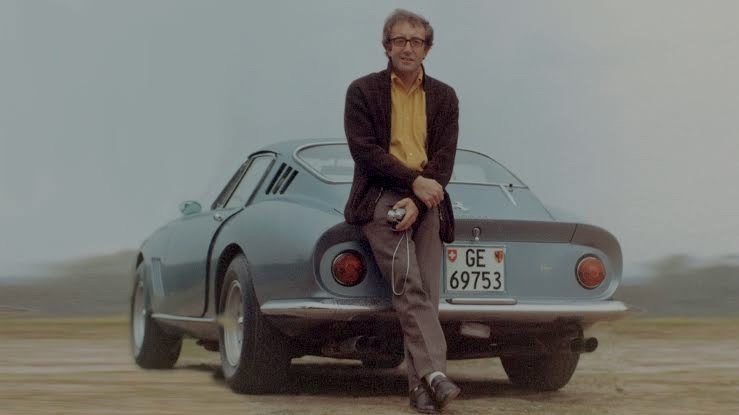
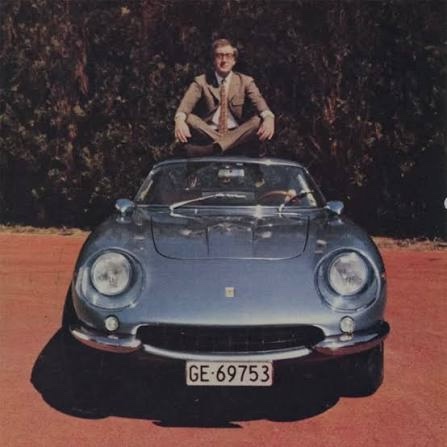
By the late 1960s, Sellers’ life had become increasingly peripatetic. After a divorce and relocation to Switzerland, he adopted a more subdued lifestyle. Yet even as he pared down his collection, he could not resist another Ferrari. In 1969 he acquired a Celeste blue 275 GTB/4 from a seller in Lausanne. This model blended competition derived mechanicals with road going comfort; its 3.3 litre quadscam Vs12 produced around 300 horsepower, and its flowing bodywork suggested motion even when parked. Sellers used the 275 as his daily driver during his Swiss years, proving that Ferraris could be faithful companions rather than fragile ornaments There are rumours he once offered to trade the car to actor Ryan O’Neal in exchange for O’Neal’s spouse, a jest that underlined his irreverent approach to possessions.
The 275 stayed with Sellers through a turbulent decade in which his career waned and resurged, culminating in critical acclaim for the film Being There. Shortly after winning a Golden Globe, Sellers died of a heart attack in July 1980 at the Dorchester Hotel in London. His cherished 275 GTB/4 lived on, and was lovingly restored and sold in 2019 for a sum befitting its rarity and former owner. Today it stands as a testament to his enduring bond with Ferrari.
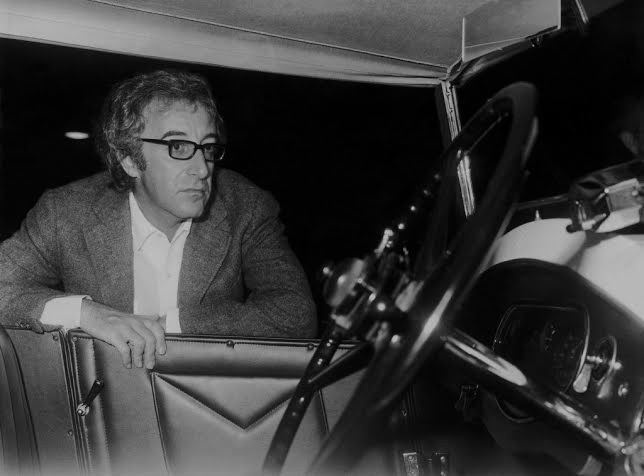
Ferraris were woven into the tapestry of Peter Sellers’ life. They accompanied him on film sets, in London night clubs and on quiet Alpine roads. They became tokens of affection, catalysts for practical jokes and sometimes standsins for human relationships. Owning a Ferrari allowed Sellers to project sophistication while indulging his inner child. He would obsess over mechanical quirks, commissioning modifications or complaining about minor inconveniences. At the same time, he never took them too seriously; each car was simultaneously a status symbol and a toy.
Ferrari, for its part, found an unlikely ambassador in Sellers. Through him, the brand reached the world of cinema, not only appearing on screen but also capturing the imagination of audiences who might otherwise have experienced the cars only as distant objects of desire. His ownership stories illustrate the pleasure these machines can bring—pleasure born not purely from speed, but from the joy of possessing something beautifully made.
Ferrari remains one of the world’s most desirable marques because it successfully balances heritage and innovation. Every new model draws on the early achievements of Scuderia Ferrari and the vision of Enzo Ferrari, while adopting modern technologies and design languages. Those who own Ferraris today often describe the experience as more than motoring; it is a relationship with a brand that evokes history and emotion. Peter Sellers understood this instinctively. He did not just drive Ferraris—he lived with them, joked with them and, in a sense, loved them. His story illustrates how a great car can become part of a person’s identity.